The Good, the Bad and the Ugly: The Defining Moments From Four Seasons of Clarkson’s Farm Ahead of Season 5
As anticipation builds for Season 5 of Clarkson’s Farm, the series has already delivered some of the most memorable moments television has seen in recent years. What began as an experiment involving Jeremy Clarkson attempting to run a 1,000-acre Oxfordshire farm quickly evolved into something far more significant — a surprisingly honest portrait of modern British farming.
Across four seasons, viewers have watched machinery failures, council disputes, livestock disasters and unexpected emotional moments unfold at Diddly Squat Farm. Ahead of the next chapter, here is a look back at the moments that defined the series.
Series 1: Chaos, Confusion and the Birth of Diddly Squat
Jeremy Clarkson’s disastrous first day in the tractor
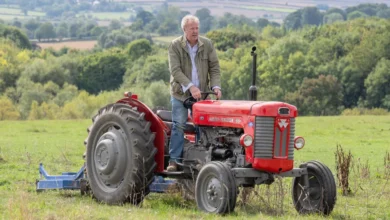
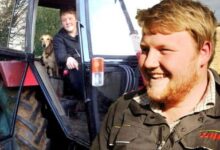
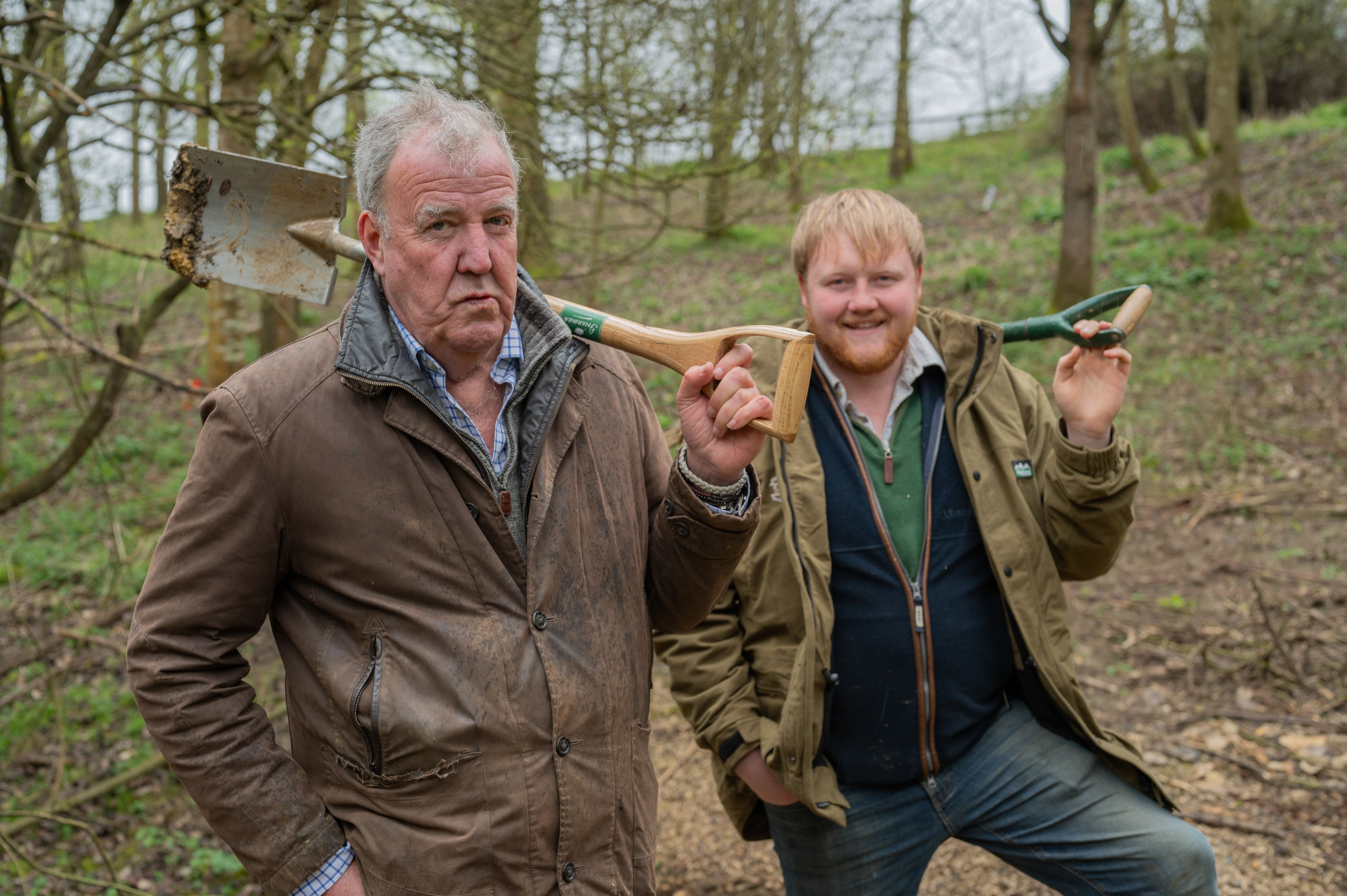
The opening episode immediately established the tone of the show. Clarkson climbed into a massive Fendt tractor with almost no practical farming knowledge, while young local farmer Kaleb Cooper quickly emerged as the true expert.
What followed was equal parts comedy and reality. Clarkson struggled with basic fieldwork, GPS systems and machinery controls, while Kaleb delivered blunt but accurate criticism. Their unlikely partnership became the foundation of the series.
The sheep experiment that quickly spiralled out of control
Clarkson’s decision to buy a flock of North Country Mule sheep created some of the programme’s most chaotic scenes. Lambing season proved far more demanding than expected, with endless complications, sleepless nights and stubborn animals refusing to cooperate.
With guidance from shepherdess Ellen Helliwell and experienced farmer Kevin Harrison, viewers got a rare glimpse into the exhausting reality of livestock farming.
The opening of the Diddly Squat Farm Shop
The launch of the farm shop appeared simple on paper. In practice, it became an early warning of the planning and logistical battles that would later dominate the series.
Traffic issues, council restrictions and overwhelming customer demand transformed the shop into one of the most recognisable locations in Britain. Despite the complications, Diddly Squat rapidly became a major tourist destination.
Harvest season brings reality crashing down
The first harvest represented Clarkson’s first genuine test as a farmer. After months of work, unpredictable weather and rising costs, the final results highlighted just how fragile arable farming can be.
Veteran farm worker Gerald Cooper played a crucial role during the harvest, bringing decades of local knowledge to the operation.
Clarkson’s bee project reveals a different side of the show
In one of the series’ quieter storylines, Clarkson attempted to improve biodiversity by introducing beehives, restoring ponds and creating wildlife habitats.
While Ukrainian beekeeper Viktor Zaichenko provided the technical expertise, Clarkson brought enthusiasm and genuine curiosity, giving the programme an unexpectedly thoughtful environmental angle.
Series 2: Expansion, Pressure and Public Battles
The farm restaurant controversy dominates the season
The launch of the farm-to-fork restaurant became one of the most talked-about storylines in the show’s history.
The project quickly escalated into a public dispute involving local councils, planning permission and rural business regulations. Many viewers sided with Clarkson and the farming community, arguing that diversification had become essential for modern farms trying to survive financially.
Kaleb Cooper officially takes control
Promoting Kaleb to farm manager proved to be one of Clarkson’s smartest decisions.
Kaleb’s confidence, blunt honesty and growing authority added a new dynamic to the show. His constant criticism of Clarkson’s farming abilities became some of the funniest material in the series, but it also reflected the genuine knowledge gap between experienced farmers and newcomers.
Charlie Ireland’s uncomfortable London adventure
Agronomist Charlie Ireland travelling to London alongside Kaleb offered one of the season’s most entertaining contrasts.
Far removed from tractors and muddy fields, both men appeared deeply uncomfortable navigating city life, creating scenes many rural viewers found instantly relatable.
Series 3: Financial Pressure and Emotional Moments
The restaurant closure hits hard
One of the most frustrating developments came when the restaurant operation was shut down following council decisions.
For Clarkson and the team, it represented a familiar reality for many British farmers: heavy investment, huge effort and mounting paperwork suddenly threatening a business model.
The closure forced the farm to search for alternative income streams once again.
Pig farming proves tougher than expected
The arrival of Sandy and Black pigs delivered some of the series’ most honest and chaotic moments.
Clarkson and Lisa Hogan quickly discovered that pig farming was physically demanding, emotionally draining and highly unpredictable. The pigs repeatedly outsmarted their owners and created constant problems around the farm.
Gerald Cooper’s cancer diagnosis changes the tone
The series took a more emotional turn when Gerald revealed he had been diagnosed with prostate cancer.
For perhaps the first time, the comedy paused completely. The storyline reminded viewers that behind the humour is a real rural community made up of hardworking people facing serious personal challenges.
Clarkson’s mushroom business becomes overwhelming
Clarkson’s attempt to build a mushroom enterprise reflected the harsh realities of diversification.
What initially sounded like a clever business opportunity soon became another stressful and time-consuming operation involving regulations, logistics and mounting costs. For many farmers watching, the storyline felt painfully familiar.
Regenerative farming enters the conversation
The appearance of musician and farmer Andy Cato introduced viewers to regenerative agriculture and soil health discussions.
Regardless of where viewers stood on the issue, the programme succeeded in bringing serious agricultural debates to a mainstream audience.
Series 4: Absence, Machinery Problems and New Faces
Kaleb leaves Jeremy to manage alone
With Kaleb away on a nationwide tour and Lisa focused on expanding business projects, Clarkson was left to manage the farm largely by himself.
The situation unfolded exactly as many viewers expected — with confusion, delays and mounting problems.
New farm worker Harriet Cowan, a Derbyshire farmer and nurse with a major TikTok following, brought fresh energy and quickly became one of the season’s breakout personalities.
The aging Lamborghini tractor finally gives up
One of the biggest running storylines of Season 4 involved Clarkson’s aging Lamborghini tractor slowly falling apart.
Faced with expensive repairs and mounting frustration, Clarkson eventually began searching for a replacement. After testing several machines, he inevitably returned to another Lamborghini — this time with more than 340 horsepower.
Unfortunately, better machinery still did not instantly improve his ploughing technique.
Clarkson’s Farm Has Become Bigger Than Farming Television
What makes Clarkson’s Farm stand out is not simply the comedy or celebrity factor. Over four seasons, the show has evolved into one of television’s most honest portrayals of modern farming life.
Behind the humour are stories about financial survival, changing regulations, unpredictable weather and the emotional toll farming places on families and communities.
As Season 5 approaches, viewers are not simply returning for tractor mishaps or arguments between Clarkson and Kaleb. They are returning because the people, problems and pressures at Diddly Squat now feel real — and because every season somehow manages to reveal a new side of rural life.