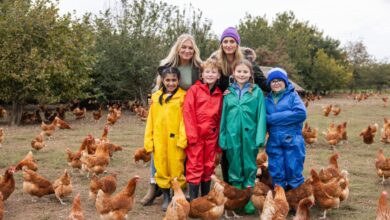
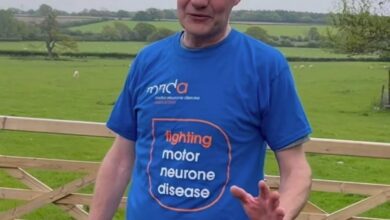
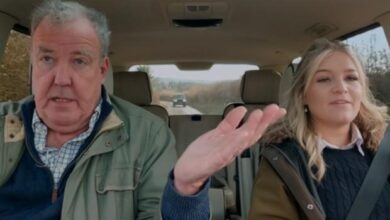
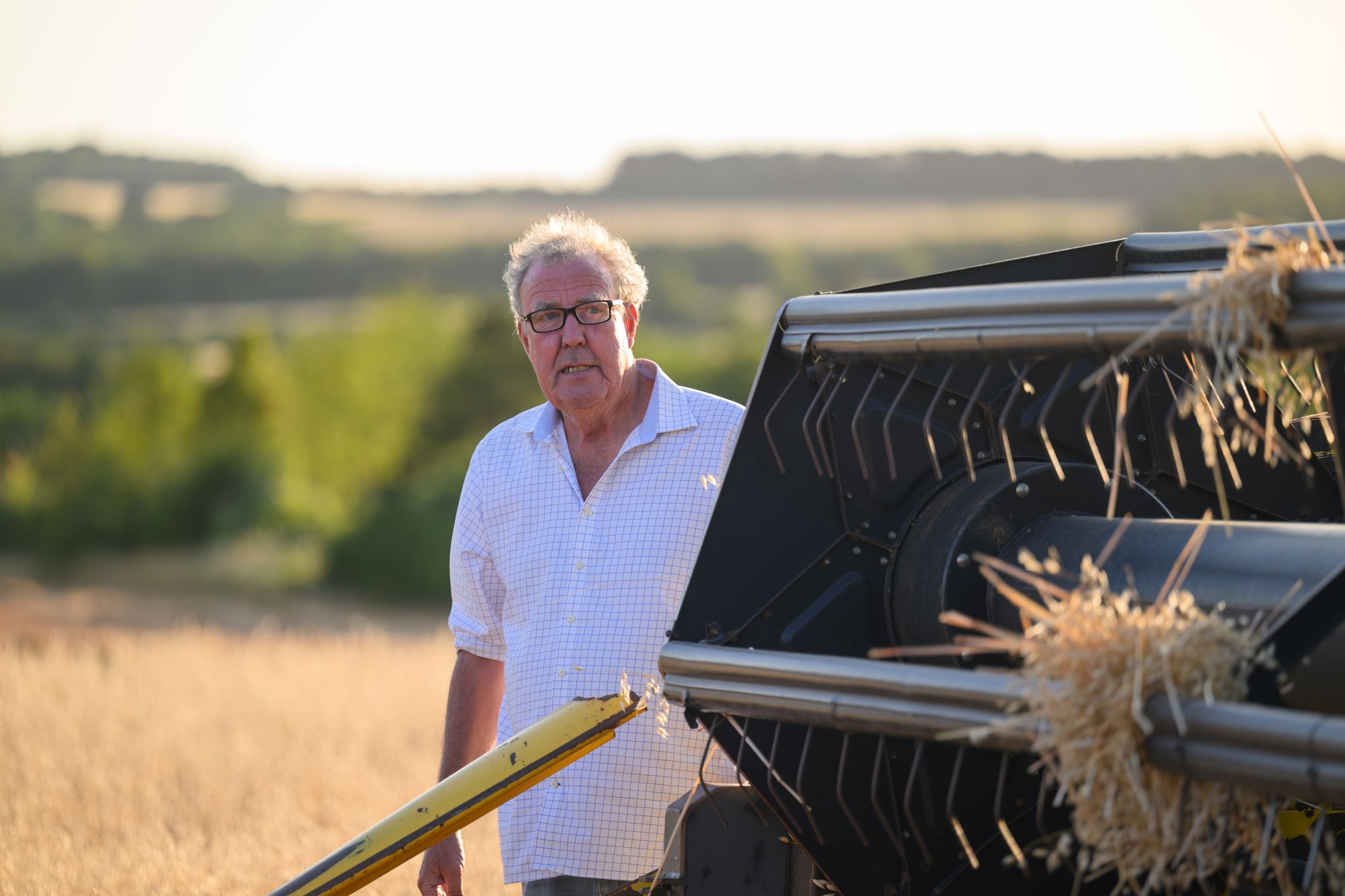
I’m back and not dead,” Jeremy Clarkson announces, at the outset of the new series of Clarkson’s Farm. “It was f***ing close though.” He’s talking about a blocked artery – which necessitated a hasty heart procedure back in 2024 – but he might as well be referring to his reputation. Time after time, Clarkson has pulled back from the brink, like Michael Caine slithering across the coach floor in The Italian Job. But are the British public being suckered by this avuncular agricultural Clarkson? Where has the provocateur gone? Is the series, now in its fifth season, nothing more than an exercise in “farmwashing”?
Clarkson’s big-money move to Amazon has proven a successful distraction from the numerous controversies that made him unpalatable at the BBC. For years he flirted with breaching the organisation’s impartiality guidelines: he referred to then prime minister Gordon Brown as a “one-eyed Scottish idiot”, called the Welsh language “a silly maypole around which a bunch of hotheads can get all nationalistic”, and repeatedly drew flak for his blasé attitude to road safety. Then, in 2015, he was suspended from Top Gear after an unprovoked physical disagreement with Oisin Tymon, a producer on the show, left Tymon with a bleeding lip. It was a brutal incident, for which he later made a public apology, that would have killed off all but the most indestructible of careers. But while it sparked the end of Clarkson’s era as a public broadcaster, it also offered Amazon the chance to snap him up, first for The Grand Tour and then for Clarkson’s Farm. As far as his accountants are concerned, it’s the best thing that ever happened to him.
The former, a bigger budget reimagining of Top Gear, ran its course after six seasons. But it is Clarkson’s Farm that has offered him the opportunity to properly reinvent himself. It is a personal project, not dissimilar to the PR genius of Ryan Reynolds and Rob McElhenney’s purchase of Wrexham and the Disney+ series, Welcome to Wrexham, that followed. It has allowed him to rehabilitate a reputation that was coloured by accusations of buffoonish bigotry. In 2011, the Indian High Commission complained about “tasteless jibes” made in a Top Gear special in the country. In 2014, he was forced to apologise for muttering a racial slur in an unaired episode. And, in the same year, he caused a diplomatic incident by driving a car in Argentina that appeared to be decorated with a provocative licence plate bearing the year of the Falklands war and an abbreviation of the islands (Clarkson and the BBC maintain that any reference was coincidental). For a while, it seemed like social mores were turning Clarkson into a dinosaur, undesirable to any major broadcaster.
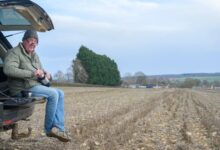
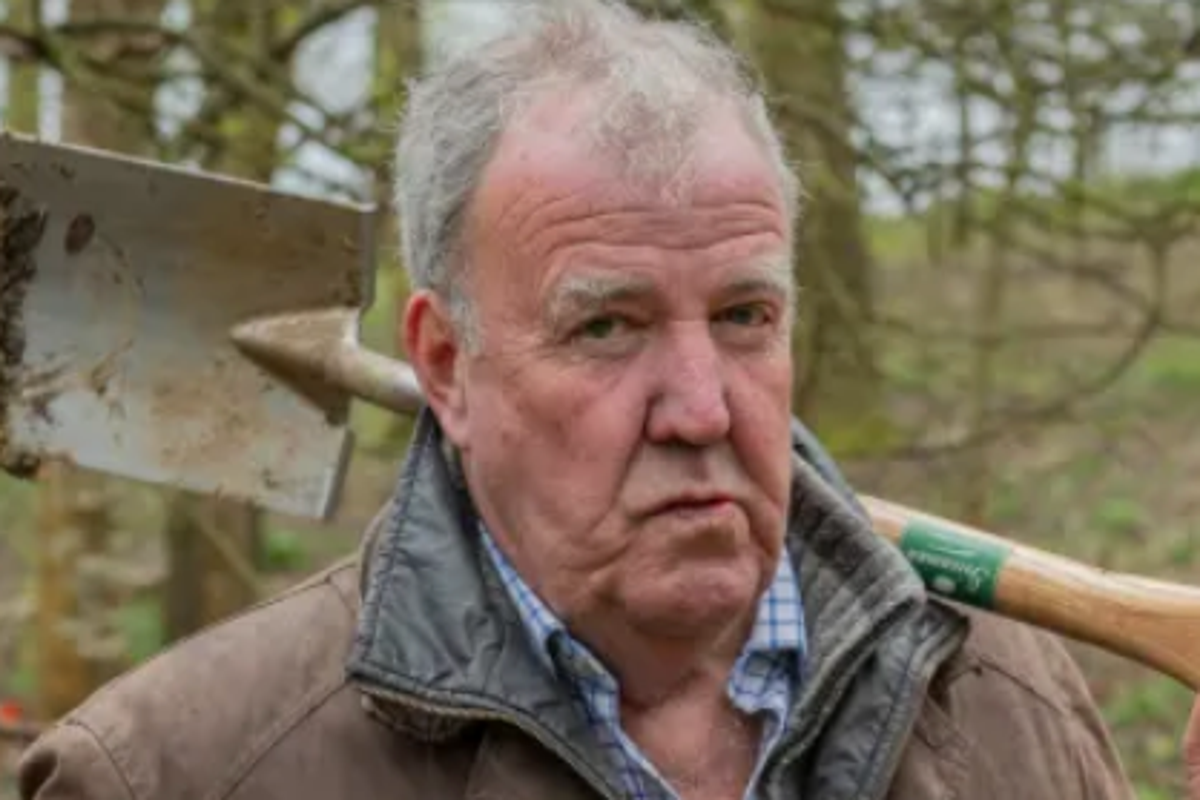
And yet Amazon, his new landlords, have stuck by him through thick and thin. “I hate her,” Clarkson wrote in The Sun in 2022, seven years after his move to the streamer, about Meghan Markle, the Duchess of Sussex. “At night … I lie there, grinding my teeth and dreaming of the day when she is made to parade naked through the streets of every town in Britain while the crowds chant, ‘Shame!’ and throw lumps of excrement at her.” These widely condemned comments for which, yet again, Clarkson said he was “profoundly sorry” were rumoured to have collapsed his lucrative deal with Amazon, but just as the show’s cancellation was anticipated, a fourth series was, instead, announced. Perhaps it had something to do with the fact that the show is comfortably Amazon’s most-watched UK series (as well as becoming a huge hit in China, which gives it a unique appeal to commissioners). It has played well across demographics (even though I find Clarkson boorish, I also think the show is very jolly), and Amazon’s solidarity proved that Clarkson had become too big to fail. It also presaged an unsettling shift in editorial policy within media organisations owned by tycoon Jeff Bezos, a transformation most apparent, recently, in the desecration of The Washington Post.
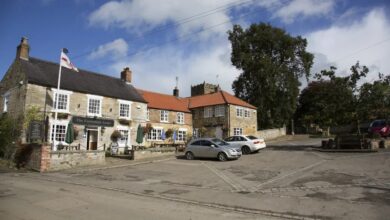
And so, here we are, four years later, watching the fifth instalment of a docuseries that shows no signs of hanging up its flat cap. In fact, Clarkson has used the show as a springboard for success in the hospitality sector (the popularity of his pub, The Farmer’s Dog, has been causing traffic chaos on the A40) and in lobbying. The fifth season of the show sees Clarkson leading an army of enraged farmers (aggrieved by the “astonishing attack on British farming” announced by chancellor Rachel Reeves) into central London. He is a very plausible populist, a natural rebel who has, finally, found a cause.