Gold Rush Enters a Critical Stretch as Tony Beets Pushes for 5,000 Ounces and Parker Fights to Hold Pace
The Season Is No Longer About Big Plans, but About What Can Still Be Saved
As the Yukon season pushes deeper toward winter, the margin for error is shrinking fast.
Every broken machine, every flooded cut, every hour lost to repairs or weather now carries extra weight. This is the stage of the mining year when good plans stop mattering unless they can still produce gold right now. For Tony Beets, that means squeezing every last ounce out of Paradise Hill and Indian River in a drive toward a record-breaking finish. For Parker Schnabel, it means holding together a far more fragile operation spread across multiple plants, multiple cuts, and multiple problems at once.
That is what gives this stretch of the season its energy.
Tony is pushing from a position of strength, but still needs the ground to hold. Parker is still producing, but the gap between what he needs and what he is actually getting remains deeply uncomfortable. And both men know the season will not give them many more chances to get it right.




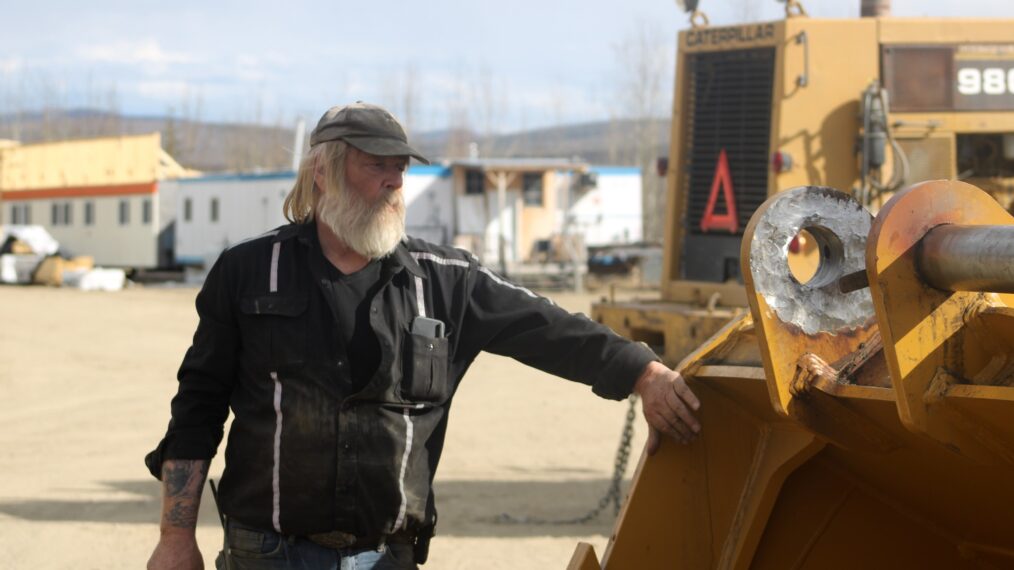
Tony Wants the 80 Pup to Keep Carrying the Season
At Paradise Hill, Tony Beets has one clear goal in sight: break through 5,000 ounces.
He is already close enough for the number to feel real, and that changes how he approaches the final weeks. The 80 Pup cut has become one of his strongest hopes, especially after it began delivering rich white channel pay. But the ground is difficult, wet, and vulnerable to the kind of late-season water problems that can shut a plan down even when the gold is there.
That is why Mike’s idea matters so much.
The proposal is to go back into a section of 80 Pup that had been stripped the previous year but then flooded and abandoned. If there is still pay there, it now lies below 20 feet of water. To reach it, the Beets crew would have to pull off a major engineering move: drain the flooded section into a new settling pond and make the ground workable again before the season closes.
Draining the Cut Becomes a Massive Engineering Job
Tony’s answer to the flooded 80 Pup is exactly the kind of big-field improvisation his operation is known for.
The plan requires the crew to build the biggest settling pond on Paradise Hill. That means stripping the perimeter of a 25-acre section, building a mile-long dyke that also doubles as a haul road, laying a 4,000-foot mega pipe from the flooded cut to the edge of the hill, and then pumping 10 million gallons of water through the line into the pond below. Tony wants it done in five days.
That kind of job is not just about moving water.
It is about buying access to gold before time runs out. If the cut can be drained and stabilized, the Beets family may recover another major run of white channel pay. If it cannot, one of Tony’s most promising late-season options disappears under the water again.
Tony’s New Equipment Is Built to Save Time
To speed up the earthmoving, Tony introduces two new belly scrapers, machines he clearly sees as late-season weapons.
They are built to move and spread material quickly while continuing to roll, making them ideal for building dykes and roads without wasting time. In a normal part of the season, they would already be useful. In the final stretch, when every delay hurts more, they become even more important. Tony is not only digging for gold here. He is trying to outrun the calendar with better logistics.
That is the theme of his whole late-season approach.
Do not simply mine the ground you already have. Rework the site itself until more ground becomes mineable.
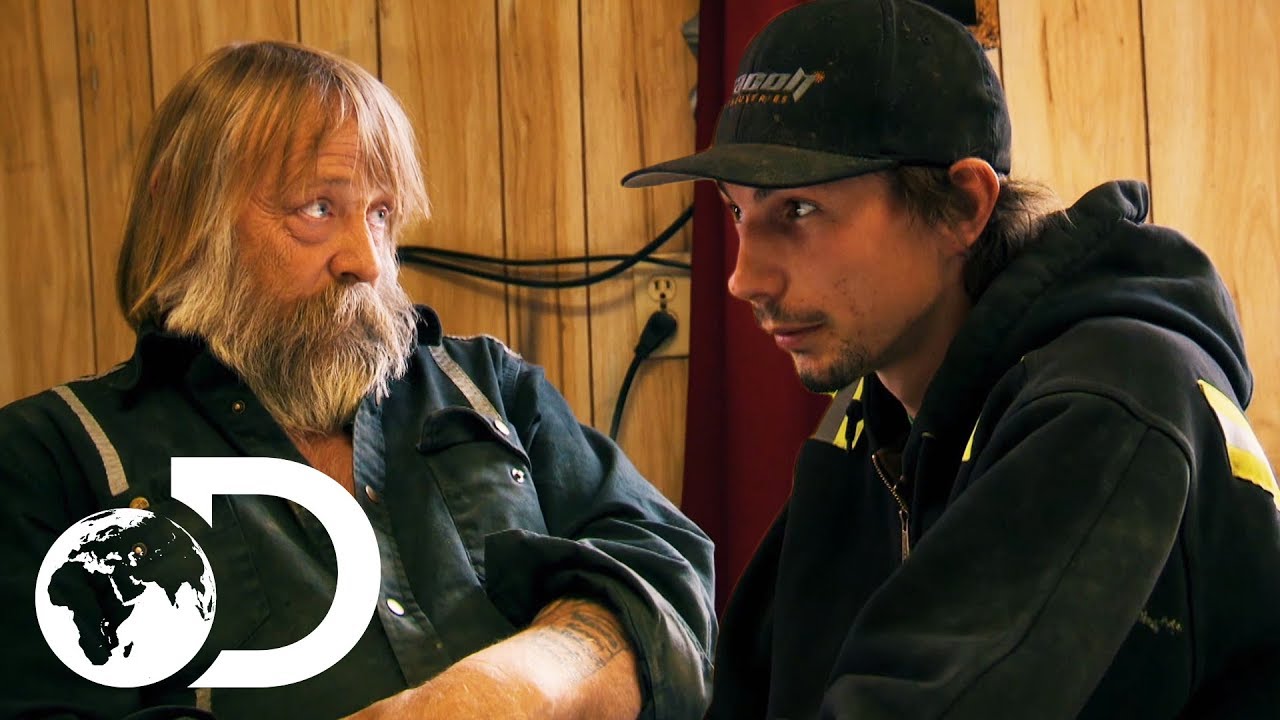
The Gold Weigh Proves Tony’s Main Operation Is Still Delivering
While the engineering work continues, the family gathers to weigh another week of 24/7 running from the Blue Cut expansion.
The result is strong: 450.36 ounces, worth roughly $766,000. That keeps Tony on track for the 5,000-ounce goal and confirms that the current operation is still productive even while the family is trying to open new opportunities elsewhere.
That matters because it keeps pressure off the expansion effort.
Tony does not need a miracle from the new drainage plan just to stay alive in the season. He already has a functioning operation. What he wants now is to turn a strong season into a dominant one.
Parker Leaves for Alaska and Hands Mitch a Critical Role
While Tony is trying to expand from strength, Parker Schnabel faces a different challenge.
He leaves his mine site in the middle of the season to explore a possible $3 million ground deal in Alaska, a move that immediately places extra pressure on the remaining leadership at Indian River. Mitch Blaschke becomes the man Parker trusts to keep things stable while he is gone. That responsibility is not small. Parker is already running behind his bigger ambitions, and he cannot afford to come back to chaos.
That is why the next problem matters so much.
It is not only about moving equipment. It is about whether the operation can keep making the right judgment calls without Parker physically present to enforce them.
Mitch and Tyson Clash Over How to Move Sluicifer
The biggest point of tension on Parker’s side begins with a wash plant move.
Parker wants Sluicifer placed low in the cut, close to where he believes it should run. Mitch disagrees. His instinct says the plant should sit higher, with more space around it, giving the crew more freedom and reducing the risk of later problems. Tyson, caught between Parker’s direct order and Mitch’s operational warning, initially sticks with Parker’s plan. Mitch reacts badly, frustrated not only by the setup itself but by the idea that the crew is blindly following instructions instead of adjusting to what the ground actually requires.
This is one of the most interesting management moments in the file.
Because it shows the difference between command and field judgment. Parker may own the sandbox, as Tyson puts it, but Mitch is the one standing there trying to prevent the sandbox from turning into trouble.
Tyson Changes Course and the Move Finally Works
To Tyson’s credit, the argument does not turn into a lasting standoff.
After Mitch apologizes for losing his temper, Tyson reconsiders and agrees to move the plant Mitch’s way. Once the super stacker is brought over and the setup is completed, Sluicifer is finally in what the crew believes is its best plant pad yet. The operation fires back up, and the whole site immediately feels more stable.
That small leadership reset matters.
Because it prevents a technical problem from becoming a camp problem. Late in the season, crews do not only need working equipment. They need decisions people can stand behind.
Bob Breaks Down at the Worst Possible Time
Even after Sluicifer is running again, Parker’s side still cannot catch a clean week.
Wash plant Bob goes down with a broken pre-wash conveyor drive shaft. The situation is especially frustrating because the plant had finally started to build momentum, and now another simple but serious mechanical failure has taken it offline. The location makes everything worse. The operations are spread out, the yard is far away, and every repair seems to require people living out of their trucks just to keep the system moving.
That is what makes Parker’s season feel so strained.
Even when the gold is there, the operation keeps losing time to the cost of keeping three distant plants alive at once.
Bill and Justin Again Have to Build a Fix in the Field
The repair on Bob is the kind of sequence that defines a season under pressure.
The father-and-son mechanic team of Bill and Justin first has to remove the broken drive shaft. Then they discover the replacement is wrong: too long, with keyway grooves that do not line up. Instead of retreating, they improvise. They flip the shaft, cut it down, grind the keyway to match the broken original, fit the bearings, seat the sprockets, and mount the whole system back into the pre-wash conveyor. If the fit is even slightly wrong, the chain will track out and the whole repair will fail again.
When the plant finally fires back up, it is more than just a repair.
It is another example of Parker’s season surviving only because the crew keeps inventing ways not to let one bad part ruin an entire week.
The Gold Totals Show Parker Is Still Producing, but Not Comfortably
At weigh-up, Parker’s crew still manages a respectable week.
Big Red delivers 98.5 ounces, Roxanne adds 168.2 ounces, and Bob nearly hits its mark with 299.0 ounces, just one ounce short of the 300-ounce benchmark Parker wanted from Sulphur Creek. The combined weekly total reaches 565.7 ounces, worth about $1.4 million, bringing the season total to 3,446.2 ounces.
Those are not bad numbers.
But the problem is that Parker no longer needs decent weeks. He needs exceptional ones, and he needs them consistently. He has already reduced his season target from 10,000 ounces to 8,000, and even that revised number still requires a much stronger finish than the operation has managed so far.
Roxanne Needs Constant Feeding and the Crew Can Feel the Strain
The long cut continues to expose another Parker problem: throughput depends on flawless hauling.
Mitch is trying to keep Roxanne fed around the clock, using giant A60 rock trucks to move more pay with a limited crew. The strategy works only if the trucks stay healthy and the operators avoid costly mistakes. But the workload is so intense that the risk of breakdown becomes part of the system itself. When one of the newer operators, James, suffers a serious truck failure, the cut immediately feels the impact.
That is the pattern Parker cannot escape.
To hit big numbers, he must run hard. But the harder he runs, the more likely it becomes that something expensive will break.
Taylor Matika Saves Another Operation From Going Dark
The broken A60 is not a minor issue.
The flange connecting the drive shaft to the rear wheels snaps, destroying brake lines and hydraulic hoses, leaving the truck loaded with 60 tons of pay and unable to dump properly. Taylor Matika’s repair strategy is to replace the damaged lines, install a new harness, bring in a fresh drive shaft, and get the truck moving again on front-wheel drive long enough to limp it back into service.
Once again, Parker’s operation survives because his mechanics are capable of doing difficult work quickly.
And once again, that survival comes at the cost of time, stress and the growing sense that every functioning week is being held together by repair work as much as by mining itself.
Tony’s Dredge Gives Hope, Then Collapses Into Another Crisis
Back at Indian River, Tony turns to one of his most unusual assets: his 85-year-old dredge.
The idea is simple. The dredge can bank roughly 80 ounces a week with a small crew and low operating cost, making it valuable late in the season when thawed pay is limited. Greg Mason and Tony maneuver the massive machine closer to the only thawed underwater pay available. At first, it seems to work. Then the dredge starts leaning. Overnight, one of the pontoons fills with water, and the whole machine begins to sink on one side.
That creates a new kind of emergency.
If the dredge takes on more water, it risks damaging the generator and shutting down Tony’s only running Indian River plant for the rest of the year.
The Dredge Is Saved, but the Season Still Takes Something Back
Greg and Mike lower the water level, pump out the pontoon, find the leak and patch it well enough to refloat the dredge.
For a moment, it looks like another narrow escape. But the inspection reveals something worse: deeper structural damage, cracked welds, failing wedges and a ring badly compromised. Kevin makes the hard call that there is neither enough time nor enough welding manpower to rebuild the dredge properly before the season ends. The dredge season is over.
That is a very Tony Beets kind of result.
He gets the machine back on the gold just long enough to prove it can still live, only to be told there is no realistic path to keep it alive through the remainder of the season.
Tony’s Final Weigh Shows Why He Still Looks Like the King of the Klondike
Even with all the setbacks, Tony still gets the kind of result Parker would love to have.
His final weekly cleanup from the Glory Hole pays 694.02 ounces, worth around $1.22 million, bringing the family total to 5,295 ounces and delivering their first $9 million season. The final week not only clears Tony’s 5,000-ounce goal. It smashes it.
That is the larger difference between the two operations right now.
Tony is also battling water, breakdowns and time. But when the dust settles, his gold weighs still come in like a man finishing from strength. Parker, by contrast, is still fighting to make his operation line up with the numbers he needs.
The Final Stretch Now Looks Like a Battle Between Momentum and Pressure
Taken together, the file tells the story of two very different late-season realities.
Tony Beets is still improvising, still repairing, still dragging old machines through another crisis, but the ounces keep arriving. Parker Schnabel is still pushing hard, still solving mechanical disasters, still managing multiple wash plants and strong weekly totals, but the overall shape of his season remains tense and unfinished.
That is what makes this stage of the season so compelling.
Tony is mining like a man trying to turn a strong year into a statement. Parker is mining like a man trying to stop a difficult year from falling short of what he believes it should still become. And with winter closing in, both know the ground is almost done giving them chances.