Gold Rush: Rick Ness Fights to Save His Season as Vegas Valley Delivers a Lifeline
Gold prices are soaring, but Rick Ness is running out of time
As gold prices climb from $2,600 at the start of the year to a record $3,600, most miners would expect to be in a position of strength. For Rick Ness, the reality is the opposite. Instead of riding the market at full speed, he finds himself under intense pressure, short on time, short on cash, and still trying to recover from one of the most damaging setbacks of his season.
With only four weeks left, Rick is not thinking about opportunity in abstract terms. He is thinking about survival. His stated target of 1,800 ounces suddenly feels less like a confident projection and more like a desperate line in the sand. The frustration is obvious. Gold is worth more than ever, but he is only now getting back to the one thing that matters most: running dirt through the plant and pulling gold out of the ground.
For a miner already stretched thin, timing could hardly be worse.
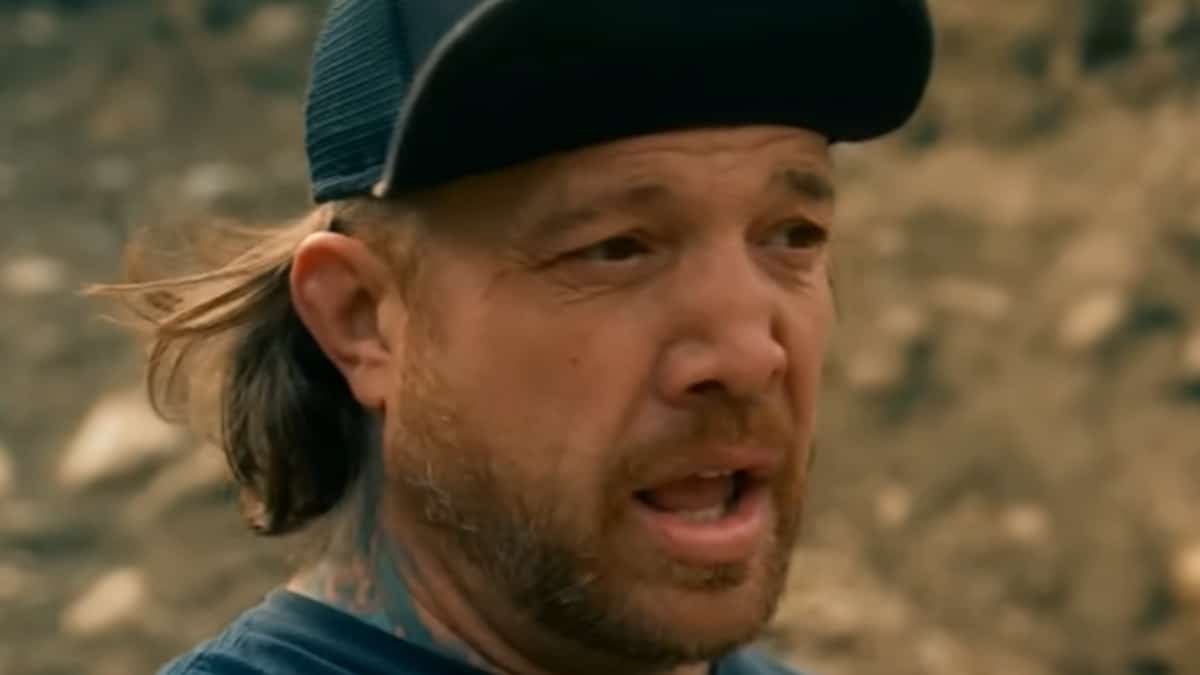



Valhalla nearly broke the season
The reason Rick finds himself in this position goes back to the decision that defined the middle of his year. Seven weeks earlier, he committed roughly $1 million to open the massive Valhalla cut, a move that carried enormous promise but even greater risk. The scale of the effort was immense. Crews stripped around 150 feet of overburden, burning through time, fuel, manpower, and money in the hope that the ground below would finally justify the investment.
It did not.
Instead of hitting the kind of paydirt that could rescue the season, Rick found little more than clay. There was no payoff waiting beneath the effort. The result was devastating, not just financially, but psychologically. By the time Valhalla failed, Rick was staring at the possibility that the entire company could be pushed to the edge. Other miners could see the pressure building, and some were already circling, sensing weakness. Offers to buy him out were no longer hypothetical.
Rick, however, was not ready to walk away.
A return to Vegas Valley offers one more chance
With Valhalla no longer viable, Rick made the decision to retreat to the one place that had delivered for him before: Vegas Valley. It was not new ground. It was familiar, proven, and deeply important. The 200-foot-deep cut had already saved his season once, and he believed it might do so again.
That belief was not based on blind optimism. Vegas Valley had a track record. Rick knew the ground there could produce serious numbers, and he was chasing the possibility of a 350-ounce week if everything finally went right. That target mattered, because with only weeks remaining, he no longer had the luxury of building momentum slowly. He needed immediate production. He needed a strong plant run. Most of all, he needed gold back on the board after nearly two months without meaningful recovery.
By the time the crew began stockpiling pay and preparing Monster Red, the mood shifted from frustration to cautious urgency. No one was pretending the season had been fixed. But for the first time in a long while, there was something concrete to work with.\

Monster Red finally comes back to life
The restart of Monster Red carries more emotional weight than a normal plant start. It has been almost two months since Rick’s crew has seen gold moving through the system. In mining terms, that is not just a dry spell. It is the kind of gap that can put the entire operation under severe financial strain.
When the first bucket of Vegas Valley pay goes into the plant, it feels less like routine work and more like a reset. Rick and the crew know exactly what is at stake. Cash has already gone out the door. Bills still need to be paid. Gold bonuses, morale, and the season itself all depend on whether the plant can stay running and whether the ground can produce fast enough to matter.
The early signs are encouraging. Monster Red appears steady. The stockpile is solid. The team finally has yardage moving. And after weeks of frustration, that alone is enough to lift the mood. Rick does not try to hide what the moment means to him. He says openly that they need the gold, that the stress has been building for everyone, and that simply getting back to sluicing again feels like the first real positive step in weeks.
Just as momentum builds, the equipment begins to fail again
But Gold Rush rarely allows any success to come cleanly.
After only two days of running, Rick’s operation is hit again by the kind of mechanical trouble that has defined so much of his season. One rock truck goes down with a flat tire. Almost immediately after that, another begins making worrying noises in the driveline. Within moments, Rick is forced to shut the wash plant down again because the haulage system feeding Monster Red has effectively collapsed.
It is exactly the kind of setback the crew can least afford. Downtime is no longer inconvenient. It is dangerous. Every lost hour now pushes the 1,800-ounce target further away and gives winter more time to close in.
The driveline problem turns out to be serious. It is the crew’s third broken driveshaft of the season, another reminder that not only are the men exhausted, but the machines are wearing down with them. At the same time, the flat tire eats into their remaining spare capacity. Suddenly, a team that had just begun to feel momentum again is back in crisis mode.
A skeleton crew keeps the season alive
What follows is less dramatic than a gold weigh but just as important. Rick’s small crew does what miners always have to do when the season is slipping away: they improvise, fix what they can, and get back to work. Mechanic Ryan tackles the driveline while the crew deals with the tire. There is no extra margin, no deep bench of spare parts, and no sense that someone else will solve it for them.
That is one of the defining realities of Rick’s season. This is not an operation cushioned by huge reserves. When something breaks, the impact is immediate. If the plant is down, gold stops. If gold stops, the numbers do not just look worse at weigh-in. The whole company feels it.
Eventually, the repairs hold. One truck is brought back online. Then the second issue is handled. The crew manages to restore enough functionality to get Monster Red back into action. It costs them two more hours they badly needed, but at least the operation is running again. Rick knows the margin is shrinking. He says it plainly: they have to tighten up and be careful the rest of the way, because any more lost time could finish their chances of reaching the goal.
Vegas Valley delivers, but not enough to end the pressure
When weigh day finally arrives, the numbers matter more than usual. Rick is not looking for a symbolic result. He needs evidence that the pivot back to Vegas Valley was the correct call and that the cut can still carry the season.
The result is meaningful. The cleanup delivers 205.4 ounces, worth just over $730,000. It is a strong number in isolation, especially after such a long gold drought, and no one around the table pretends otherwise. Rick himself admits that it is hard to be upset at a result like that. It puts real money back into the operation and proves that Vegas Valley is still genuine pay.
But the number also comes with an uncomfortable truth. It is not 350 ounces. It is not the kind of week that dramatically changes the math. It helps, but it does not erase the ground lost at Valhalla or the weeks with no sluicing. Rick’s season total rises to 643.84 ounces, but the 1,800-ounce target remains a steep climb with winter getting closer.
Rick Ness is still fighting, even if the finish looks brutal
That tension is what gives this stage of Rick’s season its emotional weight. On one hand, he is back on gold. Vegas Valley is still producing. Monster Red is alive again. The team has proven it can claw its way back from another breakdown and still post a meaningful cleanup. Those are all real positives.
On the other hand, the pressure has not disappeared. The target remains high, the margin remains thin, and the weeks left to change the outcome are disappearing fast. Even Rick admits this finish is going to be rough. But what stands out is that he has not lost belief. He still tells the crew that he knows they can do it. He still frames the fight in terms of effort, not surrender. And when the cleanup comes in, he takes time to thank the team directly, making it clear that without them, none of it happens.
That may be the clearest picture of Rick Ness at this point in the season: battered, short on time, underfunded compared to the scale of the challenge, but still unwilling to walk away.
Vegas Valley may not save everything, but it has saved the fight
The return to Vegas Valley does not magically fix Rick’s season. It does something more important. It gives him a path. After eight weeks without sluicing and more than a million dollars effectively drained away, that matters.
The 205.4-ounce cleanup is not the finish line Rick wanted, but it is proof that the operation still has life. Vegas Valley has once again become the ground keeping his hopes alive. Whether it can deliver enough in the closing weeks to push him anywhere near 1,800 ounces is still uncertain.
What is certain is that Rick Ness is not done. The gold is moving again. The plant is running. And for the first time in a long while, the season is no longer defined only by what he lost at Valhalla. It is being shaped, once again, by what he can still pull out of Vegas Valley before time runs out.