Kaleb Cooper Faces Tough Moment on Clarkson’s Farm — Jeremy Reveals What Really Happened

Jeremy Clarkson Says Kaleb Cooper ‘Took It Like a Man’ After On-Farm Dressing Down
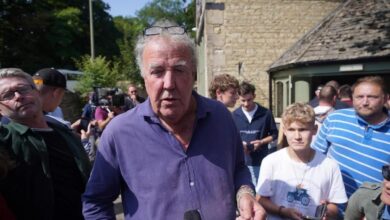
Jeremy Clarkson has revealed that Kaleb Cooper, the fan-favourite breakout star of Clarkson’s Farm, recently received a firm telling-off — and handled it “like a man”.
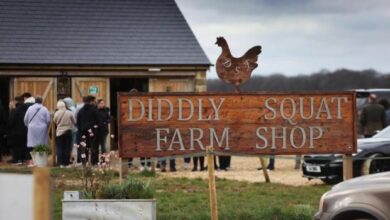
The incident unfolded at Diddly Squat Farm earlier this year and has since become the subject of Clarkson’s latest column, offering a behind-the-scenes look at the challenges of balancing farming needs with wildlife protection.

Clarkson Reflects on Running His Own Farm
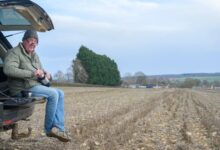
Clarkson, who bought his 1,000-acre Oxfordshire farm in 2008, took over full farming duties in 2019 after the previous tenant retired. His leap into agriculture — and the many missteps that followed — became the backbone of the hugely popular Prime Video series Clarkson’s Farm.
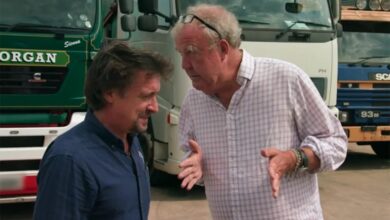
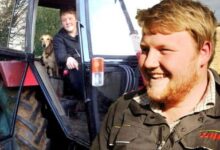
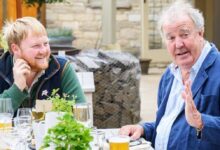
Alongside partner Lisa Hogan and farm consultant Charlie Ireland, viewers have watched Clarkson grapple with regulations, livestock, bureaucracy, and the relentless British weather. But it is Kaleb Cooper, the young and sharply opinionated tractor driver, who has become the show’s beating heart. His no-nonsense expertise has repeatedly kept Clarkson on track, even as the presenter insists on trying things his own way.
The Bird Expert, the Grass Field, and the Skylark Controversy
Writing in The Sunday Times Magazine, Clarkson explained that the latest tension on the farm emerged over efforts to improve local bird habitats.
To support wildlife, Clarkson says he planted wildflower strips, sowed bird-friendly crops, and even experimented with new biodiversity measures — only to realise that neighbouring farms were able to do far more. Curious whether Diddly Squat could make additional improvements, Clarkson consulted Kaleb, who bluntly insisted: “No.”
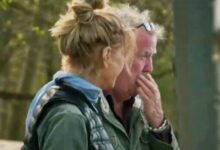
Enter Hannah Bourne-Taylor, a bird expert and parish councillor invited to evaluate the farm’s ecological progress. According to Clarkson, she arrived one June morning to find Kaleb cutting grass for hay — and was horrified.
“He’s mincing all the baby skylarks,” she told Clarkson, explaining that nests hidden in the grass contained young birds too small to fly.
Kaleb, Clarkson says, “took his b*****ing like a man”, but defended his timing.
If he waited any longer, the grass would have lost nutritional value and become useless as winter feed for the cattle.
Clarkson agreed to delay mowing the next field as an experiment — and Kaleb, he admits, was proved right. The hay quality deteriorated dramatically.
“Next spring,” Clarkson joked, “our cows are going to look like they’ve been on Mounjaro.”

Weather, Wildflowers, and the Limits of Eco-Farming
Clarkson also acknowledged that his efforts to enhance bird habitats have struggled against unpredictable weather. Wildflower borders and “things with Latin names” he planted along hedgerows failed to take root during drought conditions.
Still, he is expanding his efforts.
The presenter says he has constructed additional ponds around the farm after observing how reluctant many birds are to travel far from their nesting areas.
He cites one example: yellowhammers living in a hedge near his house.
“I’ve never seen them go even as far as 100 metres from it,” he writes.
“I’m definitely going to make them a pond.”
A Glimpse Into the Realities of Sustainable Farming
The exchange between Kaleb and Hannah captures the ongoing challenge at the heart of Clarkson’s Farm: the collision between environmental ideals and agricultural practicality.
Clarkson’s willingness to share these tensions publicly — and Kaleb’s refusal to compromise on animal welfare and feed quality — continue to highlight the complexities of modern British farming.
While fans enjoy the humour and chaos of the series, episodes like this reveal something more grounded: the difficult decisions farmers make between wildlife preservation, weather conditions, livestock needs, and economic survival.