Jeremy Clarkson Warns UK Farmers Face Bankruptcy — and Blames Ed Miliband’s Green Agenda

Jeremy Clarkson Warns of Farm Bankruptcy Fears — and Blames Ed Miliband
A Dire Warning from the Cotswolds
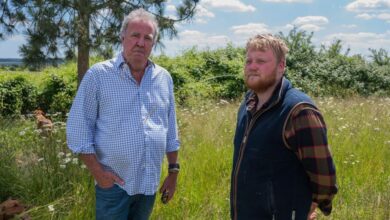
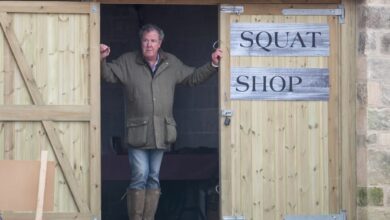
Jeremy Clarkson has sounded the alarm over what he describes as a looming crisis for British farmers, including himself. The Clarkson’s Farm star has accused Labour’s Energy Secretary Ed Miliband of “carpet-bombing the countryside” with solar farms and pushing policies that could drive agricultural businesses like his Diddly Squat Farm to the brink of bankruptcy.
Writing in his column for The Sun, Clarkson warned that the government’s pursuit of green energy targets was turning fertile farmland into solar fields, leaving the UK increasingly dependent on imported food.
“Thousands and thousands of acres of farmland which was formerly used for growing food,” Clarkson wrote, “is now being used to grow electricity.”

“Bankrupt the Farmers, Grow Electricity”
Clarkson, who has spent the past several years documenting the struggles of farming life on his hit Amazon Prime series Clarkson’s Farm, did not hold back in his criticism of the Labour government’s environmental policies.


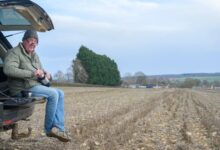

He claimed that the shift from agriculture to solar development represented a “Labourite view of the world” — one that sacrifices domestic farming for climate symbolism.
“Of course, this is fine if you have a Labourite view of the world,” he wrote. “Bankrupt the farmers, use their land to achieve Net Zero, and import all the food you need from abroad. I think it’s an idiotic plan, personally, but I’m not in charge. They are.”
The remark was part of a wider critique of Miliband’s environmental agenda, which Clarkson argues is detached from the economic realities faced by rural communities.
Green Taxes and Higher Prices
The outspoken presenter went on to condemn Labour’s proposed green tax on shipping companies, which he says will drive up the cost of imported goods — including essential food items.
According to Clarkson, the new tax will ultimately burden ordinary consumers by forcing companies to raise prices to cover higher operating costs. “Now, if you are a left-wing vegetablist,” he wrote, “you probably think this makes sense. Hammer the capitalists. Save the whale. From the river to the sea, etc.”
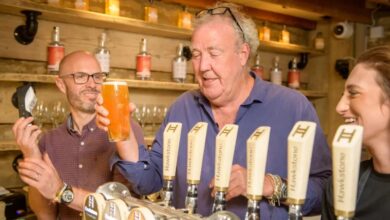
Clarkson claims he is already feeling the financial impact of these rising costs. Even for his own pub, The Farmer’s Dog in Oxfordshire, he said food inflation is making operations increasingly difficult.
“Food inflation is a huge worry, even now,” he said. “I was charged £50 for a leg of lamb the other day.”
“The Poorest Will No Longer Be Able to Afford to Eat”
Clarkson concluded his fiery column with a stark warning about the future of food affordability in the UK. He argued that if Labour continues prioritizing environmental optics over agricultural sustainability, the country could soon face a serious food security crisis.
“We’re going to quickly reach a point where the poorest in society will no longer be able to afford to eat,” he wrote.
“And it’s no good saying: ‘Well, let’s grow the food we need at home,’ because that fool Miliband has carpet-bombed the countryside with his solar farms.”
The claim reflects a growing concern among British farmers that the rapid expansion of renewable infrastructure is displacing valuable farmland — a tension that has surfaced repeatedly since the government began pushing for renewable energy independence.
A Farmer’s Frustration
Clarkson’s frustration stems from more than politics. Over the last few years, his Clarkson’s Farm series has revealed just how difficult it is to run a farm in modern Britain — where profit margins are slim, regulations are heavy, and unpredictable weather or policy shifts can make or break an entire season.
While the show has delivered plenty of humor, it has also showcased a darker truth about the UK’s agricultural system: small farms are struggling to survive. Between soaring fertilizer costs, restrictive environmental rules, and dwindling government support, many rural business owners share Clarkson’s sense of unease about the future.

The Battle Over Land Use
Solar farms have become a flashpoint in Britain’s ongoing debate over how to balance renewable energy targets with food production. Supporters argue that the UK must reduce its dependence on fossil fuels and that underused or less-productive land can be repurposed for clean energy.
Critics like Clarkson, however, warn that the push has gone too far — turning productive soil into an energy commodity while pushing farmers out of business.
In an interview earlier this year, Clarkson said that while he supports renewable energy “in principle,” he believes policymakers are “picking the wrong battles.” He suggested that small-scale solar or rooftop installations would make more sense than covering acres of farmland with panels.
A Lighter Note: Pub Problems and Toilet Mysteries
Despite the serious tone of his column, Clarkson hasn’t lost his trademark humor. In a separate video update, the Top Gear legend shared what he called his “biggest pet peeve” about running his pub, The Farmer’s Dog — and, predictably, it had nothing to do with politics.
“The thing that baffles me most of all,” he said, “is people who go to the lavatory, sit on it, and somehow miss the bowl. I cannot understand how they’re doing it!”
He went on to joke about the legal limitations of installing surveillance, saying, “Apparently, you’re not allowed to put CCTV in the cubicle, so we’ll never know. But how have you got it all over the floor and up the walls?”
Even amid his exasperation, Clarkson’s humor remains intact — a trait that has helped turn him from TV presenter to one of the UK’s most recognizable farming advocates.
The Uncertain Road Ahead
Whether his warnings will resonate in Westminster remains to be seen. But for Clarkson and thousands of farmers across Britain, the challenges are very real.
With rising costs, new taxes, and growing pressure from renewable energy developers, the countryside that once fed the nation could soon be transformed into something entirely different.
As Clarkson put it: “They’re growing electricity now instead of food.”
And if he’s right, the question isn’t just about the fate of Diddly Squat Farm — but the future of British farming itself.