You Won’t Believe Jeremy Clarkson’s Multi-Million Pound Farm – Find Out What’s Hidden Inside!

From Supercars to Soil: The Real Business Behind Diddly Squat
What if the loudest petrolhead on British television has quietly built one of the smartest rural business set-ups in the country—using a farm as the front door? Diddly Squat is often treated as a comedy about mud, machinery and misfortune. Look closer and it reads like a tightly connected portfolio: land, media, retail, hospitality, and branded consumer products—each feeding the next.

The 2008 Move People Didn’t Understand
While much of the country was focused on the financial crash, Clarkson bought a large block of Cotswolds farmland. To casual observers it looked eccentric—another rich celebrity hobby. In practice, it positioned him in an asset class that tends to hold value well over time. Even before a single crop is sold, the land itself becomes the foundation: collateral, long-term security, and a base for everything that followed.
The “£144 Profit” That Misled Everyone
That infamous first-year profit figure became a punchline—until you realise the farm’s books don’t tell the whole story. The farm’s output is not only produce; it is also content. The agricultural operation may run tight margins, but the show built around it is an entirely different revenue engine. The breakdowns, the weather, the learning curve, the clashes with rules—those are not side plots. They are the product.
The Farm as a Film Set
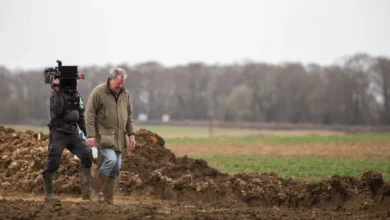
The key insight is simple: Diddly Squat doesn’t have to succeed like a normal farm to be valuable. It has to be authentic enough to carry a narrative. That authenticity—real people, real pressures, real setbacks—creates a format that keeps viewers returning. In effect, the farm becomes a working set where the “business of farming” and the “business of filming” overlap.
How a Potato Problem Became a Retail Powerhouse
The farm shop began as a solution to a basic issue: small batches of produce are hard to place with supermarkets. So the direct-to-customer model took over. Once visitors started coming in volume, the shop stopped being a side hustle and became a destination—part farm gate, part brand experience, part tourist magnet. It doesn’t just sell food; it sells the feeling of being “in Clarkson’s Farm,” and that is a higher-margin proposition.
Planning Battles as Free Marketing
The repeated disputes with local authorities are commonly framed as a rural David-versus-Goliath storyline. Business-wise, they also function as continuous publicity: every setback becomes a new reason for press coverage, online debate, and fresh audience attention. Even when an idea is blocked, the visibility often rises—keeping the brand in public conversation and pushing more visitors toward the shop, the pub, and the products.
Hawkstone: The Brand That Escaped the Screen
The leap from “barley” to “beer” turned the Diddly Squat story into a scalable consumer brand. Unlike farming margins, packaged drinks can expand rapidly through distribution, marketing, and repeat purchase. The farm contributes to the narrative and, in part, the ingredients; the real financial lift comes from brand recognition and wide availability. Once it’s stocked broadly, each new season of the show becomes an advertising cycle without looking like one.
The Farmer’s Dog: A Venue That Sells More Than Meals
The pub is often misunderstood as a restaurant project. It is closer to a showroom: a place that reinforces the “British produce” message, creates another location for filming, and—crucially—moves Clarkson-linked products at scale. Even if the kitchen economics are tough, the venue can still succeed strategically by converting footfall into higher-margin sales and strengthening the wider ecosystem.
Kaleb Cooper: The Asset You Can’t Replace
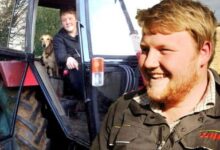
Kaleb is not simply staff; he is core value. He provides credibility, local knowledge, and a grounded counterweight to Clarkson’s celebrity persona. Their dynamic is central to why the show works. From a business perspective, Kaleb is a key pillar of the product’s authenticity. The more believable the world feels, the more resilient the brand becomes.
The 16-Mile Rule That Became a Selling Point
Restrictions on sourcing could have crushed the shop’s range. Instead, the limitation became positioning: “local, traceable, community-backed.” That forces a supply network of nearby producers—and turns the shop into an outlet for the wider farming area. What was meant as a constraint became differentiation, and differentiation is what drives queues.
Why Most Farms Can’t Copy This Model
Plenty of farms could open a shop or sell direct. Very few have celebrity reach, global streaming distribution, and a built-in audience ready to travel. Clarkson’s advantage is “attention capital” accumulated over decades—then deployed into physical ventures that normal operators could not scale at the same speed or visibility.
The Ecosystem Is the Point
Look at Diddly Squat as a system, not a farm:
- Land anchors long-term value and legitimacy
- The show amplifies attention worldwide
- The shop converts attention into footfall and sales
- The beer scales beyond the postcode
- The pub extends the visitor spend and the story world
- Local suppliers strengthen the “real farming” credibility