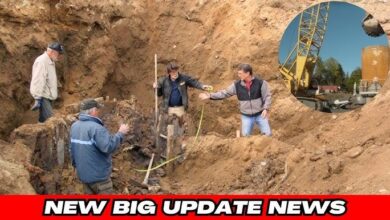
Silver in the Dirt: Oak Island’s Newest Discovery Could Change Everything
Oak Island has always been one of the world’s great unsolved mysteries. For more than two centuries, treasure hunters have dug, drilled, and searched for answers beneath its soil. But now, a new discovery — a cut silver coin buried deep in Lot 5 — may finally offer a crucial clue.
The Discovery on Lot 5
The find began in an unassuming pile of dirt. A leftover mound from a dig last year had been dumped on Lot 5, near a strange round stone feature by the shore. No one expected much — until Fiona Steele and Peter Fornetti began scanning it with their metal detectors.
The beeping was strong. They dug in and found something remarkable: a small piece of silver, cleanly cut. Not broken by time, but deliberately sliced. Fiona held it up and said, “If this is a cut coin, it could be Spanish.”
The piece looked like part of an old silver shilling — heavy, well-made, and ancient.




A Link to the Past
Back in the day, people often cut coins into halves or quarters to make small change. This particular coin fragment appeared to be one of those — a practice common in the 1600s and 1700s.
At first, the team thought it might be Spanish, possibly part of a pirate’s loot or a soldier’s pay. But when archaeologist Laird Niven and metals expert Emma Culligan analyzed it, the truth turned out to be even more intriguing.
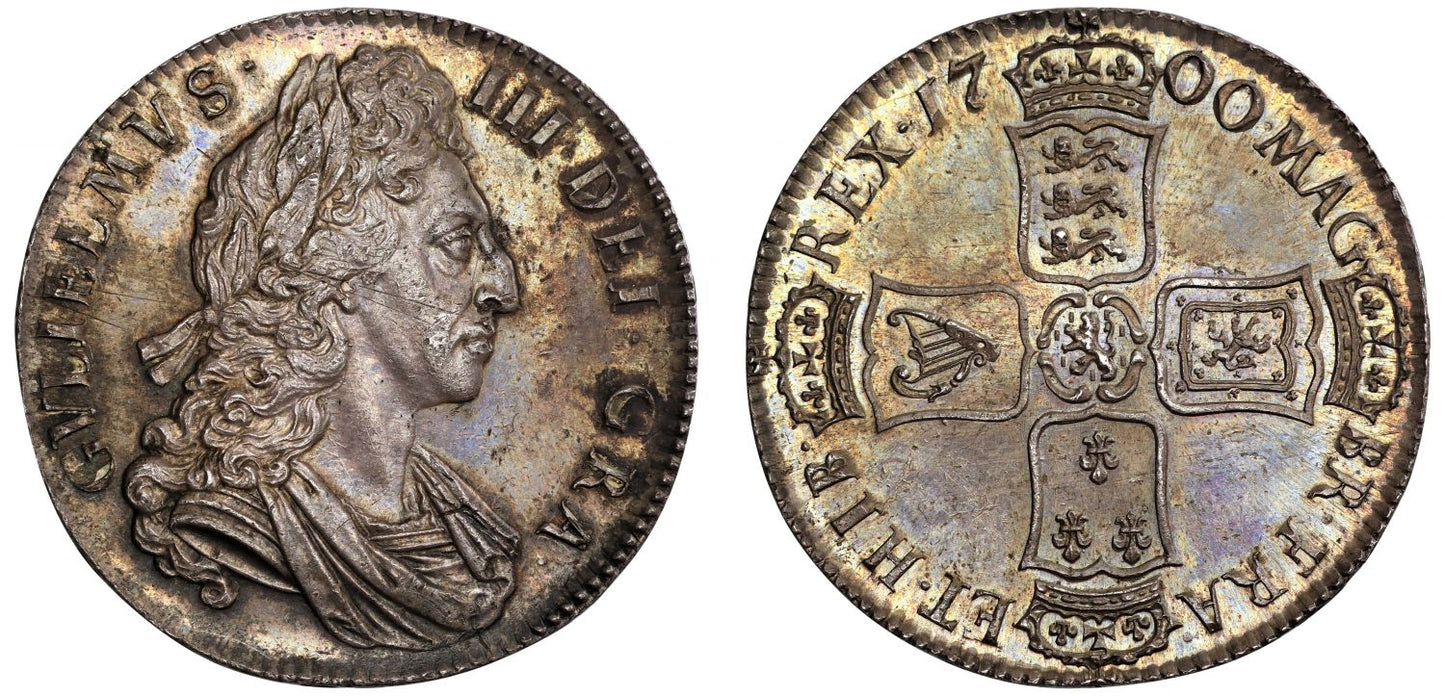
Using elemental scanning technology, Emma confirmed that the coin was primarily silver with traces of lead. Under magnification, faint markings appeared — “GV LY” — along with two small triangle symbols. Further comparison revealed its identity: a William III shilling from the 1690s.
What the Coin Means
This wasn’t just another lost artifact. It suggested that people were active on Lot 5 decades earlier than most records show.
The location — near stone foundations and 17th-century tools — hinted at organized work on the island long before the modern treasure hunts began. Some historians have theorized that British troops might have used Oak Island as a secret outpost in the late 1600s, possibly linked to treasure recovery efforts following the shipwrecks of that era.
This new coin could support that theory — evidence of British presence and payment, long buried beneath the soil.
Wood, Tools, and Clues Beneath the Ground
But the coin was only part of the story. The team also unearthed ancient timbers and fragments of iron tools buried nearby.
Tests revealed that some of the wood dated back to the early 1700s, aligning with early accounts of the “Money Pit.” The presence of mortar similar to that found in other dig sites across Oak Island suggests a shared origin — perhaps part of a larger construction project.
As Rick Lagina put it, “Every find adds another piece to the puzzle. We’re not just chasing treasure — we’re chasing truth.”

Digging Deeper: The Search for Shaft 2
Encouraged by these results, the team turned their attention to a nearby area where early maps suggested another hidden shaft — Shaft 2, believed to be just 14 feet from the original Money Pit.
The dig was tough. Heavy machinery pulled up rock, dirt, and eventually thick beams of old timber. These were not random logs; they were clearly part of a constructed shaft. Some pieces were blackened by age and moisture, and others had no nails — indicating pre-industrial craftsmanship.
Then came the breakthrough: an iron rose-head spike, hand-forged and consistent with those made in the late 1700s or early 1800s. This tiny artifact confirmed the shaft’s historical period and supported the team’s belief that they were close — very close — to the original treasure site.
History Resurfaces
The deeper they dug, the more pieces emerged: wooden beams, dark boards, and carefully fitted planks. The team began to map the structure, matching its layout to early treasure-hunting records.
Everything lined up. The timbers’ position and the shaft’s direction matched 19th-century notes describing the Money Pit’s nearby tunnels. If confirmed, this would be one of Oak Island’s most important discoveries in decades.
As Marty Lagina remarked, “It’s not gold yet, but it’s something even better — proof that we’re digging in the right place.”
The Bigger Picture: Connecting the Dots
These discoveries — from the William III shilling to the ancient timbers — paint a broader picture of Oak Island’s past. They suggest organized, skilled work long before modern treasure hunters arrived.
Could the island have been used by British soldiers to hide their wealth? Or perhaps by secretive groups like the Knights Templar, as some have long believed?
Whatever the truth, each clue strengthens the case that Oak Island was once a hub of deliberate activity, not random myth.
Science Meets Mystery
The team’s use of advanced scanning technology, radiocarbon dating, and elemental analysis has elevated Oak Island exploration into modern archaeology.
For the first time, they’re combining scientific precision with centuries of folklore, uncovering a timeline that connects 17th-century tools, 18th-century timbers, and 19th-century legends — all in one place.
14 Feet to the Truth
The excavation now focuses on verifying the age of the wood and matching it to the earliest search shafts. If the results point to the early 1800s, it could confirm the rediscovery of Shaft 2 — and place the Money Pit within reach.
It’s not the final answer, but it’s closer than anyone has been in 200 years.
A Mystery That Endures
From the silver shilling to the dark timbers of a buried shaft, each find reminds us why Oak Island continues to fascinate.
The island’s secrets may still lie buried, but for Rick, Marty, and their team, the journey is far from over. Every discovery — no matter how small — brings them one step closer to unraveling the world’s most enduring mystery.
And as Rick Lagina says, standing over the dig site, “It’s not about the treasure. It’s about the truth buried beneath it.”