Metal Detection and Promising Discoveries
The exploration of Smith’s Cove began with metal detection, led by Gary Drayton, a seasoned expert in unearthing metallic artifacts, alongside Alex Lagina. Using a systematic zigzagging method along the shoreline—an area where tides could trap objects—they uncovered several metallic items hinting at buried artifacts.
One of the standout discoveries was a heavily encrusted metal object buried four feet underground, later identified as a cast-iron stove door. While seemingly mundane, its intricate starburst design drew attention due to its similarity to a medieval button previously found on Lot 5, suggesting recurring design elements that could point to a distinct group or era of activity on the island.
—
Laboratory Analysis and Historical Context
Archaeometallurgist Emma Culligan analyzed the stove door, revealing its manganese content placed its origin in the mid-1800s. This timeframe aligns with documented searcher activities on Oak Island, blending the narratives of treasure hunters with the possibility of earlier inhabitants or visitors.




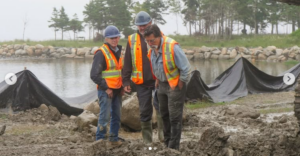
In addition, wooden boards and modern nails unearthed at Smith’s Cove were linked to the Restall family, who conducted excavations in the 1960s. These remnants marked the location of a vertical shaft reportedly connected to the manmade flood tunnel believed to guard the Money Pit.
—
Artifacts with Potentially Ancient Origins
The discovery of a broken iron spike with a rounded beveled point added to the intrigue. While its origins remain uncertain, its shape suggests it might predate modern times. If proven ancient, the spike could provide a direct connection to Oak Island’s elusive original builders, fueling speculation about a deeper historical narrative.
The recurring starburst design on the stove door also resonated with theories linking Oak Island to the Knights Templar. While speculative, artifacts like the 14th-century lead cross found in earlier seasons strengthen the possibility of Templar influence. Validating such connections could fundamentally reshape the understanding of the island’s history.
—
Smith’s Cove: A Repository of History
The findings at Smith’s Cove demonstrate the layered complexity of Oak Island’s excavations. Discoveries like the stove door provide valuable chronological anchors, differentiating between modern searcher activities and potentially older, original constructions.
Artifacts recovered from the Restall shaft, including wooden boards and nails, validate historical records while highlighting the challenges faced by past explorers. These remnants represent progress in pinpointing critical locations such as the flood tunnel and vertical shaft.
—
Natural Forces and the Challenges of Excavation
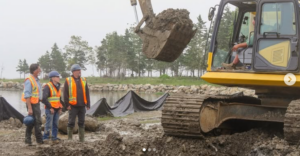
The role of natural forces in shaping the artifact landscape at Smith’s Cove cannot be overstated. By targeting areas where tides may have trapped objects, the team effectively adapted to the island’s geology and hydrology. However, the challenges posed by shifting sands, water infiltration, and deep burial sites remain daunting.
For instance, recovering the stove door required teamwork, pumps, and sheer determination—a testament to the persistence of the Oak Island team.
—
Moving Forward: The Path Ahead
As the search continues, the findings at Smith’s Cove emphasize the importance of perseverance and strategy. The team’s ability to blend modern technology with historical analysis offers hope for uncovering the island’s long-held secrets.
Smith’s Cove has proven to be a critical site in unraveling Oak Island’s mystery, and its discoveries hint at a deeper, intentional narrative that continues to captivate treasure hunters and historians alike. Will these clues lead to the ultimate treasure, or will they add yet another layer to the island’s enigmatic story? Only time will tell.