Why These Ox Shoes Could Change What We Know About Oak Island’s Early Activity

Investigating Samuel Ball’s Land on Lot 26
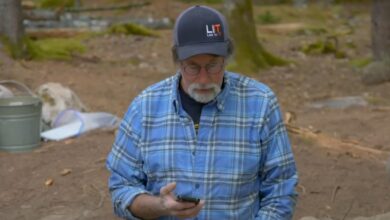
On Lot 26, metal detection expert Gary Drayton and treasure hunter Michael John focus their search near the former homestead of Samuel Ball. Once farmland, the property belonged to Ball in the 19th century, a figure whose sudden wealth has long raised questions among Oak Island researchers. With surface debris already cleared, Gary deploys a large 32-inch coil on his GPX 5000 metal detector, capable of detecting deep targets up to six or seven feet below ground.
The expanded search area, now free of trees and dense vegetation, allows for deeper scanning. Almost immediately, the detector produces a strong signal. Excavation reveals a small ox shoe—an unusually compact example compared to others previously found on the island. The discovery reinforces the idea that oxen were once used extensively in this area, possibly to transport heavy materials during a large-scale operation.
Gary notes that ox shoes are not random finds. They are typically associated with organized labor, infrastructure, and hauling activities. The team agrees the discovery warrants further archaeological attention.




Searching for a Path Between the Swamp and the Money Pit
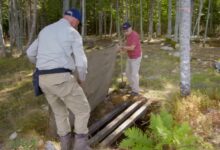
Rick Lagina later joins Gary on nearby Lot 15, where the team hopes to confirm the existence of a historic route connecting the swamp to the original Money Pit. The theory gained momentum after the earlier discovery of an iron band believed to have come from a wagon wheel—evidence suggesting repeated transport activity predating the 1795 Money Pit discovery.
Under updated cultural heritage regulations, all metal detection now follows a grid system. Gary must flag potential targets and receive archaeological approval before digging. Although the process slows progress, Rick believes preserving historical context is essential.
Despite the frustration of uncovering modern debris, the method soon pays off. Another ox shoe emerges from the soil, this one located closer to the Money Pit. Its age and placement strengthen the argument that this area once supported a well-used transport route.
Expert Analysis Confirms Early Origins
Alex Lagina and Jack Begley take the ox shoes to blacksmithing expert Carmen Legge for evaluation. Carmen identifies the artifacts as winter ox shoes, some dating to the early 1700s or even earlier—well before the Money Pit was discovered.
More importantly, Carmen notes that multiple types of ox shoes were used in different seasons, indicating long-term, organized activity rather than short-term farming. The alignment of these finds suggests animals were hauling materials along a consistent route between the swamp, Lot 15, and possibly the Money Pit itself.
This interpretation supports earlier theories linking the nearby pine tar kiln and stone features to early British or European industrial activity on the island.
Additional Finds Strengthen the Trail Theory
Returning to the field, Gary and Jack continue detecting closer to the swamp. Another ox shoe appears, followed by a heavy iron object believed to be part of an ox or horse harness. The weight and design suggest pre-1800s craftsmanship.

When plotted together, the artifacts form a linear pattern pointing from the swamp toward the stone structure on Lot 15. The alignment strongly suggests a constructed hauling path rather than scattered agricultural debris.
A Coordinated Operation, Not Isolated Activity
Taken together, the discoveries point to deliberate planning and sustained labor. Ox shoes, harness components, and wagon-related ironwork indicate the movement of heavy cargo across Oak Island long before recorded treasure hunts began.
For the team, this is no longer just about isolated artifacts. The evidence increasingly supports the existence of a structured transport system—possibly tied to construction, storage, or concealment activities involving the swamp and the Money Pit.
As Gary puts it, “Everything is lining up now.” The finds suggest Oak Island was once the site of an organized operation, leaving behind a trail that is only now beginning to be fully understood.