A Potential Breakthrough in the Search for the Oak Island Flood Tunnel

Discovery of a Possible Tunnel Structure
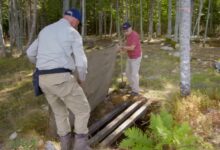
While conducting excavation work in the uplands near Smith’s Cove, the Oak Island team uncovered what appeared to be a man-made tunnel. The structure was found approximately 15 feet above the base of the pit and showed clear signs of timber bracing along one side. Early observations revealed a slit-like opening with wooden supports, leading many to suspect this could be a section of the legendary flood tunnel — a booby-trap water system designed to protect whatever lies in the original Money Pit.
Utilizing Remote Technology to Investigate
Due to the instability of the surrounding area, it was deemed unsafe for a full excavation. Instead, the team mounted a camera to the arm of the excavator to investigate further. Video footage revealed significant wooden structural elements embedded in the wall — including thick timber boards on both sides, consistent with tunnel construction.
Evidence of Engineering: Double-Walled Tunnel
The footage also revealed what appeared to be a double-walled wooden structure filled with rocks. Experts on-site speculated it might be a collapsed tunnel or shaft, potentially dating back to the original workings on the island. The presence of layered timbers and a distinct beam suggested intentional design, not random debris from past searcher efforts.




Strategic Location Matches Historical Data
Surveyor Steve Guptill pointed out that the tunnel-like feature aligns precisely with coordinates based on the U-shaped structure previously discovered in Smith’s Cove. This alignment adds further weight to the theory that the team may have located part of the original flood tunnel system engineered to protect the Money Pit centuries ago.
Excavation Deadline Looms
Despite the excitement, the team faced a harsh reality: excavation in the area had to cease due to the impending removal of the massive cofferdam at Smith’s Cove. Contractors from Irving Equipment were scheduled to begin dismantling the steel barriers, making the site inaccessible for the remainder of the season. This forced the team to suspend their activities, though they remained hopeful about returning to the site with the proper permits in the future.
A Surprising Find: Coconut Fiber Unearthed
During the excavation, the team uncovered a fibrous material that bore a striking resemblance to coconut fiber. This material had been historically documented as part of the original flood tunnel’s filtration system, first discovered in the Money Pit in 1804 and later in Smith’s Cove in 1850. Given that coconut trees are not native to Nova Scotia and are located over 1,500 miles away, its presence strongly suggests that the material was brought to the island intentionally as part of a sophisticated engineering effort.
Scientific Confirmation
Dr. Ian Spooner, a geoscientist working with the team, conducted a preliminary analysis and confirmed the material was indeed coconut fiber. This validation was a significant moment for the team, as it served as strong evidence supporting the historical accounts of original engineering works on Oak Island.
Implications of the Find
The confirmation of coconut fiber, combined with the discovery of the tunnel-like structure, strongly supports the theory that the team is closing in on the original flood system designed to protect the Money Pit. The presence of this rare material not only corroborates accounts from early searchers but also suggests the team may be digging in an untouched, original area of the treasure system.
Conclusion: Closer Than Ever
Although their work has been paused due to seasonal constraints, Rick and Marty Lagina, along with their team, are more confident than ever that they are on the right track. The combination of structural evidence and coconut fiber offers compelling support for the existence of the flood tunnel — and potentially the treasure it was meant to protect.
As one of the most exciting developments in years, this discovery may represent a turning point in the centuries-old Oak Island mystery.