Top Three Discoveries on Oak Island That Could Rewrite History
The Oak Island team has made three groundbreaking discoveries that could challenge long-standing narratives about the island’s history. These findings, made across various lots on the island, suggest possible links to ancient civilizations, lost artifacts, and potentially even buried treasure. Each discovery has left the crew both astonished and more determined than ever to uncover the full story.
1. The Ancient Well on Lot 26
An apparent man-made well discovered on Lot 26 has become a focal point of the team’s investigation. Preliminary analysis suggests the structure dates back several centuries—potentially making it the oldest known construction on the island. Water tests and core sampling revealed that the well never freezes, even during the harshest winter months, an anomaly that captured the team’s attention.
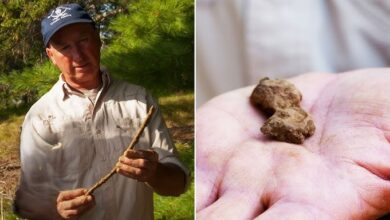
Carbon dating of organic material retrieved from the bottom of the well, including a twig, yielded a surprising date range: between 1028 and 1172 AD. This predates any other known construction on Oak Island and dramatically alters the timeline of human activity on the site. Moreover, the well lies roughly 100 feet from a supposed 16th-century stone wall, further suggesting the area could hold deep historical significance.



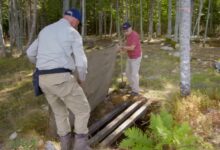
The well’s construction is larger and more complex than initially thought, and silver particles found within it raise questions about its purpose and origin. As excavation continues, the well has become a critical lead in the wider Oak Island mystery.
2. The Circular Stone Depression on Lot 5
On Lot 5, a near-perfect circular stone depression has emerged as a second major point of interest. The formation resembles the structure of a burn cellar and mirrors historical accounts of the original Money Pit discovered in 1795. The 13-foot diameter of the depression is identical to early descriptions of the Money Pit—raising the possibility of a deliberate and historically significant connection.
Lot 5 was previously owned by the late treasure hunter Robert Young, who claimed to have found ancient coins and artifacts on the property. Current excavation efforts have uncovered a stone foundation estimated to date to the 1730s, as well as a Roman coin believed to be over 2,000 years old and a mysterious lead barter token possibly linked to the Knights Templar.
Geological studies and strategic drilling in the area continue to yield indications of pre-18th-century occupation. Some signs suggest the existence of an older underlying structure that was rebuilt and lined with stone in the 1700s. These discoveries have turned Lot 5 into one of the most archaeologically rich areas on the island.

3. The Garden Shaft in the Money Pit Zone
Initially regarded as a simple 10×10 searcher shaft from past excavation efforts, the Garden Shaft has gained renewed importance after recent scientific testing. Water samples from within the shaft revealed traces of gold—prompting a series of deeper investigations led by geoscientist Dr. Ian Spooner and hydrogeologist Dr. Fred Michael.
Carbon dating of a wooden beam taken from 50 feet below ground indicated that the structure predates the Money Pit’s 1795 discovery by at least half a century. Further analysis revealed a tunnel located 95 feet underground near the shaft, with the highest recorded concentrations of gold in water samples found directly beneath it.
These results led the team to theorize a possible connection between the Garden Shaft and the elusive Money Pit vault. While excavation was halted during winter after reaching 82 feet in depth, plans are underway to resume operations.
Conclusion
These three discoveries—the ancient well on Lot 26, the symmetrical stone depression on Lot 5, and the gold-laced Garden Shaft—have reshaped the Oak Island investigation. With each structure revealing new timelines and possible connections to historical events or legends, the team now stands at the threshold of potentially solving the island’s centuries-old enigma.
As testing and excavation continue, Oak Island may soon yield answers that have eluded treasure hunters and historians for generations.