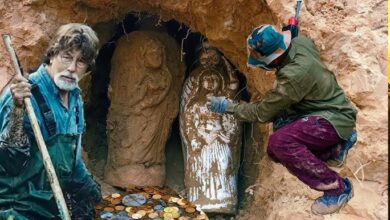
Rick and Marty Lagina Edge Closer to the Truth as Gold Found in Oak Island Shaft Samples

Oak Island’s New Push: Finds, Science, and the Garden Shaft Gamble
Overview: A Season of Artifacts and Answers
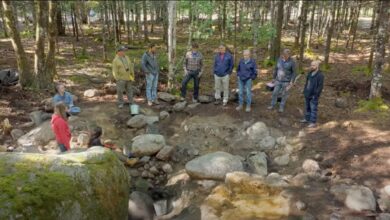
With Lot 5 now in play and probe drilling underway at the Garden Shaft, Rick and Marty Lagina are throwing everything they’ve got at Oak Island. After six decades of dreaming, they’re pairing relentless fieldwork with cutting-edge analysis to connect artifacts, structures, and subsurface anomalies into a single, testable story.

Inside the Garden Shaft: Probing for a Void
In a tent beside the Garden Shaft, Alex and Rick observe Dumas Contracting’s probe drilling. Supervisor Brandon Vanderho briefs them as the team squares the tooling in tight quarters, flashlights cutting the darkness 50–55 feet down. Alex flags a prior hit on a cavity at this depth—earlier in summer, the crew intersected a 10-foot void southwest of the shaft, fueling Marty’s theory of an offset chamber possibly tied to the original Money Pit vault.
Smart Sampling Strategy: Wood, Water, and Soil
As Dumas cuts through the timber lining at 55 feet, Rick asks that shavings from each wall be bagged, labeled, and sent for XRF (X-ray fluorescence) alongside water and sediment samples—on the logic that shaft timbers might sponge up gold traces carried by surrounding groundwater.
Lab Breakthrough: Gold Signatures in the Timbers
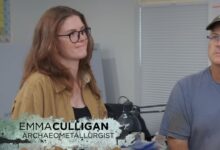
Archaeometallurgist Emma Culligan maps the samples and confirms trace gold in wood taken at 55 feet—validating Rick’s “sponge” hypothesis. Though only ~0.1% by XRF estimate, she notes that, in parts-per-billion terms, it’s significant. The team resolves to cross-check water, wood, and soil repeatedly to verify a persistent signal and refine targeting.


Lot 11: A Buried Well and Early Hardware
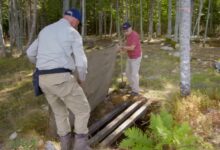
Guided by Tom Nolan’s tip, Rick, Alex, and Billy Gerhardt carefully open an old well near the swamp’s north edge, with Gary Drayton scanning the spoil. Finds include:
- Rose-head spike: hand-forged, likely pre-1795.
- Heavy iron hook: long-shanked and striated—Carmen Legge dates its form to ~1650–1690 and ties it to block-and-tackle rigging for lifting substantial loads, not mere water buckets.
Paired with prior dates at the Eye of the Swamp (organic backfill to ~1680), the well area looks like a purposeful work zone—potentially for moving valuable cargo.
Lot 5: A Trove of “Shouldn’t Be Here” Finds
Since acquiring Lot 5, the Fellowship has uncovered:
- A stone structure possibly contemporary with the Garden Shaft.
- Early tools, some pushing four centuries old.
- The half of a Roman coin dated as early as 300 BC.
On a fresh sweep, Gary flags and bags:
- A late-1700s square nail.
- A scalloped lead token with twin punch holes.
Origin Story: The Lead Token’s European Fingerprint
Emma’s extended XRF/XRD work shows:
- Light layer ~99.96% lead, with trace Cu/Fe.
- Dark layer with minor Fe, Cu, and Si.
Both are naturally occurring leads, not typical North American ores. Match sets point to a Mediterranean belt—Emma highlights a comparative signature along the Italian coast (Sardinia’s Roman-era mining among plausible sources). Age is undetermined, but the purity hints at antiquity. The token’s style and metallurgy echo the earlier Lot 5 Roman coin, reviving Templar/Old-World contact hypotheses—intriguing, but still unproven.

The Last Push: Metal Detecting the Garden Shaft
Back at the Money Pit, Dumas reaches ~93 feet—near the suspected westward tunnel—before time and permits run out. The probe snags on possible wood; filings suggest it wasn’t substantial. With the clock ticking, the Laginas descend the refurbished shaft with Gary’s discrimination-capable Cscope (CEX-3 SA-30). Pulling a floorboard reveals a muck-filled pocket; the coil sings on a non-ferrous target below—potentially gold, silver, or copper. Regulations prevent a deeper breach, and safety concerns rule out forcing the bottom. The team backs out—frustrated, but encouraged.
Science First: A Shared Commitment
In the Money Pit tent and War Room, Rick reiterates the ethos: let science lead. The Garden Shaft is their best laboratory; careful sampling, cross-checks, and humility about the data will guide next steps. The crew applauds Emma’s contributions and circles around a plan to expand controlled testing and mapping.
What It All Suggests—So Far
- Gold-bearing signals in shaft timbers suggest nearby mineralized fluids—or something more intentional—circulating outside the lining.
- 17th-century hardware at the well aligns with heavy-lift work, not casual use—hinting at engineered activity around the swamp.
- Lot 5 anomalies—Roman coin fragment, high-purity lead token—continue to challenge a strictly colonial-era narrative.
- The non-ferrous hit at the shaft base sits tantalizingly above the suspected westward tunnel, but remains unresolved.
The Pause Before Spring
Permits pause deeper work for now. The plan: expand lab cross-checks, tighten subsurface models, and use targeted probing to decide where and how to open safely. Whether the Garden Shaft sits beside a vault, a bleed tunnel, or an elaborate decoy, the mosaic of evidence is sharpening.
The Question That Endures
Have they brushed the edge of Oak Island’s core secret—or added crucial pieces to a larger, centuries-spanning puzzle? With ancient hardware, Old-World metallurgy, and measurable gold traces all converging, the next chapter will hinge on one thing: turning careful science into the right dig, at the right depth, in the right place.