Romans on Oak Island? The Find, the Near-Miss, and the Ongoing Mystery
A Legend Reignited
For centuries, Oak Island has been wrapped in lore—Vikings before Columbus, Templar treasure, and pirate hoards. A fresh twist now fuels the debate: artifacts some claim point to Roman presence. Whether proof or red herring, the latest discoveries—and the peril that preceded them—have pushed the mystery to a new edge.
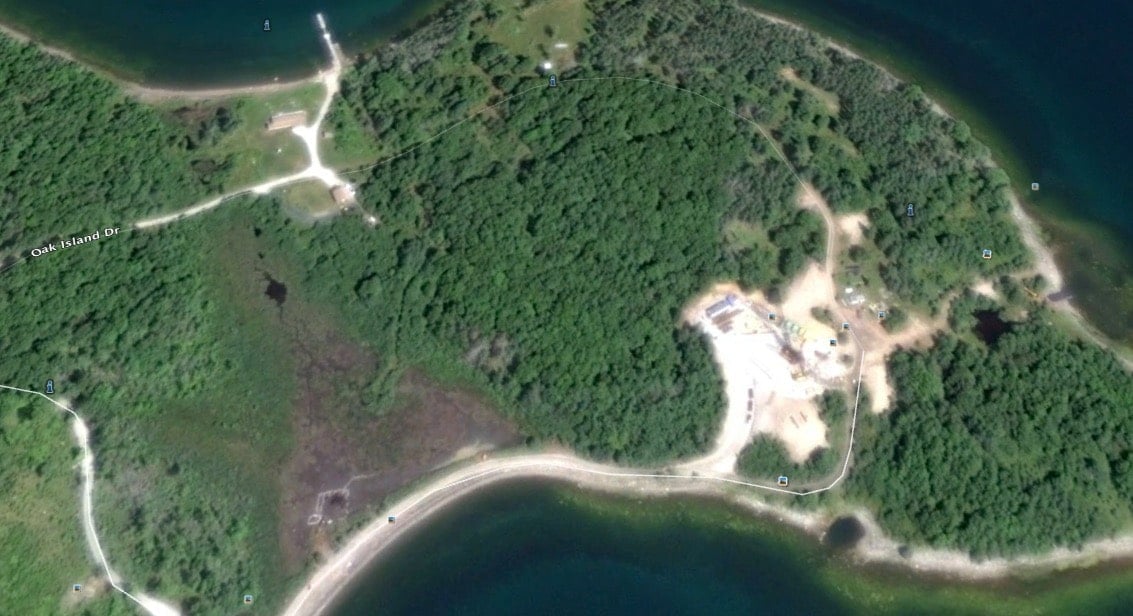
The 10X Ordeal: A Brush with Disaster
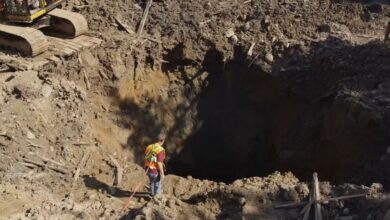
Before the headline artifact surfaced, the team probed Borehole 10X—Dan Blankenship’s infamous, water-filled shaft:
- Depth & design: ~235 ft deep, with a 181-ft concrete/steel drop tapering into a 27-inch-wide, 44-ft squeeze tube submerged in murky water.
- Conditions: Zero visibility, constant collapse hazards, and decades of lost equipment.
- The dive: Pro divers Harvey Morash and Michael Gharts descended with comms—until Michael’s communication failed 100 ft down. For 32 tense minutes the surface team waited, tapping signals into darkness.
- The snag: Harvey reached the constricted tunnel only to be blocked by a 20-ft drill bar wedged in place. He scraped backward to escape, low on time and air. The message was unmistakable: 10X was not giving up anything easily.
A Shift in Focus—and an Intriguing Pulley
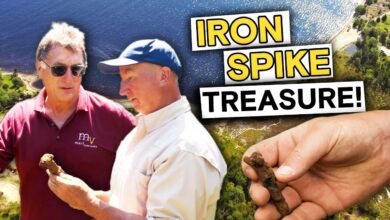
Regrouping, the team moved to a lesser-probed area. What first looked like a rusted lump turned out to be a well-made, old pulley—the kind used for lifting heavy loads or operating trap mechanisms. Not flotsam; placed. It wasn’t the day’s showstopper, but it hinted at engineered activity long before modern searchers.
“A Roman Sword”: The Artifact That Lit the Fuse
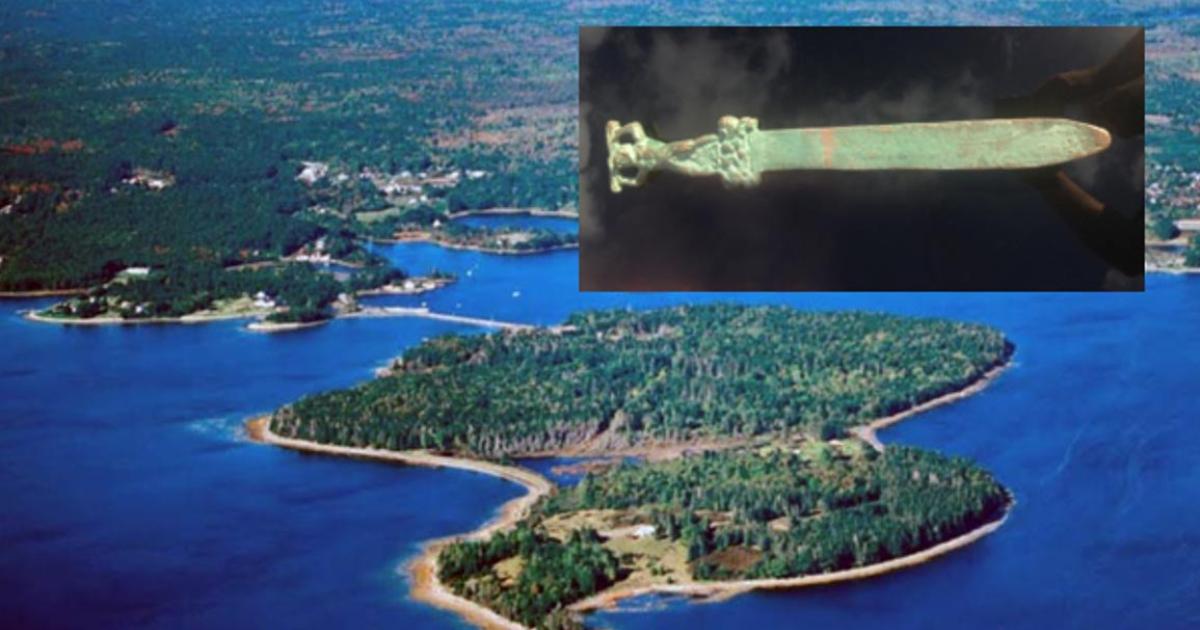
Then came the bombshell. Researcher Charles Barkhouse introduced a bronze/brass sword said to have been found in the 1940s near Mahone Bay and kept in a local family for decades. The piece featured an ornate hilt—Hercules motif and all—suggestive of Roman iconography. If authentic and original to the site, it would upend accepted timelines of transatlantic contact.


Science Weighs In: Conflicting Signals
The blade went to St. Mary’s University for scrutiny:
- Pros (at first glance): Shape, balance, and iconography resemble ceremonial Roman weapons; alloy elements (copper, tin, lead, trace arsenic) are consistent with ancient bronze in broad strokes.
- Cons (the technique): Casting marks suggested a bivalve mold, atypical for Roman lost-wax weapon production.
- A second look: Chemist Dr. Christa Brosseau detected elevated zinc, pointing toward modern brass rather than ancient bronze.
- Comparanda: Near-identical swords in European museums are cataloged as 19th-century replicas.
- Counterpoints: Some argue natural zinc contamination can occur in ancient bronzes; others caution that replicas don’t automatically disqualify this specimen.
Bottom line: The sword remains contested—either a later reproduction, a planted curiosity, or (as a minority contend) a rare survivorship of ancient design and alloying variance.
Beyond the Sword: A Tangle of “Out-of-Place” Finds
The sword isn’t alone in stirring debate. Over the years, searchers have pointed to:
- Roman-style crossbow bolts: Small, sharp projectiles echoing classical designs. Provenance and dating remain uncertain.
- The Smith’s Cove lead cross: Stylistically linked by some to Templar imagery; lead isotopes trace to southern France—Roman at one time, medieval later, muddying the signal.
- The 90-Foot Stone: A vanished inscription stone from the Money Pit, recorded with symbols some compare to Phoenician/Roman-era scripts.
- Stone roads & platforms (Smith’s Cove): Deliberate construction unlike local colonial methods; some liken the engineering to Old World techniques.
- A “Roman” coin (alleged): Without secure context, coins travel easily and prove little.
- A deep-dated wreck near Mahone Bay (sonar): Possibly pre-Columbian; not yet linked to any specific culture.
Engineering Echoes Underground
Layered wooden platforms and flood-trigger tunnels beneath the island suggest designed hydrology—booby traps to thwart diggers. Such complexity reminds some of Roman underground works and water management. Skeptics counter that later European miners or early industrial crews could have built them. The sticking point: several features seem older than known colonial activity.
![Roman Sword Found Near Oak Island, Nova Scotia May 'Rewrite' North American History [Updated] - Inquisitr News](https://i.pinimg.com/736x/36/79/c7/3679c7fd6e2d87b1ceaee8cb6f1ce57f.jpg)
Skepticism vs. Possibility
- Skeptics see misidentified replicas, contaminated alloys, traveling curios, and confirmation bias.
- Optimists see converging clues: cross-cultural symbols, Old-World-style engineering, and a pattern of finds that strains coincidence.
Both camps agree on this: Oak Island refuses simple answers. Each test narrows one path and opens three more.
What Would Count as Proof?
To move from captivating theory to history-book revision would require:
- Secure context: Stratigraphic, datable layers tying artifacts to pre-Columbian horizons.
- Replicable science: Independent labs converging on ancient alloying/techniques.
- Corroboration: Multiple artifacts with consistent dating, plus documentary or paleoenvironmental evidence.
The Mystery Endures
Whether the “Roman sword” is a 19th-century curiosity or an ancient import, it has reignited global interest in Oak Island. And coupled with pulleys, platforms, cross-style artifacts, and unusual stoneworks, it keeps the central question alive:
Did an Old World expedition reach these shores centuries before the record says—or are we reading modern traces into ancient dreams?