Oak Island’s Lot 26 Well Yields Mysterious 18th-Century Iron Artifact
Unearthing Clues From a 900-Year-Old Well
On Oak Island’s Lot 26, a team led by Jack Begley, archaeologist Laird Niven, and conservator Helen Sheldon has resumed excavation of a centuries-old stone well believed to date back to the 11th century. The well, one of the oldest manmade features on the island, recently drew attention after water samples tested by geoscientist Dr. Ian Spooner revealed elevated levels of silver — suggesting the possible presence of buried valuables.
“This is not just an ordinary well,” Rick Lagina noted, emphasizing Oak Island’s history as a potential hiding place for precious materials.
Digging Into History
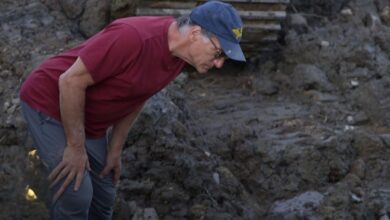
Using pumps and hand tools, the team worked to clear muck and debris from the well while carefully preserving any material for later analysis. “It’s beautifully rounded to a certain point, then angular rocks start appearing,” Niven observed, hinting that the well may have been deliberately engineered.



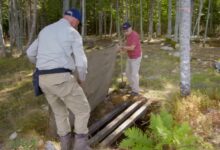
Marty Lagina added, “The well is as old as the 11th century. It fits with other outliers on the island like the paved swamp area and possible ship’s railing. It’s astounding.”
The Unexpected Find
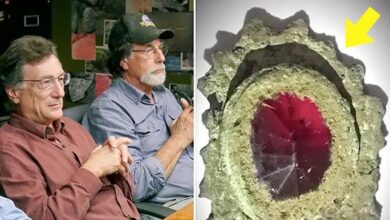
Later, at the Oak Island Interpretive Centre, Sheldon and archaeometallurgist Emma Culligan sifted through the dried spoils from the well. Amid organic debris, they uncovered a hand-wrought iron fragment that looked nail-like but didn’t match the profile of a typical nail.
“The tip is rounded — it seems intentional,” Culligan explained. “The sulphur content indicates it was forged at lower temperatures, typical of older iron. I’d place it around the 1700s.”
Sheldon added, “It could be a piece of shipbuilding material, maybe a clench nail, but it’s not like anything we usually see.”

Scientific Analysis Confirms Age
To better understand the find, the artifact was sent to Dr. Christa Brosseau and Dr. Xiang Yang at Saint Mary’s University in Halifax. Using a Scanning Electron Microscope (SEM), they confirmed the piece contained no manganese, placing it firmly in the pre-1840s category — possibly as early as the mid-1600s.
“That’s consistent with what our consultant suggested,” noted team member Peter Fornetti. “It points to activity on Lot 26 long before the Money Pit was ever discovered in 1795.”
What Was Happening on Lot 26?
The discovery raises more questions than it answers. Why was an artifact of possible 17th- or 18th-century shipbuilding found in a well built centuries earlier? Was the well used as a hiding place — or as part of a larger network of tunnels?
“There’s clear evidence of human activity here prior to settlement,” said historian Charles Barkhouse. “The question is: what were they doing, and what were they trying to protect?”
A Site That Refuses to Give Up Its Secrets
Lot 26 continues to intrigue researchers. With artifacts predating both settlement and the Money Pit, the area may hold crucial clues to the island’s true history.
As Rick Lagina reflected: “You can find all the artifacts you want, but at the end of the day, they have to tell a story. And Lot 26 may be the key to unlocking one of Oak Island’s biggest mysteries.”