Leather, Lumber, and a Possible Key: New Clues Emerge in the Northern Swamp
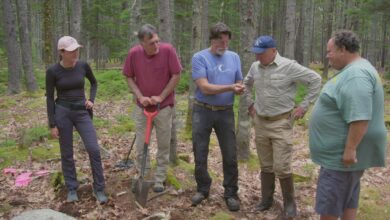
The search in the northern region of the swamp continues as Rick Lagina and Craig Tester join metal detection expert Gary Drayton and property owner Tom Nolan. Their focus remains fixed on the cobblestone pathway lined with distinctive eight-sided wooden survey stakes—a path that, one year earlier, led them to a mysterious but empty brick-and-slate vault roughly 50 yards to the south.
Now, the team is determined to see whether additional hidden structures—possibly ones that still contain valuables—remain buried along the same alignment.
A Leather Find With Historical Weight
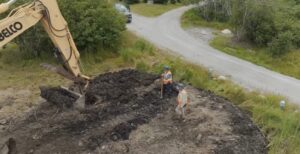
As excavation continues, Gary spots something unusual in the soil. Rick leans in closer.
Leather.



The fragment appears to be part of a boot or shoe sole. The small perforations are not stitching but hobnail holes—an old method of reinforcing footwear with iron studs for traction. The texture and wear suggest age, not modern debris.
This discovery carries added significance. In 2023, Rick and Gary found a similar piece of leather near what is believed to be a Portuguese stone road in the swamp’s southeast corner. That earlier fragment was identified as European in origin and potentially dated to the 17th century.
Could this new find be related? If so, it might help identify the individuals responsible for constructing the cobblestone road.
Rick emphasizes the importance of laboratory analysis. With the on-island research facilities, including carbon dating and metallurgical testing, they may be able to narrow down the origin and age of the leather with greater precision.
If these pieces belonged to the original builders of the swamp infrastructure, they may represent direct physical evidence of those responsible for the site’s construction.
Thick Planks and a Square Nail
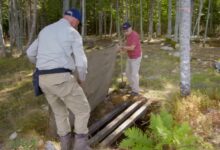
Later in the day, the team uncovers several heavy wooden planks emerging from the bank of the swamp. The boards are thick—over an inch—and appear to fit together.
Embedded within one piece is a nail. The shape of the nail becomes critical. If square-forged, it would indicate significant age, potentially pre-industrial.
The width and construction of the boards raise further questions. Could these planks have been part of a chest? A structural platform? Or even a component of another underground vault?
The proximity to the previously discovered brick-and-slate vault adds to the intrigue. If one vault existed in this zone, could another remain undiscovered?
A Metal Detector Signal — And a Possible Key
As metal detection continues, a sustained tone draws attention. The object recovered does not resemble a nail or spike.
Its form is unusual—rounded at one end, heavier than expected, and with a profile that suggests a spade-shaped bit typical of early iron keys.
Katya identifies the object as key-shaped. Rick notes its depth and weight. The corrosion makes it difficult to determine how much metal remains intact versus rusted away, but the possibility is unmistakable.
If confirmed, this could represent a key associated with a lock—perhaps tied to a chest, vault, or other secured structure within the swamp.
A CT scan and further analysis will be required to determine its age and composition. The team hopes metallurgical testing may link it to other early artifacts found on the island.
Carbon Dating Brings Medieval Implications
Later, in the War Room, the team receives preliminary carbon-14 dating results on the leather fragments.
The most prominent date range falls between 1148 and 1216, with some samples suggesting even earlier origins.
This timeline aligns with previous research presented by Professor Adriano Gaspani, whose astronomical analysis of Nolan’s Cross indicated a likely construction period in the early 13th century. Gaspani has theorized that the formation may be connected to the Knights Templar.
The leather dates now provide another data point within that same medieval timeframe.
Rick highlights the growing pattern: the paved area in the swamp, the survey stakes, the cobblestone road, and now potentially medieval footwear fragments.
While carbon dating of leather does not confirm who constructed the site, it adds another layer to the historical timeline emerging from the swamp.
Digging With Data
With accumulating evidence and converging dates, Rick advocates continued excavation. The team has machinery, resources, and now additional scientific support.
The combination of physical artifacts, structural features, and laboratory analysis suggests that the northern swamp remains one of the island’s most promising areas.
Whether the key proves functional, symbolic, or unrelated remains to be seen. But the pattern of finds—leather, lumber, iron—indicates human activity of considerable age.
As the investigation moves forward, the team remains focused on one objective: follow the data, follow the alignment, and keep digging.
The swamp continues to yield clues. Whether it will ultimately yield treasure remains the unanswered question.