The Curse of Oak Island Season 13, Episode 7: “Walk the Line” — A Rapid Recap
This episode of The Curse of Oak Island moves quickly, but unfortunately not in the direction of clarity. Titled “Walk the Line,” it continues Season 13’s familiar pattern: ambitious claims, minimal evidence, and logical leaps that stretch credibility to its limits.
Back to the Money Pit: Mud, Hopes, and Nothing Else
The episode opens, as usual, in the Money Pit area with more core drilling. The team extracts what can only be described as muddy slurry — yet somehow treats it as meaningful. At one point, this indistinct mixture is once again framed as potential evidence of hidden treasure, despite offering no visible proof of anything valuable at all.
It is not exactly nothing — but it certainly isn’t convincing.





Lot 5: Brief Discoveries, Quickly Forgotten
Attention briefly shifts to the mostly overlooked Lot 5, where a fragment of pottery and a small bead are uncovered. These items are mentioned, acknowledged, and then promptly abandoned, never to be meaningfully discussed again.
As with many finds on Oak Island, their potential importance exists only momentarily before disappearing from the narrative.
The “Roman or Viking” Rock Returns
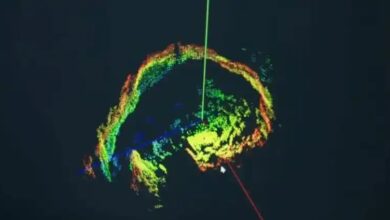
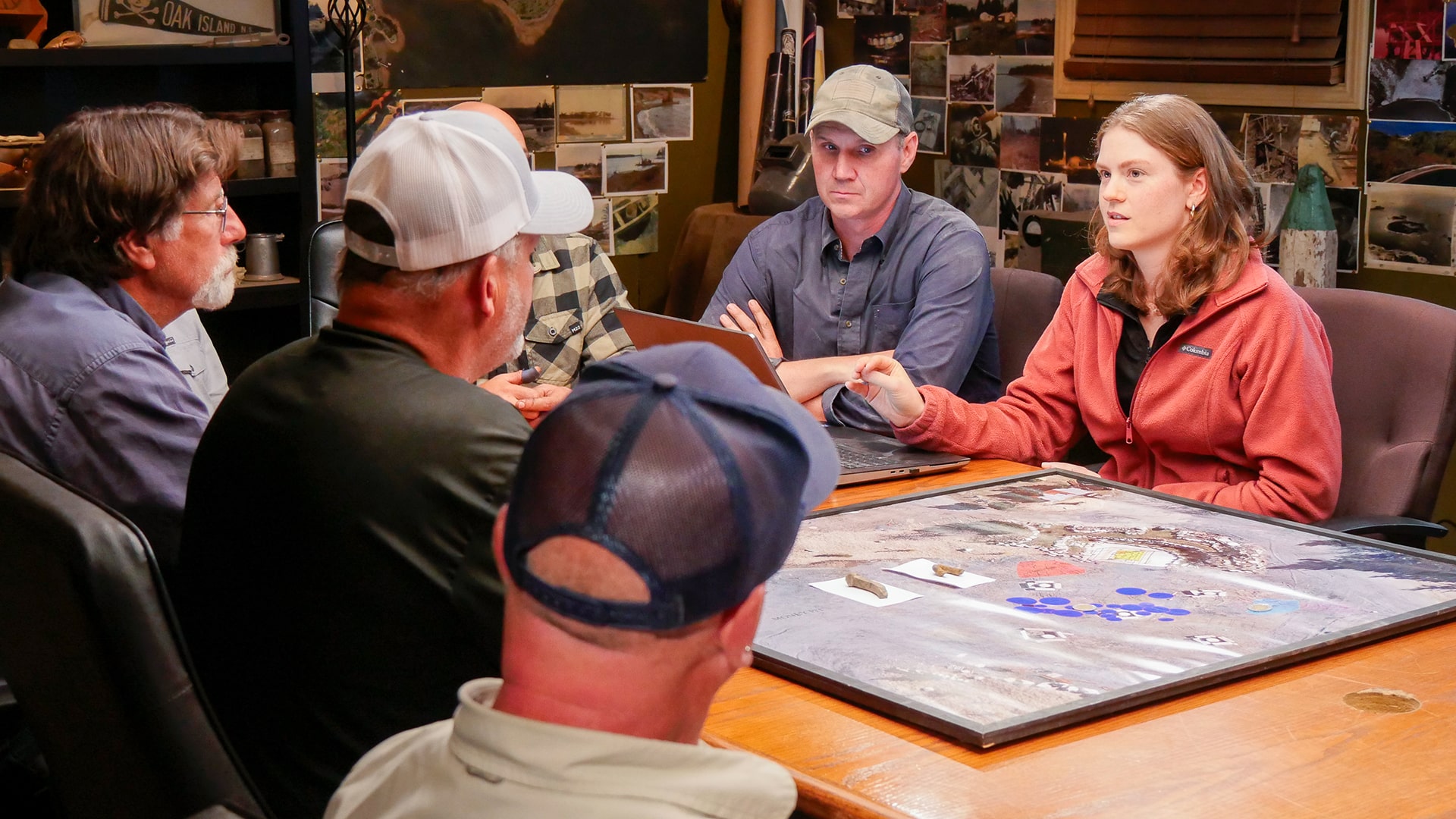
Remember the unremarkable stone from earlier episodes? Rather than examining it outside in the real world, the team gathers in the research center to study a 3D digital model instead.
Through a series of unexplained assumptions, the rock is suddenly declared to be either Roman or Viking in origin. No clear reasoning is offered, no definitive markers are explained, and no expert consensus is shown. The conclusion simply appears — fully formed — without justification.
Directional Logic That Raises Questions
The team notes that the stone faces north, which somehow leads them to believe they should search southeast for artifacts. The logic behind this decision remains unclear.
As they follow this supposed line, they uncover an iron fragment and several rocks — none of which clearly demonstrate human placement or purpose. At one point, the episode suggests that if two objects can be aligned in a straight line, that alone proves intentional design.
From a basic geometry standpoint, this reasoning is deeply flawed. Any two points can form a straight line. That fact alone does not imply meaning, design, or ancient planning.
Imaginary Structures and Expanding Theories
Despite the lack of physical confirmation, the team continues to reference a hypothetical structure that has never been found. The episode treats this imagined feature as if it were already established fact, layering speculation on top of speculation.
Lab Analysis: The Compass That Isn’t a Compass
In the lab, Emma examines a previously recovered metal object believed to be a compass. Her initial conclusion places it somewhere between the 1600s and 1800s — already a wide range.
Then expert Carmen Legge arrives, and the object immediately transforms. It is no longer a compass, but a divider. Its origin could now be French or English, and its date could be the 1500s as well.
Rather than narrowing the possibilities, the analysis expands them dramatically.
Flood Tunnels, Saltwater, and Final Frustration
The episode concludes by asserting that because the object shows signs of saltwater exposure, it must have been pulled into the Money Pit through flood tunnels.
Saying that sentence out loud highlights just how speculative the logic has become.
Final Thoughts
“Walk the Line” continues a familiar Oak Island pattern: minor discoveries inflated into sweeping historical claims, supported by assumptions rather than evidence. While the episode offers plenty of enthusiasm, it also demands repeated leaps of faith from the viewer.
Still, if you enjoy watching theories grow faster than facts, Oak Island remains consistent — if nothing else.
Thanks for watching, and stay tuned for the next episode, where another ordinary object may once again rewrite history.