Oak Island Season 13: A Breakthrough Find on Lot 5 Sparks New Hope
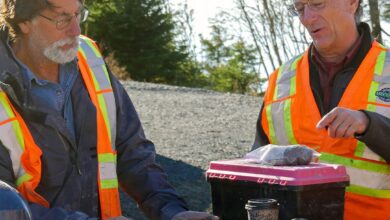
Lot 5 continues to prove itself as one of the most intriguing and artifact-rich locations on Oak Island. In Season 13’s latest investigation, Marty Lagina, Peter Fornetti, and metal-detection expert Katya Drayton uncover not one, but two significant artifacts — fueling speculation about who once occupied this mysterious corner of the island.
Searching Between Two Strange Structures
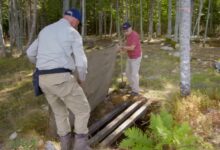
The team begins its exploration between a rectangular formation and a rounded stone foundation near the shoreline — two features that have puzzled researchers since their discovery.
Marty directs Katya to scan an area recently disturbed by a skid steer. Almost immediately, her detector starts firing with strong signals.



After digging, they pull out a metal fragment with a curved shape and a clear attachment point. Marty recognizes it as potentially important:
“It’s lab-worthy.”
Peter notes how close the object was to the rectangular structure — raising questions about whether the artifact may help link Lot 5 activity to the legendary Money Pit.
Lab Results: A Cast-Iron Cooking Pot From the 1600s–1700s
The next day, the team brings the object to the Oak Island laboratory where archaeologists Emma Culligan and Laird Niven analyze it.
Emma confirms:
- It is cast iron, likely part of a cooking pot
- The high phosphorous content suggests a pre-1800s date
- It could easily date to the 1700s, maybe even late 1600s
Rick sums up the importance:
“In its confusion, Lot 5 still brings artifacts to the surface.”
A New Metal Signal Leads to a Stunning Find
Back on Lot 5, Marty and Katya continue searching south of the rounded feature. A strong, non-ferrous signal catches Katya’s attention under a large rock.
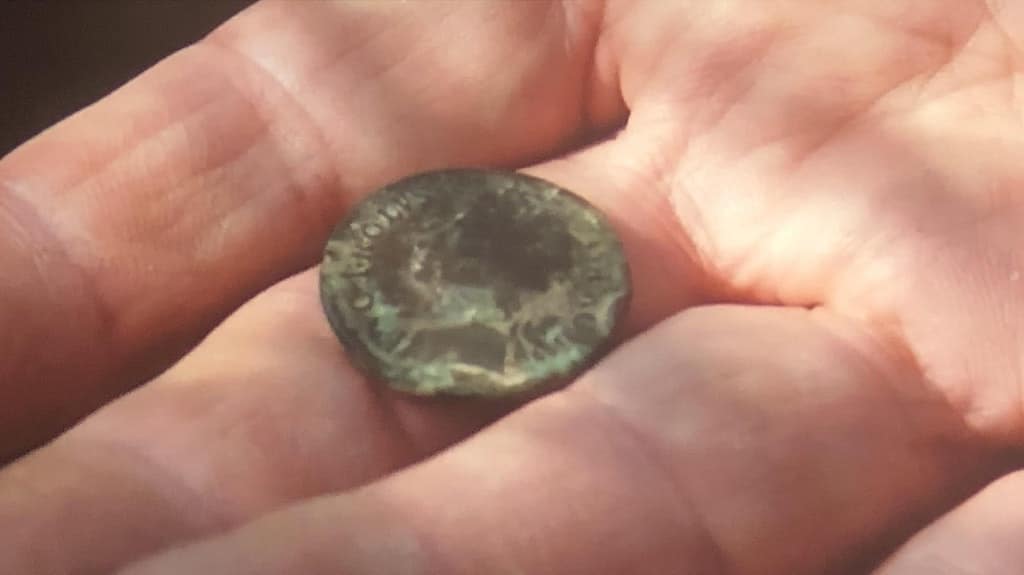
Moments later, she lifts an object from the soil — thick, irregular, and unmistakably old.
“I think that’s a coin.”
—Katya
The discovery immediately excites Marty, who knows this area has already produced authenticated Roman-era coins.

Experts Confirm a Pre-1600s Copper Coin
Rick, Gary Drayton, and Billy Gerhardt rush to the site.
The moment Gary sees it, he reacts instantly:
“Ooh… that’s old. Pre-1600s. Definitely hammered.”
He notes:
- Writing is visible around the edges
- The copper oxidation is authentic
- Its shape and thickness suggest it predates the 1600s
- It may be connected to the previously discovered Roman coins on Lot 5
The team is visibly thrilled — especially Katya, whose metal-detecting skill led to the discovery.
Gary calls it:
“A top-pocket find.”
Could This Coin Rewrite Oak Island’s History?
With metallurgical confirmation of Roman-era coins already found on Lot 5, this new hammered copper coin could help identify:
- Who explored the island long before the Money Pit was discovered
- Whether Portuguese, Templar, Roman, or early European groups reached Nova Scotia centuries ago
Rick, examining the coin closely, states:
“The coin will tell you what it is — and that gives us immense hope.”
Lot 5 Becomes the New Center of the Mystery
With dozens of artifacts now emerging from Lot 5 — including pottery, cast iron, Roman coins, and now a pre-1600s hammered coin — it is quickly becoming one of the most historically significant areas ever explored on the island.
The team’s excitement grows as they prepare to send the coin for CT scanning and deeper analysis.
If this artifact reveals its origin, Oak Island may finally be closer to answering the question that has haunted researchers for 230 years:
Who was here first — and why?