Oak Island’s Enigma: Technology, legend, and the race to read the ground
Why technology matters on a “mysterious place”
“What’s important is that we can discern what it is.” That single line captures the modern Oak Island mindset. For more than two centuries, stories of buried treasure, ancient artifacts, and engineered flood traps have lured searchers to Nova Scotia’s most famous island. Today’s teams see technology—seismic mapping, gyroscopic surveying, ground-penetrating radar, borehole imaging—not as silver bullets, but as tools that can turn rumor into data and data into testable hypotheses. The question is no longer just what lies beneath, but how to interpret signals from a place layered with excavation scars, natural geology, and centuries of storytelling.

Origins of a legend: the Money Pit mythos
The canonical tale begins in 1795, when three youths—Daniel McInnis, John Smith, and Anthony Vaughan—reportedly found a depression in the ground beneath an oak limb fitted with a block-and-tackle. Their small dig uncovered flagstone at two feet and timber platforms roughly every ten feet thereafter. Lacking resources, they stopped around thirty feet. In the decades that followed, organized syndicates returned, reporting everything from a cipher stone at 90 feet to sudden floods suggestive of booby-trapped tunnels. Whether each detail is literal truth or embellished memory, the structure of the story—purpose-built shafts and flood defenses—has shaped every search since.
Artifacts that keep the mystery alive
Oak Island’s artifact record is a patchwork—some finds well-documented, others filtered through time and television. Notable claims and recoveries include:



- Parchment fragment (reported at ~153 ft): A sliver found beneath cement-like material has fueled theories of hidden manuscripts—from Francis Bacon to Shakespearean apocrypha—though provenance and chain of custody remain debated.
- Templar-style coin & lead cross: Iconography reminiscent of the Knights Templar keeps medieval theories in the discourse, though symbols alone cannot prove presence.
- Spanish silver ring (c. 1730s): Suggests contact with Atlantic trade networks—privateers, smugglers, or mariners using the island as a stopover.
- Nolan’s Cross: Five massive boulders aligned as a cross, their geometry inviting interpretations from navigational markers to ritual symbolism.
- U-shaped timber structure at Smith’s Cove: Dated to the 1760s by some assessments and marked with Roman numerals, implying planned construction and repeatable assembly—whether by treasure depositors or later searchers.
- Inscribed granite “cipher” stone: Long cited, rarely seen; translations vary from pirate code to elaborate substitutions, but the artifact’s current whereabouts and authenticity are contested.
- Ship brace & burn-scarred timbers (swamp): Read by some as evidence of an intentionally scuttled vessel—a plausible tactic for concealment.
- Coconut fiber (reported at ~60 ft): Anomalous for Nova Scotia, often cited as filter material for drains or as maritime packing; either way, it implies far-reaching supply chains.
- Human bone fragments (Borehole H8): Isotopic work suggested diverse ancestry, raising questions about who labored—or died—on the island and why.
Each artifact adds a thread; together they weave a tantalizing, if inconclusive, tapestry.
Hoaxes, hard lessons, and why authentication matters
Not every headline holds up. The infamous “Roman sword”—briefly championed as proof of ancient European contact—was later exposed as a modern replica. The episode underlines a hard rule of historical investigation: extraordinary claims demand extraordinary provenance. In contrast, comparatively humbler finds—like a British military button and a large chest-style hinge (late-17th to 18th century)—fit known patterns of regional activity and strengthen the case for real historical footprints on the island.
Samuel Ball: from enslavement to landowner—and a fresh trail of clues
Among Oak Island’s most compelling historical figures is Samuel Ball, born enslaved in South Carolina, who earned freedom fighting with the British during the American Revolution and later became one of Oak Island’s largest landholders. Excavations on Lot 24 have yielded coins, buttons, and a pistol fragment—artifacts consistent with wealth and activity. Whether Ball profited from agriculture, salvage, proximity to illicit trade, or contact with hidden hoards remains unknown; his story, however, powerfully reframes the island within Atlantic world history.
Smith’s Cove: engineered waterworks or searcher debris?
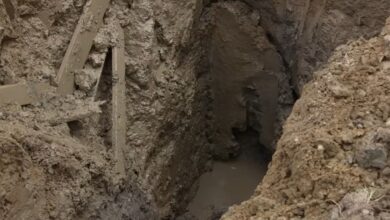
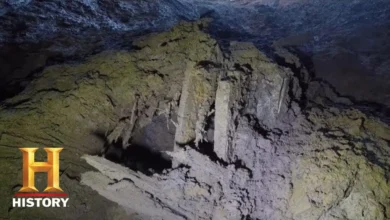
Smith’s Cove has long been the crucible where theory meets tide. Reports dating back to the 1850s and 1860s describe “finger” or “box” drains—stone-laid channels converging toward the Money Pit, theoretically designed to flood intruders out. Modern teams have documented a U-shaped structure, triangular apertures, and layers of coconut fiber that look like filtration. The interpretive split is crucial: are these the original flood defenses, or the by-products of later industrial or search activity? The answer determines whether today’s crews are finally mapping the original system—or chasing echoes of 200 years of digs.
Precision or bust: straight holes, true lines, hard geology
A single borehole drifting eight feet off line at 100 feet depth can miss a shaft, tunnel, or void completely. That is why the team’s collaboration with specialists like gyroscopic surveyors matters: it’s the difference between repeatable science and “close enough.” The historical record warns of catastrophic collapses—notably the 1860s failure that swallowed a working shaft—and today’s crews still battle seepage, blow-ins, and unstable tills. Technology improves the odds; geology keeps the house edge.
The skeptic’s case: saltworks, packing fiber, and a tar kiln
Not all mysteries need Knights Templar. Skeptical archaeologists and geologists point out that coins, tools, and timbers are expected on a site repeatedly disturbed since the 1790s. The supposed flood tunnels may reflect historic salt-harvesting works at Smith’s Cove; coconut fiber could be maritime packing. A robust alternative synthesis by marine geologist Gordon Fader and historian Joy Steele posits an 18th-century British industrial compound on Oak Island—pine-tar production, brass, and wire drawing to service Royal Navy needs. In their read, the “Money Pit” could be a repurposed natural sink or a tar kiln, with layers of wood, charcoal, and putty matching industrial residues rather than treasure defenses. This view does not erase anomalies; it re-orders them under a different logic: supply chains, not secret vaults.

Building a research center: curating evidence, not just chasing it
One sensible proposal is to centralize records—logs, core samples, dendro dates, metallurgy, bathymetry, and archival scans—into a dedicated research center on or near the island. A live catalog would let hypotheses rise or fall against shared, standardized datasets. Whether the endgame is bullion, a manuscript cache, a scuttled ship, or a clearer picture of 18th-century industry, progress will come from repeatability and transparency as much as from the next dramatic core pull.
What the “unknowns” still say
- Engineering intention: The repetition of cut timbers, numeral-marked elements, and organized drainage points to planned works, not random digging.
- Global fingerprints: Finds tied to British military presence, Spanish trade, and Templar-style symbols keep the island tethered to wider Atlantic networks—some proven, some speculative.
- Human cost and diversity: Bone fragments signaling multiple ancestries hint at a past of labor, loss, and mobility—whatever was happening here mattered enough for people to risk and spend lives.
Conclusion: treasure, truth, or both?
Is Oak Island a vault of magnificent loot? A palimpsest of imperial industry, smuggling, and salvage? A centuries-deep mirror reflecting the human need to find order, meaning, and payoff beneath chaos? Perhaps it’s all three. Technology won’t choose our favorite story; it will test it. As gyros straighten holes and GPR refines targets, the island keeps doing what it has always done—giving just enough to make the next step irresistible.
Until a chamber is opened and a context documentable beyond doubt, Oak Island remains what it has been for two hundred years: a lesson in persistence, a debate between romance and rigor, and a coastline where fog, fact, and folklore meet.