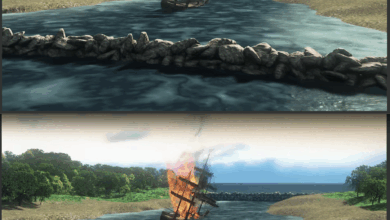
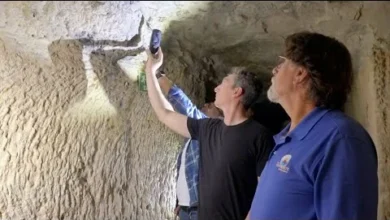
Curse Of Oak Island Season 13: New Evidence – That Proves Gold Fell into Solution Channel

The Curse of Oak Island Season 13: The Coin That Changes Everything
A Premiere That Redraws the Map
After 12 seasons of grit and near-misses, Season 13 opens with the series’ most consequential reveal yet: a bent 14th-century Portuguese silver coin presented in the War Room—framed as the very object foreman James Pitblado allegedly pocketed during the famed 1849 auger strike at ~98 feet in the Money Pit.
Rick Lagina’s take: “It’s proof that something is at the bottom of the Money Pit.”
Marty’s calculus: If authenticated to that event, it’s “the strongest thing we’ve ever found.”

The 1849 Pitblado Incident—Revisited
- The Drill Log (1849): Hardwood → ~2 ft of loose metal → hardwood → ~2 ft of loose metal—long read as stacked treasure chests.
- The Flash of Silver: Pitblado retrieves a “shiny object,” shows it to Charles Archibald, and the pair immediately try to buy Oak Island’s eastern end—a move that electrified legend and suspicion alike.
The Coin on the Table
- Type: Portuguese Tostão (Tornês/“torrés” variant)
- Date Range: Reign of King Ferdinand I (1367–1383)
- Analysis: Metallurgist Emma Culligan confirms authenticity; composition ~37.5% silver
- Condition: Slightly bent (consistent with auger impact), remarkably well-preserved (suggestive of long-term enclosure)
Why It Matters: From Theory to Tangible
For years, the show’s medieval/Templar hypothesis hinged on patterns, symbols, and context. This coin provides datable, portable evidence from a period linked to the Templars’ reconstitution in Portugal as the Knights of Christ. If—and it’s a crucial if—the coin is the same object from the 1849 drill, it becomes a direct Money Pit artifact with a documented depth narrative.
Strategy Shift: Chase the Solution Channel
The working model now asserts that collapse events likely dropped contents deeper into a bedrock solution channel (>200 ft). Season 13 pivots to:



- Map & Drill: Systematic targets (J6, 8, 5) near last season’s collapse (TO-1)
- Depth Envelope: ~180–210 ft and beyond
- Tooling Upgrade: From percussive “hammer-grab” (risk of driving targets away) to 7-ft carbide augers and a scoop drum aimed at retrieval, not redistribution
Early Field Signals
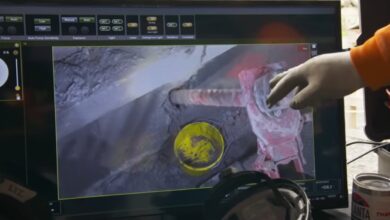
- Searcher Hardware: Thick, non-corrosive casing fragments in core—likely 19th-century searcher steel (validation they’re intersecting historic drill lines)
- Pre-1795 Metal: A separate metal fragment with no modern alloy signature—supporting a depositor-era presence at depth
Lot 5: The Parallel Storyline
While the Money Pit goes deeper, Lot 5 keeps reshaping the island’s backstory:
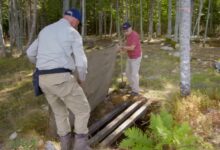
- Features: A rounded stone foundation and rectangular structure—deliberately buried
- Finds: Staffordshire slipware (c. 1675–1770), Venetian/glass beads (some potentially much earlier), iron fasteners, earlier buttons linked by some to Knights of Malta symbolism
- Implication: Lot 5 may have served as a long-lived operations base, with activity bands from c. 1200 through the searcher era
Unifying the Threads
- The Coin offers the why (European/medieval intent & proof of depth association)
- The Channel offers the where (the likely sink-path of displaced deposits)
- Lot 5 offers the who/when (multi-century presence consistent with clandestine custodianship)
The Risk—and the Resolve
Season 13 narrows the margin for error. The hypothesis: treasure rests precariously within the solution channel. One wrong move could scatter it deeper. Hence the gentler drilling paradigm, the grid discipline, and the lab-first approach to every fragment.
The Big Picture
Whether you subscribe to Templar lines or prefer a secular depositor theory, the Portuguese coin—authentic, medieval, and plausibly tied to the 1849 auger—has transformed Season 13 from a set of informed inferences into a tangible-evidence hunt.
If the Money Pit was the lock, this coin may be the long-lost key.
Fast Facts (At a Glance)
- Headline Artifact: 14th-century Portuguese silver coin (bent, ~37.5% Ag)
- Claimed Provenance: The alleged 1849 Pitblado auger retrieval
- Operational Pivot: Deep solution channel exploration at ~180–210+ ft
- Tooling: 7-ft carbide augers + scoop drum (less percussive, more recoverable)
- Corroboration: 19th-century searcher casing fragments at depth
- Lot 5: Layered occupation (c. 1200→post-1795), structural features, early ceramics/glass