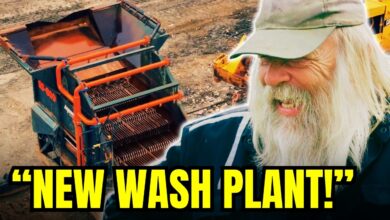
Sluicifer Shutdown Forces Major Equipment Reroute
Unexpected Conveyor Failure Halts Top Wash Plant
Parker Schnabel’s most productive wash plant, Sluicifer, came to a sudden stop after its main conveyor belt failed. The halt triggered immediate action, with Shane retrieving a spare 37-foot belt from the yard. Initial expectations were that the plant would be operational again by day’s end.
The conveyor system plays a critical role in minimizing trucking and operational costs. Recognizing its importance, Parker quickly put a plan into motion to replace the belt and restore operations.

Belt Replacement Plan Goes Awry
Parker’s approach involved raising the conveyor and using a mini-excavator to position one end of the new belt onto the head roller, while a second excavator pulled the opposite end toward the tail roller. However, installation revealed an issue—the belt was significantly shorter than expected.




Though labeled as 37 feet, the belt appeared to have been cut and spliced, reducing its effective length by nearly two feet. As a result, the replacement could not be used.
Contingency Plan: Equipment Reassignment
With the conveyor belt replacement a failure, Parker devised a backup strategy to get Sluicifer running again. The plan involved two major moves:
- Redirect the super conveyor, a 100-ton unit mounted on a 700-class excavator, to feed Big Red.
- Relocate Big Red’s hopper and conveyor system 300 yards around the mining cut to service Sluicifer.
This would temporarily shut down Big Red, but with no other viable option, Parker prioritized reviving Sluicifer.
Execution and Obstacles
The super conveyor was successfully detached and mobilized. Meanwhile, Tyson was tasked with removing the broken feed conveyor from Sluicifer. The operation, however, faced further setbacks.
Tyson encountered resistance while maneuvering equipment due to water lines buried beneath the road. The team took extra care to avoid damaging infrastructure, using controlled movements and additional rigging to prevent frame flexing and minimize the risk to underground utilities.
Despite the rough terrain and logistical complexity, Tyson managed to lift the broken stacker free from the dirt, clearing the path for replacement.
Operational Impact
The unexpected conveyor belt failure and subsequent adjustments resulted in significant downtime for both wash plants. However, the quick thinking and coordinated effort among Parker’s team ensured that production could resume with minimal long-term disruption.
This incident highlights both the challenges of remote mining operations and the team’s ability to adapt quickly under pressure—turning mechanical failure into another test of resilience in the relentless pursuit of gold.