Gold Rush Pressure Builds Fast as Tony Beets Forces a Recovery, Parker Schnabel Faces a Production Dip, and Rick Ness Comes Up Short Again

Gold Rush Recap: Breakdowns, Big Risks, and Signs of a Turnaround
This stretch of Gold Rush delivers exactly what makes the series compelling: costly breakdowns, bold field improvisation, hard-earned repairs, and the constant pressure of turning dirt into ounces before the season slips away.
Tony Beets fights to revive his Paradise Hill operation after a mechanical collapse shuts everything down. Parker Schnabel faces an uncomfortable production slump just when his season should be accelerating. Rick Ness, still searching for the right ground after Rally Valley, sees another week of disappointment at the crew cut. Across all three camps, the message is the same: time is running, and patience is wearing thin.
Tony Beets Tries a Field Rescue Instead of a Full Recovery Haul
When one of Tony Beets’ loaders dies out on Flat Creek, his first instinct is not to tow it home and deal with the repair in the yard. Instead, Tony chooses the faster and far more unconventional option.




He decides to pull an engine from the boneyard, transport it directly to the disabled loader, install it on-site, and drive the machine back under its own power. For Tony, the logic is simple. Dragging the loader all the way back would create too much disruption. Swapping the engine where it sits should, in theory, save time and avoid a major haul.
To make the plan work, the crew brings in a side boom, a machine designed for lifting and positioning heavy loads in rough terrain. The replacement engine is lowered into place, and for a while the operation appears to be going smoothly. The old engine comes out, the new one goes in, and Tony starts to believe the fix may actually work.
For a moment, it looks like the king of the Klondike has pulled off another one of his improvised recoveries.
Then it falls apart.
A New Engine Is Not Enough
After five years of sitting idle, the salvaged engine does turn over. But the loader still refuses to return to work. As soon as the machine tries to move, Tony realizes something else is wrong. The problem is no longer the engine alone. The transmission or the hydraulics are loading up, and the machine is still effectively dead.
Tony quickly abandons the idea that the field engine swap has saved the day. In his own blunt style, he admits the plan has failed.
That leaves the entire operation shut down.
For a mine already under pressure, that downtime matters. Paradise Hill cannot afford to lose productive days, especially with Tony still chasing a very ambitious seasonal target.
Mike Beets Brings in the Heavy Haul Solution
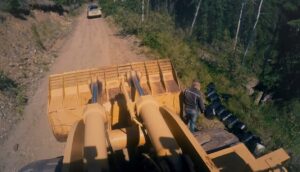
With the field resurrection attempt finished, Tony shifts to a more practical approach. Cody fabricates a steel tow bar, and the only machine powerful enough for the recovery is brought in: the 63-ton D10 dozer.
Mike Beets, the family’s heavy-haul specialist, handles the recovery operation. The D10 is stripped down for towing duty, the tow bar is fitted to the bucket of the dead loader, and Mike begins dragging the 48-ton machine the six miles back to the yard.
It is a slow, demanding recovery, but it works.
By the time the loader reaches the yard, Tony can only admit what is now obvious. This is probably the approach they should have taken from the start.

Kevin Finds the Real Problem
Back at the yard, Kevin Beets diagnoses the loader more carefully. He finds that several valves are stuck, preventing the transmission from moving freely. Once those valves are loosened and corrected, the machine is finally able to run properly.
After four days of downtime, the loader is back in service.
That matters immediately. With the machine working again, the Beats crew can finally return to moving material and feeding the trommel. For a family operation trying to stay on track, even one loader coming back online makes a significant difference.
Still, the larger problem remains. Tony is not chasing a small cleanup. He is chasing 5,000 ounces for the season, and he knows very well that every shutdown costs money and momentum.
Tony’s Weekly Weigh-In Falls Well Short
Once the operation resumes, Tony pushes the crew to keep feeding rough material through the wash plant. He is willing to take risks on messy pay, roots, and oversized material if it means keeping the trommel turning.
But the weekly gold weigh is underwhelming.
After all the breakdowns and all the downtime, Tony’s piggy bank cut produces just 78.7 ounces, far below the roughly 260 ounces he needs to stay properly on pace for his 5,000-ounce goal.
No one around the table looks impressed. Tony tries to stay philosophical, pointing out that bad weeks happen and that many miners would still be glad to see that amount of gold. But the truth is obvious. This is not a productive week by Tony Beets standards.
He knows the season will only work if it evens out later.
For now, Paradise Hill still has a long way to go.
Dave Turin’s Eagle Plant Struggles to Justify Itself
Elsewhere, Dave Turin is dealing with his own frustrations. The Eagle plant is repeatedly shut down by a damaged conveyor belt. First, a rock jams the tail pulley. Then a worn rubber flap allows more rocks to drop into the same vulnerable spot, causing a second shutdown.
The crew patches the belt as quickly as possible, but the interruptions cost them eight hours of valuable running time.
When the cleanup comes, the result is disappointing: 6.86 ounces, worth about $11,000.
For Dave, the number is not good enough. He still believes there is richer virgin ground deeper below, but Jason is clearly losing patience. The operation cannot afford to wait indefinitely for deeper promise while the current returns remain this low.
Dave insists on one last push. The people around him sound increasingly doubtful.
Tony’s Historic Dredge Finally Runs Again
One of the brighter moments in this stretch comes when Tony’s long-dormant dredge finally gets moving again. After a complicated cable setup and a risky extraction, the dredge is brought into position and powered up.
For Tony, it is a meaningful milestone. The machine has been sitting for years, and seeing it catch dirt again feels like a genuine revival.
At the next family weigh-in, the dredge runs for only two days but still produces 22.56 ounces, roughly one ounce per hour. That rate is encouraging because the dredge is relatively cheap to run compared to some of the larger, hungrier wash plants.
Alongside that, Sluicifer delivers 184.36 ounces, while the Paradise Hill trommel adds 205.22 ounces.
The combined total for the week is 412 ounces, bringing Tony’s season total to 1,669 ounces.
The number is not enough to relax anyone, but it is enough to remind the crew that multiple operating plants give Tony a real shot at recovering ground later in the season.
Parker Schnabel Hits a Production Slump at the Worst Time
While Tony fights breakdowns, Parker Schnabel faces a different problem: declining production.
His operation has three wash plants running, and in theory this should be the stage of the season where output is peaking. Instead, Parker endures another disappointing week.
Big Red, running at the bridge cut, manages only 100.8 ounces. Roxan performs better, bringing in 185.65 ounces, but Bob, working on Ken’s ground, only produces 58.45 ounces after running for two days.
The combined weekly total comes to 307.6 ounces, Parker’s worst weigh-in in seven weeks.
That matters because Parker is chasing an 8,000-ounce target, and he needs roughly 600 ounces per week to stay on pace. Instead of ramping up, his operation has now posted two straight weeks of decline.
Halfway through the season, Parker has banked 4,175.4 ounces, which is still impressive in absolute terms. But Parker does not measure himself by averages. He measures himself against targets, expectations, and what his operation should be doing with this much equipment in motion.
From his perspective, this is a production slump at exactly the wrong time.

Rick Ness Sees the Crew Cut Fall Apart
Rick Ness has his own crisis. After Rally Valley gave him a rich run of gold earlier in the season, he now needs another productive cut to keep his season alive. Unfortunately, the crew cut is not delivering.
Buzz Legault believes he has identified a better pay streak, and Rick gives him another week to prove it. But while the crew tries to keep Rocky running, equipment problems start stacking up.
A tilt linkage breaks on one loader. Another loader is already down with a locked compressor and a failed belt. To avoid shutting the plant down completely, the crew is forced into a costly workaround, using an excavator and a rock truck together to do the work of one loader.
Eventually, Ryan and the mechanics rob parts from the worse machine to get the other one back running. It is resourceful, but it is also a sign of how fragile Rick’s operation has become.
When the cleanup arrives, the result is brutal: just 9.28 ounces, worth a little over $23,000.
That number is not even close to enough.
Rick, Buzz, and the rest of the crew know immediately that the crew cut is effectively finished. The pay streak did not materialize. The ground is a miss.
Rick now has around 950 ounces for the season and still needs another 550 ounces to reach his goal. Worse, he no longer has a clear plan for where that gold is going to come from.
For the first time in a while, Rick openly admits he is feeling the pressure.
A New White Channel Hope at Paradise Hill
Back at Paradise Hill, however, Tony may have reason to believe better ground is finally within reach.
After ten straight days of digging in the cold cut, Ruby Mahoney reaches approximately 70 feet down and calls Mike over to look at what appears to be pay. The material shows the yellow, iron-stained gravel and rounded river rocks that often indicate gold-bearing white channel ground.
Tony arrives to pan the material for himself.
His test pan is encouraging. It produces visible color, including fine gold and a few flakes. For Tony, that is enough to declare the cut worth sluicing.
If the white channel pay layer has truly been reached earlier than expected, the cold cut could become one of the most important pieces of his season. Tony has been banking heavily on this cut to get him closer to his 5,000-ounce target, and now he finally has proof that there is at least some real gold in the ground.
That discovery does not solve all of Paradise Hill’s problems, but it gives Tony something he badly needs: confidence that the season’s next big push may still be worth the effort.
Final Outlook
This run of events shows three very different kinds of pressure.
Tony Beets is fighting through mechanical collapse, trying to keep multiple plants alive long enough to let his stronger ground save the season. Parker Schnabel is not breaking down, but his output is sliding at a time when his operation should be gathering full momentum. Rick Ness, meanwhile, has run straight into the harsh reality of bad ground and is now searching urgently for the next viable payday.
Across all three camps, the lesson is the same. Mining seasons are not won by potential. They are won by machines that stay running, crews that keep moving, and pay that actually produces.
Right now, everyone still has work to do.