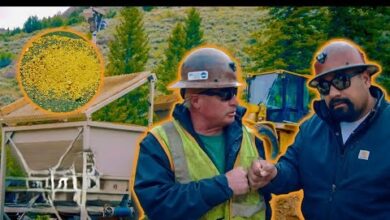
EVERYTHING Goes Wrong During This Gold Test, The Octopus Wash Plant Faces a Make-or-Break Test | Gold Rush: Mine Rescue with Freddy & Juan

The Octopus: A Wash Plant Under Pressure
On a remote gold mining site, a small crew is facing the harsh reality of operating on the brink of financial collapse. Their hopes rest on a weathered, green-hosed wash plant they call “The Octopus.” The nickname comes from its tangle of water lines stretching in all directions, but the plant’s condition and performance may be more problematic than its appearance.
Last year, crew member Raul operated the plant in the belief that, over time, it could be fine-tuned to recover enough gold to stabilize their operation. But as the season begins, the team is in a tight spot — and The Octopus will have to prove it can deliver.

Firing Up the System
The setup is simple in theory: pay dirt is loaded into a 10-by-6-foot hopper. From there, a vibrating punch plate should screen out large rocks, letting the smaller gold-rich material drop down into four 10-foot-long sluice boxes.

As the crew starts the plant, the first bucket of material goes in and the vibration of the punch plate rattles loudly across the valley — “you could hear that screen on the dark side of the moon,” one observer remarks. But noise isn’t the only concern. Within minutes, critical flaws in the system become apparent.
Major Problems With Classification
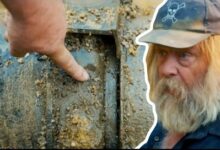
The punch plate is “way loose,” with no functioning side tensioners and welded components preventing adjustments. In mining, classification is a key step — separating larger rocks from finer particles before they enter the sluices. This ensures that water flow can properly concentrate the heavier gold while carrying lighter waste downstream.
In The Octopus, the oversized rocks are passing straight into the sluices. This disrupts water flow, churns up the mats, and reduces gold capture efficiency. “Probably the most ineffective screen I’ve ever seen,” one expert notes. The lack of proper classification means the plant cannot effectively separate gold from waste material, leading to potentially significant losses.
Sluice Boxes in Poor Shape
The sluice boxes themselves — the heart of gold recovery in a wash plant — are described as being “in rough shape.” Riffles and mats appear worn, and the alignment suggests water flow may not be evenly distributed. Any irregularity in sluice operation can cause fine gold to wash away rather than settle in the mats.
These issues point to a broader problem: every stage of the plant, from hopper to sluices, needs work before the operation can hope to run efficiently.

The Water Supply Fails
Just as the crew begins to gather initial performance data, disaster strikes. The plant suddenly loses water pressure — the pump feeding The Octopus has failed. With the water supply gone, the sluicing process stops instantly.
In a placer mine, water is the lifeblood of the entire system. Without a steady, strong flow, pay dirt simply moves through the plant without effective washing, and gold recovery drops to zero. The team has no choice but to shut down immediately.
The Road Ahead
The test run of The Octopus has exposed deep flaws in both equipment and process. To reach cash-positive operations, the crew will need to address:
- Replacing or repairing the punch plate with a properly tensioned, adjustable screen.
- Restoring the sluice boxes to optimal condition with new riffles and mats.
- Implementing a more reliable, high-capacity water pumping system.
- Training operators to maintain consistent classification and material flow.
These are not small fixes. Each will require time, money, and skilled labor — resources already in short supply.
A Make-or-Break Season
For Raul and his team, the challenge is more than mechanical; it’s existential. Without a fully functional wash plant, they cannot process enough material to generate revenue, and without revenue, they cannot continue mining.
The Octopus, once seen as a potential lifeline, now represents a critical obstacle. If they can overhaul it in time, it could still become the cornerstone of a successful season. If not, the crew’s gold mining venture may grind to a halt before it truly begins.