After a Rocky Start, Parker Schnabel’s Crew Hits Their Best Cleanup of the Season
After a tough beginning to the mining season, Parker Schnabel and his crew are finally finding their rhythm. With three wash plants running at full capacity, the team has just pulled in their biggest gold haul yet, proving that their hard work is beginning to pay off. Running three wash plants simultaneously is chaos—it stretches both the crew and equipment to their breaking points. But with the slowest start of his career, Parker has no choice. This is the only way to salvage the season and hit his ambitious 10,000-ounce target.
A Tough Start, but Hope is Sparked

Midway through the mining season, Parker is still playing catch-up. A series of disappointing cleanups has left him in a difficult spot. However, his recent 500-ounce haul has sparked hope. Still, hope alone won’t pay the bills. “You start building a company bigger and bigger, and it becomes a monster you have to feed,” Parker admits. The amount of cash needed each week to keep the operation running is overwhelming.


With the season slipping away, Parker has deployed his crew across three key sites. At Indian River, a skeleton crew is running Keenan Stewart’s paid dirt at Dominion. Meanwhile, in the massive 114-acre Bridge Cut, his team is stripping the top layer over a mile and a half away. They’ve just mined out the first half of the 20-acre-long cut, but keeping all three wash plants running is a logistical nightmare.
A High-Stakes Operation
The race to move rock sand from the first section of the long cut is on. The crew must relocate the wash plant upstream, outside the pit. Parker’s strategy is to haul paid dirt to the plant, which will allow the stripping crew to remove overburden efficiently and open more ground for next season, avoiding costly delays.
Over the past eight weeks, Parker’s crew has stripped 10 acres of the long cut. Now they need to tackle the second half. Moving rock sand more than a mile upstream is a high-stakes operation, and everything must be in place before the night shift arrives to start running material.
Tension on the Job Site
Tyson radios in, “How’s it going, Parker?” He reports that rock sand’s done but they need to finish at the long cut before moving the plant. Parker replies, “You’ve moved a lot of wash plants this season—up for one more?” With the pad ready but the cut not yet complete, the crew jumps into action, carefully dismantling and relocating the equipment. They remove the feeder, radio stacker, dig out the pipeline, and relocate the water pump and generator.
Despite the challenges, Tyson remains calm, reminding everyone, “Slow is smooth, and smooth is fast.” They move piece by piece, ensuring the plant is in position and ready to fire up. But there’s one major problem: no water. A costly pump failure earlier in the season has left them relying on a high-powered pump capable of pushing over 77,000 gallons per minute. But when they try to start it, nothing happens.
A Costly Setback
After a closer inspection, they find a loose intake hose allowing air into the system and causing an air lock. Once tightened, water begins flowing. “Go ahead, EV, start feeding. We’ve got water,” Parker calls out. With the plant running again, Parker’s crew has met their deadline—but keeping it running will be the real challenge.
A Trial by Fire for Tav Peterson
With rock sand running, Parker hands the controls to 20-year-old Tav Peterson. This is Tav’s first time operating the loader solo, and the learning curve is steep. He’s tasked with feeding 250 yards of pay per hour, but six hours into his shift, disaster strikes—the hopper jams. Unsure of how to fix it, Tav calls for help.
Tyson and Mitch arrive to assess the situation. A large rock has slipped through the grizzly bars, blocking the material flow. Mitch shuts down the plant and shovels away the debris while Tav stands by, ready to stop operations if needed. Mitch notes, “If he had kept running, that rock would have cut the belt, and we’d be replacing it right now.” Tav’s quick thinking and willingness to ask for help prevent a much bigger disaster.
A Critical Moment for the Team
As the plant roars back to life, the team knows the key to success isn’t just about moving dirt—it’s about keeping everything running. Without paid dirt flowing, there’s no gold at the end of the week. Right now, things are looking good. “We have dirty rock going in and clean gold coming out,” Parker says. But with three wash plants running, every cleanup counts, and every mistake could mean falling short of the season’s target.
A Strong Gold Haul, but the Pressure is On
The crew has completed a demanding week of work. Mitch Blash reflects on how much they’ve accomplished, noting they’ve finished the downstream section of the long cut, moved the plant, and put Tav in charge of the loader. Despite Tav’s tough challenge with the hopper jam, Mitch stepped in to teach him how to clear it out. He emphasizes that mining is unpredictable, and complacency can lead to bigger problems. Fortunately, Tav caught the issue in time.
With Fox now running steadily in the new section of the long cut, the crew hopes for better results. The first half of the cut produced only 138 ounces per week—far below expectations. But Parker remains hopeful that this new ground will yield stronger returns.
A Historic Cleanup
As the crew gathers for the gold weigh-in, anticipation fills the air. Chris Doet carefully measures the gold recovered from rock sand. The numbers climb steadily, and the final total reaches 222 ounces. It’s a solid start, but there are still two more plants to go. Big Red, processing paid dirt from the bridge cut, comes in next with 82.8 ounces, worth $127,000. Parker nods in approval; while not the highest yield, it’s a respectable number.
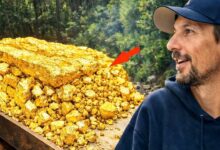
Then comes the moment everyone has been waiting for—the cleanup from Big Bob, which has been running 24/7 at Keenan Stewart’s site. As Chris continues weighing the gold, the scale climbs higher and higher until it reaches a staggering 368 ounces, worth $867,000. It’s the biggest single cleanup of the season so far, and the excitement in the room is palpable. One crew member jokes, “I didn’t even know the scale could go that high!”
A Glimmer of Hope for the Season
With all three wash plants combined, the team pulls in an incredible 652 ounces of gold, bringing their season total to 2,345.3 ounces. As the gold totals climb fast, Parker sees improvement in their operation. Though the season isn’t over, he sets his sights on even bigger results. The crew is energized by their best cleanup yet and is ready for the challenge ahead.
Parker is pleased with the progress but knows that sustaining this momentum is key. With only a few weeks left in the season, he emphasizes the need to keep pushing, ensuring the wash plants run at full capacity and that every ounce of pay dirt is processed efficiently. If they can keep up this pace, they might just turn the season into a record-breaking success.