The Most Expensive Machines in Gold Rush History: Inside the High-Stakes World of Yukon Mining
In the treacherous gold fields of the Yukon, fortune favors the bold — and the well-equipped. For miners like Tony Beets and Parker Schnabel, success isn’t just about grit and determination. It’s about betting millions on the right machines.
These miners live in a world where a single mistake can destroy an entire season — and a single machine can make or break a career. From 120-ton bulldozers to floating gold factories, we’re digging into the most expensive equipment ever used in Gold Rush history, and the colossal risks that come with them.
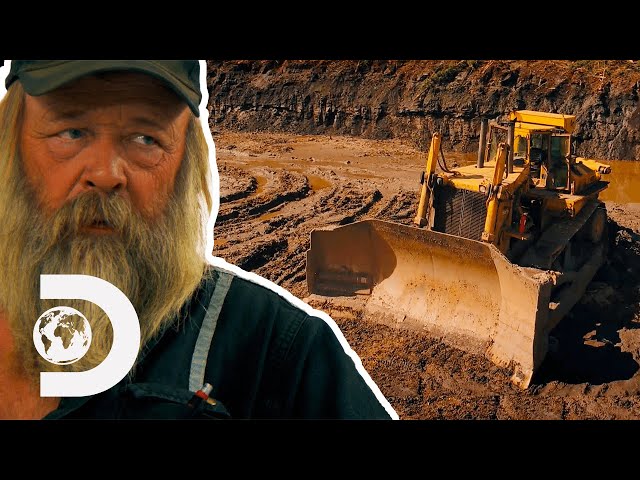
The D11 Dozer: Tony Beets’ $2.7 Million Gamble
Gold mining in the Yukon is nothing short of a war against the earth itself. To win that war, you need serious firepower — and no one understands that better than Tony Beets, the self-proclaimed “Viking of the Klondike.”
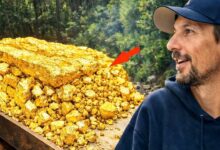


For his most ambitious season, Tony set an outrageous goal: 9,000 ounces of gold, worth more than $16 million. But the richest pay dirt at Paradise Hill lay buried under 40 feet of frozen permafrost. Even with his biggest excavators, digging through it would take weeks — time Tony didn’t have.
So he went all in.
“You have to upgrade. You have to get the iron,” Tony declared. “You’ve got to work with the equipment, not on it.”
His solution was as bold as it was expensive — a brand-new Caterpillar D11 dozer, straight from the factory.
This 120-ton monster cost a staggering $2.7 million, making it one of the most expensive single machines ever purchased on Gold Rush. With over 850 horsepower and a blade capable of pushing 45 cubic yards of dirt in one pass, it’s a mobile earthquake.
But the real weapon was its 10-ton ripper shank, a single steel claw designed to tear through rock and ice.
The plan was simple — and terrifying. Tony would drive the dozer to the very edge of a 40-foot cliff and rip through the permafrost from the top down. One wrong move, and both Tony and his $2.7 million machine could plunge into the pit below.
The crew watched in silence as the massive dozer crept forward. The engine roared, the ground trembled, and tons of frozen dirt cascaded into the pit. It was a high-stakes gamble — and it paid off.
Thanks to the D11, Tony’s team reached the pay layer in just five days instead of a month. In the Yukon, the biggest risks often lead to the biggest rewards.
The Floating Fortune: Tony Beets’ Million-Dollar Dredges
While the D11 was a modern marvel, Tony’s biggest gambles haven’t always been on new steel. Sometimes, they’re on forgotten history.
Years before his dozer purchase, Tony took on one of the most ambitious — and expensive — projects in the history of Gold Rush: reviving a 75-year-old gold dredge.
A dredge is a floating factory that digs its own pond, scoops pay dirt from the bottom, and processes gold onboard. These behemoths built the Klondike a century ago, and Tony became obsessed with bringing one back to life.
He bought his first dredge for $1 million, but moving it was a logistical nightmare. The 750-ton machine had to be dismantled into hundreds of pieces, each weighing up to 20 tons, and hauled over 150 miles through rough Yukon terrain.
Just transporting it cost hundreds of thousands of dollars.
Rebuilding it was even harder. Without blueprints, Tony’s crew had to rely on old photographs and pure determination. Rusted parts had to be custom fabricated, electrical systems rebuilt, and the massive bucket line completely overhauled.
By the time the dredge — christened The Viking — was finally operational, Tony had invested more than $3 million.
But he wasn’t done. A few seasons later, he bought a second, even larger dredge for another $1 million, repeating the entire process.
The total cost of his two floating giants exceeded $5 million, making them the most expensive operational systems in Gold Rush history.
It was an all-or-nothing gamble — a testament to Tony’s belief that “the old ways, powered by modern money,” could still pay off.

Parker Schnabel’s Million-Dollar Gold Factories
While Tony Beets revives history, Parker Schnabel builds the future.
From the start of his mining career, Parker understood one thing: if he wanted to beat the competition, he needed to process more dirt — faster and more efficiently than anyone else.
“We buy the new stuff, and we’re going to do 9,000, 10,000 ounces every year from now on,” Parker once said. “You can’t do that with old crap.”
His strategy? Custom-built wash plants designed for one purpose — maximum gold recovery.
The first was Sluicifer, a $600,000 powerhouse engineered to handle huge volumes of pay dirt. But Parker didn’t stop there. He upgraded constantly, pouring hundreds of thousands more into stronger pumps, specialized matting, and improved shaker decks.
Next came Big Red, another custom plant that cost roughly $400,000 to construct and transport. Then, in his drive for ultimate efficiency, Parker unveiled Monster Red, followed by his latest plant, Roxanne — both cutting-edge machines that pushed his total investment in wash plants alone to over $2 million.
Running these behemoths simultaneously doubles everything — fuel, maintenance, manpower — but also doubles the gold output.
For Parker, every dollar invested in equipment is a dollar bet on engineering and precision. His empire runs on efficiency — turning dirt into fortune through sheer innovation.
When Big Iron Fails: The D-Rocker Disaster
But not every million-dollar machine leads to success. In the world of gold mining, sometimes the biggest investments lead to the biggest failures — and no one learned that lesson more painfully than Todd Hoffman.
Todd’s crew spent over $1 million developing the D-Rocker, a custom-built mobile wash plant designed to break down heavy clay-rich dirt. On paper, it was brilliant. In reality, it was a nightmare.
From day one, the D-Rocker was plagued with design flaws. The complex trommel constantly clogged, axles broke, and the system was so heavy it could barely be moved.
“It’s not looking good under there,” one crew member admitted. “I think we’re screwed.”
Despite months of effort, the machine never hit its production targets. The cost wasn’t just financial — it cost the Hoffmans precious time and lost gold.
The D-Rocker became a symbol of overambition, a million-dollar monument to what can go wrong when innovation outruns practicality.
The True Cost of Gold
In the Yukon, success demands massive investment — and just as massive risk. The D11, the Viking dredge, Sluicifer, and even the D-Rocker all prove one unshakable truth:
In the world of Gold Rush, the price of glory is measured in steel, sweat, and sacrifice.
For every fortune found, there’s a fortune lost — buried not in the dirt, but in the machines that dared to dig it up.