Josh Gates Searches For A Lost WW2 Fighter Plane In Chuuk Lagoon | Expedition Unknown

A MISSION THAT ENDED IN FLAMES
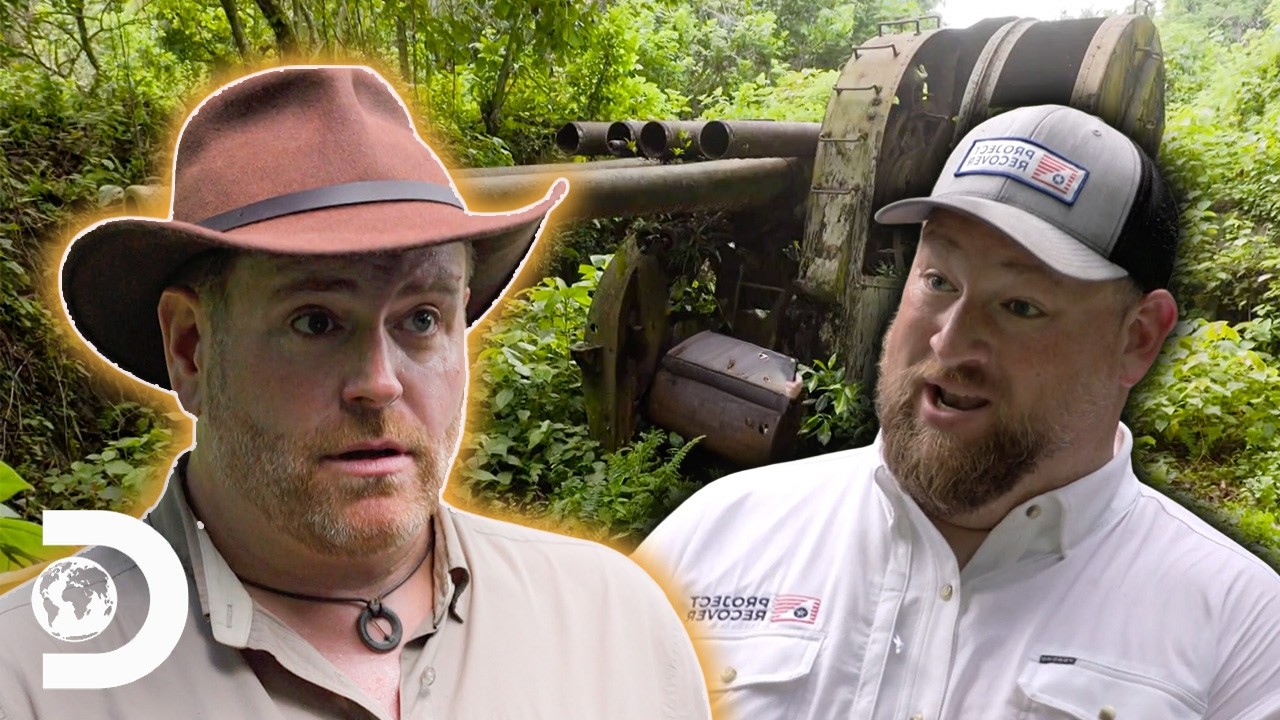
The search for the lost Thunderbolt begins in the remote islands of Chuuk, Micronesia — once known as Truk Lagoon. Today, Tonowas Island is an overgrown wilderness. But during World War II, it was one of the most fortified Japanese strongholds in the Pacific.
In 1945, the lagoon was a massive military hub. Five airfields supported roughly 500 aircraft. The harbor sheltered hundreds of vessels — gunboats, minesweepers, supply ships — all protected by anti-aircraft batteries, bunkers, and concealed cave systems.
Eighty years later, the jungle has reclaimed much of it. But beneath the water, history remains.

THE FINAL FLIGHT OF LIEUTENANT BROOFT
On May 6, 1945, Lieutenant Gordon Brooft and his squadron launched from Saipan, over 700 miles away, flying P-47 Thunderbolts on a high-risk strike mission against Truk Lagoon.




The plan was precise: attack the seaplane base, hit an airfield, sweep across Dublon Island, and exit northwest toward Saipan.
During the strafing run, Brooft’s aircraft was struck. His wingman, Colonel Derwood Williams, saw the plane burning midair.
Fuel ignited beneath the fuselage. Williams tried desperately to radio Brooft, urging him to climb and clear the lagoon before bailing out. But Japanese radio jamming blocked communication.
The P-47 had no ejection seat. At nearly 400 miles per hour, Brooft would have had to manually slide the canopy open and jump — a nearly impossible task at that speed. His parachute reportedly failed under the strain.
The plane, still flying straight and level, continued across the lagoon before ultimately crashing.
For decades, its exact resting place remained unknown.
PROJECT RECOVER TAKES ON THE SEARCH
Project Recover — a team dedicated to locating and identifying missing American service members — began investigating Brooft’s disappearance.
Colonel Williams’ eyewitness testimony proved crucial. He recalled that Brooft was hit near the center of the lagoon and that the aircraft continued flying at high speed after the bailout attempt.
That detail narrowed the search area — but the lagoon remains vast, with decades of wreckage scattered across the seabed.
The team knew the odds were difficult. But they believed the Thunderbolt could still be found.
A WRECK IN THE SAND
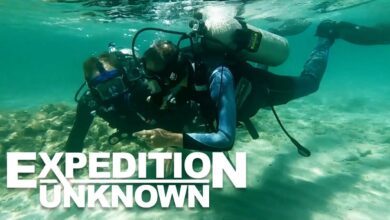
Divers scanning the seabed located twisted wreckage. The metal was heavily mangled, suggesting a high-speed water impact — consistent with Williams’ account.
Burn patterns were visible on portions of the structure. Brooft had been hit in the left wing root, and the damage appeared consistent with fire exposure.
Still, many aircraft wrecks lie in Truk Lagoon. The team needed definitive proof.
THE SUPERCHARGER CLUE
Using underwater scooters to carefully blow away sediment, divers exposed a circular mechanical component buried beneath the sand.
It resembled a supercharger — a key feature of the P-47 Thunderbolt.
The Thunderbolt was known for its large turbo-supercharger system, one of the defining characteristics of the aircraft. However, some Japanese aircraft also utilized superchargers, so this alone was not confirmation.
The team continued excavating.
THE LANDING GEAR MATCH
Beneath more sand, the divers uncovered landing gear struts. Comparing them to technical diagrams of the P-47, they identified a distinctive bend near the wheel assembly — an exact match.
Then came the decisive discovery.
On the wheel itself, visible lettering read:
“General Tire”
“Made in USA”
There was no longer any doubt.
IDENTIFICATION CONFIRMED
The wreckage was American. The structural design matched the Thunderbolt. The mechanical components aligned with P-47 specifications.
After 80 years beneath the lagoon, the lost aircraft of Lieutenant Gordon Brooft had been found.
In the closing days of World War II, he was shot down over one of the Pacific’s most heavily defended bases. Now, in the quiet waters of Micronesia, his story had resurfaced.
A MISSION COMPLETED
Finding the Thunderbolt is more than an archaeological discovery. It restores a chapter of history and honors a pilot whose fate remained unresolved for generations.
Through testimony preserved from aging veterans and meticulous underwater investigation, a missing aircraft — and a missing airman — have been brought back into the historical record.
The lagoon is no longer silent.