Archaeological Discoveries Rewrite History
Nazi Bunker Unearthed: Secrets of the America Bomber
Deep beneath the Polish countryside, a forgotten Nazi bunker, sealed for eight decades, has revealed chilling artifacts from World War II. Among the finds are documents detailing the construction of a grenade thrower, landmine manuals, and booby trap designs, including a tree-mounted explosive triggered by a tripwire. These manuals served as a guide for Nazi soldiers to unleash destruction. A particularly striking discovery is an order stamped “In the name of the Führer,” dated February 4, 1945—just weeks before the Soviet advance. This suggests the bunker was operational until the war’s final moments.
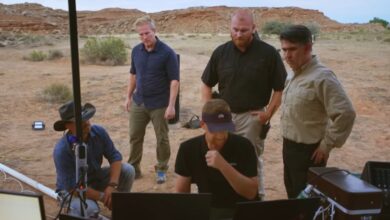
The team, searching for evidence of the elusive “America Bomber”—a prototype plane designed to strike the U.S. East Coast—found no aviation-related materials. However, the bunker, part of the MRU tunnel network, was meticulously documented using a Leica laser scanner, creating a 3D model of the chambers. This marks the first survey of this rediscovered section, offering vital clues for future explorations.
![Expedition Unknown | Season 10 Episode 2 Preview [HD] [2022]](https://i.ytimg.com/vi/Pu1I33DXnRw/maxresdefault.jpg)
Buffalo Bill’s Lost Cache: A Glimpse into the Wild West
Near a hunting cottage once owned by Lord Dunraven, patron of Buffalo Bill Cody, treasure hunters uncovered relics tied to the American frontier. Among the finds was a broken glass bottle, initially mistaken for whiskey but identified as a soda bottle, and a tin lid from a snuff box—a common item for 19th-century hunters like Buffalo Bill. The most intriguing discovery was an intact medicinal bottle from Fellows and Company, New Brunswick, Canada. Its presence, thousands of miles from its origin, points to Lord Dunraven, who hunted in New Brunswick and likely brought the bottle to the site.
These artifacts, dating to the 1800s, confirm the area’s historical significance as a hunting ground for elite figures of the era, offering a tangible link to the Wild West.




Pirate Trading Post Uncovered in South Carolina
In a temporarily drained South Carolina riverbed, treasure hunters Harley Houston and Axel Min discovered evidence of an 18th-century pirate trading post. Large coral blocks, identified as ballast stones from Caribbean ships, were found alongside non-native stones, likely from England. These findings confirm the site as a hub where pirates exchanged goods, with ballast stones used to stabilize embankments.
The most remarkable find was a silver ring crafted from a Spanish half reale coin, dated to the early 1700s. Such coins were prime targets for pirates like Anne Bonny, and the ring’s discovery fuels speculation about her legendary treasure. The site’s historical significance is now undeniable, transforming a local legend into a confirmed piece of pirate history.

Göbekli Tepe: Redefining Human Civilization
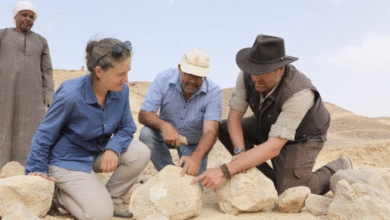
At Göbekli Tepe, a 12,000-year-old site in Turkey, Dr. Lee Clare’s team uncovered a rare stone scepter fragment, hinting at early societal hierarchies. Predating farming and the wheel, this site challenges our understanding of hunter-gatherer societies. The scepter, carefully photographed in situ, suggests the presence of leaders, though not kings, in a society capable of erecting monumental structures.
Further excavations at Göbekli Tepe and similar sites continue to unravel the daily lives of these elite hunters, who performed rituals to honor ancestors and animals. The discovery raises questions about their fate and the broader network of ancient societies, with ongoing research poised to reveal more about humanity’s first organized communities.