From Heated Arguments to Record-Breaking Crab Hauls: Deadliest Catch’s Best Moments!

Chaos on the Bering Sea: Fires, Fights, Failures — and One Crew Pushed to Its Breaking Point

In the violent heart of the Bering Sea, where 70-knot winds and 30-foot waves punish even the toughest mariners, the crab fleet is fighting through one of the harshest and most chaotic stretches of the season. From electrical fires to crew mutiny, from disappearing crab to deadly fatigue, every vessel faces its own storm — and not all of them come from the weather.
Brena A: Big Numbers, Bigger Tension
On the Brena A, rookie captain Shawn Dwyer is pushing hard to recover losses after sloppy rigging cost the crew two crab pots. With each day paid at a fixed rate, margin for error is razor-thin — and tempers even thinner.
The deck comes alive with promising numbers:
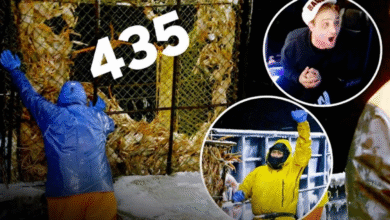
97… 104… 118 crab per pot.
The western end is producing, and the captain knows better than to run from good crab.
But the real storm is happening on deck.


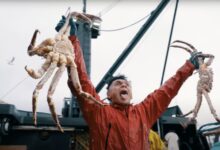
Veteran deckhand Brett challenges Shawn’s decisions, complains about bait choices, and sparks tension with the greenhorns. When a flying steel hook nearly smashes into a crewmember’s face, the argument explodes. Brett blames others. Others blame Brett. And the rift only widens.
A breakthrough comes from an unlikely source — a greenhorn observes that pots baited with herring consistently produce better than the imported sardines. Shawn listens, adjusts, and the catch rate skyrockets. But instead of celebrating, Brett mocks the decision, fueling an already volatile situation.
Then disaster hits.
Slack Cotton, Lost Crab — and a $15,000 Mistake
Pulling the next string, the crew discovers multiple pots with broken cotton, wide enough for entire loads of crab to escape. Alaska regulations require a biodegradable escape line on each pot — but only if properly checked.
They weren’t.
Shawn asks the critical question: “Who was on the rail for this string?”
The answer: Brett.
The damage?
31 pots, 5,000 pounds of lost crab — roughly $15,000 gone.
Shawn calls a meeting. Every deckhand agrees: morale is down, work is sloppy, and Brett has become more of a liability than an asset.
Minutes later, Brett is called to the galley and fired on the spot. He quietly packs his gear as the Brena A heads back to port — one man short, but with tensions finally eased.
Northwestern: Fire in the Engine Room
While the Brena A battles personnel problems, the F/V Northwestern faces something far more life-threatening.
In the middle of the night, alarms erupt.
Smoke. Sparks. A glow from below deck.
An electrical fire has broken out in the engine room, melting breakers, burning insulation, and threatening to consume the entire vessel.
Captain Sig Hansen shouts for flashlights, CO₂ extinguishers, and backup generators as the crew races below. A wall of flame engulfs the crab pump panel. If the fire reaches fuel lines, the vessel could explode.
Miraculously, they put it out.
But the damage is brutal: melted wiring, destroyed breakers, and only a limited emergency power supply. With no radar screen, no crab pumps, and batteries draining fast, Sig must attempt a manual navigation back toward Dutch Harbor in near darkness.
“They were on deck — thank God,” Sig says, knowing that without lookouts, the fire might not have been discovered until far too late.
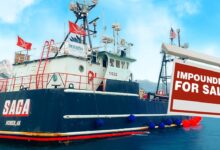
Saga: A Near-Catastrophic Fatigue Failure
Farther down the line, on the Saga, Captain Jake Anderson is battling the tail end of an arctic hurricane and a painfully low crab count. Discouraged but determined, he shuts down for the night and places his crew on rotating wheel-watch.
But fatigue takes its toll.
Deckhand Kenny, suffering stomach pain, lies down “just for a minute” — and falls asleep for four straight hours, missing every watch.
The boat drifts through violent seas with no one monitoring the radar, the waves, or obstacles.
Jake’s fury is explosive:
“Your pride could have killed us. Seven lives are on this boat. If you’re sick, you wake someone up. That’s standard.”
Kenny avoids being fired — but the message is clear.
Time Bandit: Stuck in Port, Breaking Spirits
Meanwhile, the Time Bandit hasn’t moved in 10 days. A critical fuel centrifuge has failed, risking contamination that could stall both generators and engines at sea — a potentially deadly scenario.
Captain Johnathan Hillstrand is frustrated, exhausted, and painfully aware of what the delay means for everyone:
“People think we like being cold and hungry. We don’t. We just want to go home.”
With no functioning centrifuge available, the crew resorts to a desperate workaround:
buy every fuel filter in Dutch Harbor and change them every three hours.
It’s costly, messy, and dangerous — but it’s the only way to keep the season alive.
Finally, after emotional strain and endless mechanical battles, the Time Bandit gets back underway. And, almost miraculously, the first numbers are solid: 66 keepers per pot.
But no catch can replace lost time with family — something every man on deck painfully acknowledges.
A Fleet Under Fire — Literally and Figuratively
Across the Bering Sea, the crab fleet fights on:
-
Explosions of temper.
-
Explosions of equipment.
-
Near-disasters in the wheelhouse.
-
Real disasters in the engine rooms.
-
And miles of ocean that don’t care who’s tired, angry, or scared.
Every pot hauled, every breaker replaced, every sleepless hour of wheel-watch is a reminder of the razor-thin margin between payday and tragedy.
For the men of the Bering Sea, it’s just another week at work.