

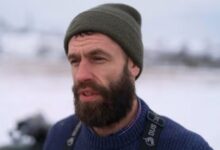
Jeremy Clarkson Reflects on a Childhood Fear Shaped by the Cold War
A Rarely Seen Personal Admission
Jeremy Clarkson is best known for sharp opinions, dry humour, and larger-than-life television moments. But in a recent column for The Sunday Times, the former Top Gear and The Grand Tour presenter revealed a far more personal side, revisiting a childhood memory that continues to unsettle him decades later.
Writing against the backdrop of renewed global tensions, Clarkson reflected on how events from his early years during the Cold War still influence the way he processes today’s headlines.

Life in Oxfordshire, On and Off Screen
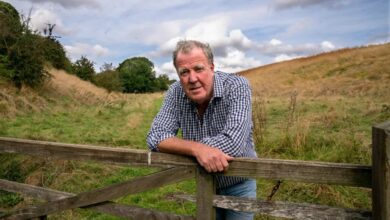
In recent years, Clarkson’s public image has shifted toward rural life. He owns Diddly Squat Farm, which he purchased in 2008 when it was still known as Curdle Hill. The farm later became the centrepiece of Clarkson’s Farm, offering viewers an unfiltered look at the pressures of modern British farming.
Beyond agriculture, Clarkson has also expanded into hospitality, buying and renovating a pub in Asthall and reopening it as The Farmer’s Dog. Both ventures now feature prominently in the series, showcasing the challenges of running rural businesses alongside Clarkson’s trademark frustrations.
A Memory That Never Faded
Away from farming and pub life, Clarkson’s latest column takes a markedly darker tone. He recalls being a young boy in 1962, during one of the tensest moments of the Cold War, when he witnessed his mother sitting on the living room floor in tears. She genuinely believed that nuclear missiles could strike at any moment.
According to Clarkson, the fear felt immediate and unavoidable. It was not an abstract political debate but something that seemed close, personal, and terrifying to a child who could not fully understand the situation.
Growing Up Under Constant Tension
Clarkson described his childhood as taking place during what he considers the coldest phase of the Cold War. Fighter jets would thunder into the sky from RAF Finningley, practising full-power interceptor take-offs. At the same time, television screens were filled with images of Soviet military parades.
To a young boy, these sights and sounds created the impression that conflict was not a distant possibility, but something that could happen at any time. The combination of noise, imagery, and adult anxiety left a deep impression that has stayed with him into later life.

Then and Now: A Different Kind of Fear
In his column, Clarkson contrasts that era with the present day. While acknowledging that modern headlines can be alarming, he suggests the atmosphere feels different now compared with the constant, visible tension of the Cold War years.
His reflection serves as a reminder that global conflicts are not only shaped by politics and diplomacy, but by how they are experienced by ordinary families. For children especially, fear is often absorbed without context, leaving long-lasting emotional traces.
A Glimpse Beyond the Public Persona
For fans awaiting the next chapter of Clarkson’s Farm, expected to return with a fifth season next year, this candid reflection offers a rare glimpse behind the humour and bravado. It reveals a man shaped not only by engines, land, and controversy, but also by quiet moments of fear witnessed at home.
Clarkson’s recollection shows that even those known for confidence and provocation carry memories formed in vulnerability. It also highlights how historical events continue to echo through personal lives long after the headlines fade.
A Conversation That Still Resonates
Clarkson’s comments raise broader questions about how different generations experience global tension. Are today’s fears simply expressed in new ways, or do they feel less immediate than those of the past?
What remains clear is that for Clarkson, a single childhood moment during the Cold War left a lasting imprint—one that still shapes how he views the world today, long after the tractors are parked and the cameras stop rolling.