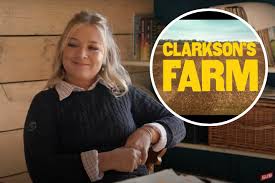
Clarkson’s Farm Inspires a New Generation of Farmers
A Television Show With Real-World Impact
When Clarkson’s Farm first aired on Amazon Prime in 2021, it was seen as an experiment: a famous TV presenter turned reluctant farmer, trying to manage a thousand-acre farm in the Cotswolds. Few expected it to have a lasting impact on agriculture in the United Kingdom. Yet four years and four seasons later, the show has not only won awards but is also being credited with sparking a new wave of interest in farming among young people.

Recent data from Wiltshire College & University Centre shows that applications to study agriculture have risen by a remarkable 62 percent in 2025 compared to the previous year. The increase comes at a time when the farming sector faces major challenges—climate change, rising costs, and concerns over food security—but also unprecedented opportunities in technology, sustainability, and innovation. For many students, Clarkson’s Farm has provided a glimpse into this world and turned curiosity into career ambition.
Raising the Profile of Modern Farming
The impact of television on career choices is nothing new. Doctors, lawyers, and detectives have long benefited from glamorous portrayals on screen. But farming has rarely had a spotlight in mainstream media. That changed with Clarkson’s Farm. By combining humor, hardship, and honesty, Jeremy Clarkson offered viewers a raw look at the highs and lows of life on the land.




The show’s popularity has translated into wider interest in agriculture as a career. Kersty Ellis-Drew, Head of Faculty for Land-Based Studies at Wiltshire College, explained the trend:
“We’re all more aware of food security now and where our food is coming from. But the increased media attention—especially Clarkson’s Farm—has really shown people what the industry is about. I think it has sparked genuine interest and excitement among young people.”
Ellis-Drew highlights that the show makes farming relatable. Instead of abstract lectures on food production, students see Clarkson and his team—Kaleb Cooper, Lisa Hogan, and others—grappling with broken tractors, unpredictable weather, and government red tape. For a generation raised on streaming platforms, this kind of accessible storytelling has proved to be a powerful recruitment tool.
The Student Experience at Lackham Campus
At the College’s Lackham campus, the rise in applications reflects not just enthusiasm for farming but also for agri-tech and sustainability careers. The modern farm is no longer only about ploughing fields or milking cows. Increasingly, it is about drones, data, soil science, and smart machinery.

Seventeen-year-old George Smith, from Malmesbury, embodies this new mindset. Winner of the 2025 Student of the Year Award for agriculture and land-based studies, George is passionate about combining tradition with innovation.
“Food, sustainability and tech are moving fast in farming,” he explained. “That’s why I chose agriculture here—there are so many ways to make a difference. I wanted something practical with real routes into work. Studying at Lackham has given me the skills and confidence to take the next step.”
His comments reflect a broader reality: farming today is as much about science and engineering as it is about livestock and crops. Courses at Wiltshire College teach students about environmental management, sustainable food production, and the use of cutting-edge equipment, preparing them for a rapidly changing industry.
Results That Speak for Themselves
The enthusiasm generated by the show is matched by strong academic outcomes. In 2024, 90 percent of Level 3 agriculture students at Wiltshire College passed their course, and more than half achieved a distinction. These results are significant because they show that students are not only attracted to agriculture but are also excelling in it.
Such success has wider implications. The UK agricultural workforce has long faced concerns over aging demographics, with fewer young people entering the industry. Now, with new applicants inspired by both cultural and economic factors, institutions like Wiltshire College are helping to reverse the trend.
Why Farming Matters More Than Ever
The timing of this surge in interest is crucial. Agriculture is at the center of several global debates—climate change, sustainability, and food security. Britain’s departure from the European Union and new trade realities have reshaped the agricultural landscape. Rising input costs, pressure on land, and the push toward net-zero carbon emissions mean that farming is evolving rapidly.
For young people, this creates both a challenge and an opportunity. Farming is no longer simply about keeping traditions alive; it is about leading change in one of the world’s most essential industries. By highlighting these issues in an engaging way, Clarkson’s Farm has tapped into a growing awareness among young people that their career choices can have a real impact on society and the environment.
The Role of Media in Shaping Futures
While critics sometimes dismiss television as mere entertainment, Clarkson’s Farm shows how media can influence real-world decisions. The blend of humor and hardship in the show makes farming feel both approachable and aspirational. Unlike polished documentaries, Clarkson’s misadventures—from battling sheep to clashing with local councils—highlight that farming is tough but rewarding work.

By putting farming into living rooms worldwide, the show has also created a cultural shift. Farming is no longer invisible; it is talked about in pubs, classrooms, and social media threads. Memes about Clarkson’s tractor purchases sit alongside serious discussions about soil health. For young people making career choices, this visibility matters.
Looking Ahead: An Open Invitation
Wiltshire College is seizing the moment. On October 4, the Lackham campus will host an Open Event for prospective students and their families. Visitors will be able to explore the working farm, tour specialist facilities, and meet staff to learn more about the wide range of land-based courses available.
The event is more than just an open day. It is an opportunity to showcase farming as a modern, high-tech, and essential industry, one where young people can make a meaningful difference. Whether inspired by Clarkson’s adventures or driven by a deeper calling to feed the nation, the next generation of farmers is beginning to take shape.
Conclusion: From Entertainment to Inspiration
The story of Clarkson’s Farm is no longer just about television ratings. It has become part of a larger narrative about the future of farming in the UK. By sparking a 62 percent increase in applications at Wiltshire College, the show has demonstrated the power of media to shape education and career choices.
As farming confronts the twin pressures of climate change and food security, the arrival of motivated, skilled young people could not be more timely. And whether they were inspired by Jeremy Clarkson’s misadventures or the serious realities of agriculture, one fact is clear: a new generation is ready to take farming into the future.