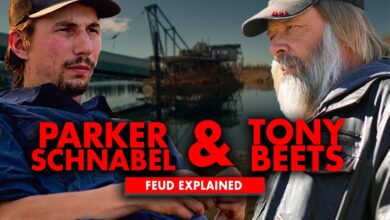
In the unforgiving wilderness of the Klondike, where machines groan under Arctic strain and fortunes can vanish with a single bad decision, Parker Schnabel continues to chase a dream forged in grit, risk, and relentless ambition. Parker’s High-Stakes Golden Dream is not merely about mining precious metal—it is about the mindset of a young entrepreneur who wagered everything on a vision few believed he could sustain.

From the moment Parker first appeared on Gold Rush, viewers watched a teenager inherit a legacy and shoulder expectations far heavier than any excavator bucket. His grandfather, John Schnabel, built more than a mine; he built a philosophy rooted in hard work, honesty, and faith in the long game. When Parker took the reins, skeptics questioned whether youthful confidence could survive the brutal realities of industrial-scale gold mining. Over a decade later, the answer is unmistakable: Parker didn’t just survive—he evolved.
At the heart of Parker’s journey lies risk. Each mining season begins with massive financial commitments long before the first ounce of gold is recovered. Leases can cost millions, fuel prices fluctuate wildly, and machinery breakdowns can drain six figures in a single day. For Parker, the stakes are amplified by scale. His operation regularly invests hundreds of thousands of dollars per day, a burn rate that would terrify even seasoned executives. One wrong geological assumption or delayed water permit can turn a promising season into a financial nightmare.




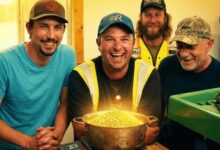
Yet Parker’s willingness to risk big is matched by meticulous preparation. Unlike early seasons where trial and error ruled the day, today’s Parker relies on data-driven decisions. Prospecting drills, ground testing, and precise cut planning are non-negotiable. He studies pay streaks like a chess grandmaster studies the board, anticipating where gold will pool and where it will disappoint. This evolution—from instinct-led miner to analytical operator—has become a defining feature of his success.
Leadership is another pillar of Parker’s golden dream. Managing a diverse crew in extreme conditions is no small feat. Tempers flare when equipment fails, exhaustion sets in after 16-hour shifts, and morale can collapse when gold totals fall short. Parker’s leadership style has matured from blunt, sometimes abrasive commands to clearer communication and accountability. He demands excellence, but he has learned that respect and trust are just as valuable as horsepower and wash plants.
Still, the pressure is relentless. Unlike traditional mining executives, Parker’s decisions play out on national television. Every misstep is dissected by fans, critics, and armchair miners alike. The cameras capture not only triumphs but also doubt, frustration, and sleepless nights. That exposure adds a psychological burden few entrepreneurs ever face. Parker has openly acknowledged the mental toll—how the constant push to outperform last season can feel like chasing a moving target.
What makes Parker’s dream especially compelling is that success never brings comfort. Record-breaking gold weighs are celebrated briefly before attention shifts to the next challenge. New ground must be secured. Better equipment must be sourced. Costs must be controlled. In this world, standing still is equivalent to falling behind. Parker’s ambition refuses to plateau; each victory raises the bar for the next season.
Technology plays a growing role in sustaining that ambition. Modern wash plants, improved gold recovery systems, and real-time monitoring have transformed efficiency. Parker is quick to adopt innovations that offer an edge, but he remains grounded in fundamentals. No machine can replace good ground. No shortcut can compensate for poor planning. His respect for mining’s brutal honesty—where the earth always tells the truth—keeps him cautious even when confidence runs high.
Beyond gold totals, Parker’s dream is about legacy. While he carved his own path, the influence of his grandfather remains evident. There is a quiet reverence in how Parker speaks about stewardship—leaving land reclaimed, crews paid fairly, and operations run with integrity. In an industry often criticized for environmental impact, Parker’s commitment to reclamation reflects an understanding that the future of mining depends on responsibility as much as profitability.
As Gold Rush continues to captivate audiences, Parker Schnabel stands as a symbol of modern frontier entrepreneurship. He blends old-school grit with new-school analytics, personal risk with professional discipline. His story resonates because it mirrors a universal truth: big dreams demand big risks, and success is never guaranteed.
In the end, Parker’s high-stakes golden dream is not defined solely by ounces poured or records broken. It is defined by resilience—the ability to absorb setbacks, adapt under pressure, and return each season with undiminished resolve. In the frozen north, where nature shows no mercy, Parker Schnabel keeps betting on himself. And so far, the gold keeps coming.