Oak Island Team Uses New “Heat Map” to Identify Lot 15 as Next Major Search Target
In the quest to solve the centuries-old mystery of Oak Island, the treasure-hunting team has turned to a new analytical tool—an island-wide archaeological heat map designed to plot every significant artifact ever uncovered. And according to the latest findings, this map is pointing the team toward an overlooked but increasingly intriguing location: Lot 15.
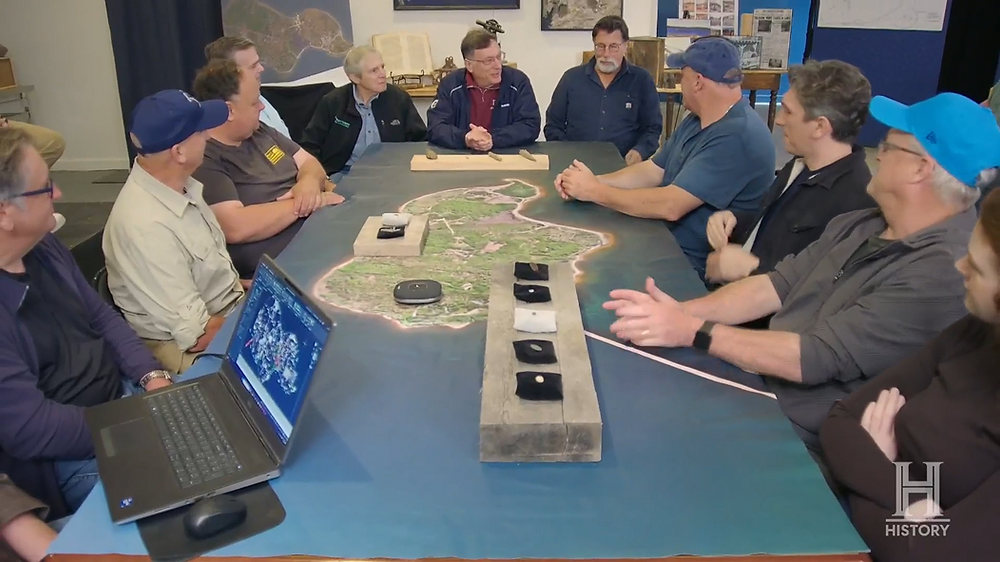
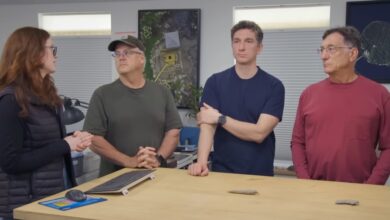
The dramatic reveal unfolded inside the War Room, where Rick and Marty Lagina, along with Craig Tester and other experts, gathered to assess the results of the heat-mapping project. Steve Guptill, joined by researchers Emma Culligan and Jillian, presented a detailed legend of color-coded artifact ages:
- Pink for materials dating 1725 or earlier,
- Orange for those from the mid-1700s,
- Green for transitional periods, and
- Blue indicating more modern “searcher” activity.
The purpose was straightforward: identify where on the island the oldest and most compelling artifacts appear to cluster. The results surprised even the veteran team members.



Lot 15 Emerges as a Hotspot
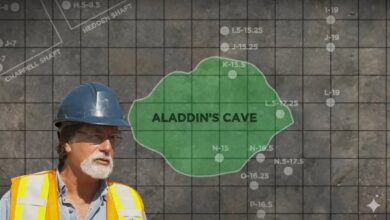
Although the Money Pit and Lot 5 predictably appeared as major zones of interest, the map also revealed a noticeable concentration of pink and orange markers on Lot 15, located roughly 200 yards northwest of the Money Pit. These older ages hint at activity long predating any known search efforts.
Craig Tester pointed out that even the mid-1700s artifacts could be tied to original depositors, not searchers. Rick Lagina went further, suggesting the concentration of old finds indicated “a lot more work to do there.”
The narrator reminded viewers that Lot 15 has already produced several historically unusual objects:
- Burned charcoal possibly dating to the 14th century,
- A Chinese coin potentially more than 1,000 years old,
- And a rare piece of pre-17th-century Portuguese cannon stoneshot.
These discoveries, now visually clustered on the heat map, strengthened the case for renewed exploration.
A Farming Technique Unlocks New Clues
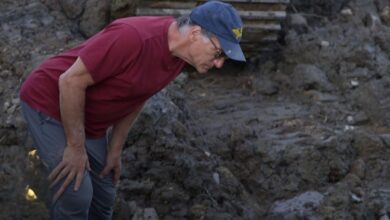
Before the team returned to Lot 15, heavy equipment operator Billy Gerhardt used a two-and-a-half-ton tractor to plow the area. This technique, borrowed from Gary Drayton’s experience metal detecting in English farmlands, brings deeply buried artifacts closer to the surface.
Joined by Rick and Steve, Gary began scanning the freshly turned ground. It did not take long for the first unusual object to appear.
Coal Discovery Raises New Questions
Gary extracted a lightweight, jet-black fragment that quickly proved to be coal—a curious material to find in an area with no known historical reason for its presence. Steve noted its similarity to coal unearthed near the Portuguese stone road in the swamp, reviving questions about whether the swamp and Lot 15 could once have been connected.
The new sample was bagged for laboratory analysis by Emma Culligan.
Rosehead Spike Suggests Pre-1750 Activity
Moments later, Gary’s detector signaled again. This time, he unearthed what appeared to be a rosehead spike, a hand-forged fastener used widely from the 1500s through the 18th century. These spikes have been found before both on the island’s surface and deep underground in the Money Pit, often dated prior to 1750—well into the era of potential treasure deposition.
“This is brilliant,” Gary said as Rick nodded in agreement. “We could have a connection between Lot 15 and the Money Pit.”
Discovery of a Pintle Adds to the Mystery
A third significant signal led to the recovery of a pintle, a type of iron hinge or bracket. Gary explained that pintles could be used for gate hardware, lantern hangers, or even inside early mining shafts. Its presence on Lot 15 adds another layer of mystery to what activities may have once occurred there.
Rick was visibly optimistic as each new find was flagged and bagged for cataloging. Steve confirmed that the heat map would need to be updated once again—Lot 15 was indeed heating up.
Lot 15 Becomes a Prime Target
With fresh artifacts emerging within minutes of searching, the team’s confidence grew. What once seemed like a peripheral area is now shaping into a possible hub of ancient activity—perhaps even tied to the depositors themselves.
“We are convinced the mystery is island-wide,” Rick declared in the War Room. And with each new discovery on Lot 15, that conviction grows stronger.
As the sun set on another productive day of fieldwork, it was clear that Lot 15 is no longer just another plot of land. It is fast becoming one of Oak Island’s most promising leads.