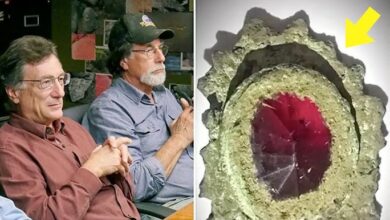
Season 13 Raises the Stakes as the Lagina Team Faces Collapse, Chaos, and Clues from the Past

The Curse of Oak Island: A New Season Digs Deeper Into History’s Greatest Mystery
Ancient tools, collapsing tunnels, and renewed hope fuel the Lagina brothers’ boldest season yet
The chill of another Nova Scotia morning greets Rick and Marty Lagina as they arrive once more on Oak Island — a place where mystery runs deeper than any mineshaft. For over a decade, the brothers have led what’s become the world’s longest-running treasure hunt, uncovering tantalizing clues to a centuries-old enigma buried beneath the island’s soil.

Now, with their trusted partner Craig Tester and the rest of their team, they’re launching a new season of The Curse of Oak Island — one that promises more discoveries, more danger, and perhaps, finally, more answers.
A Treasure Buried — and Sinking Deeper
At the center of the mystery lies the infamous Money Pit, the location where searchers first struck something strange in 1795. Nearly a century later, in 1804, explorers unearthed a carved stone 90 feet down, only to trigger a flood that submerged the shaft with seawater. Ever since, every attempt to bypass the island’s booby traps has ended in collapse, both literal and financial.


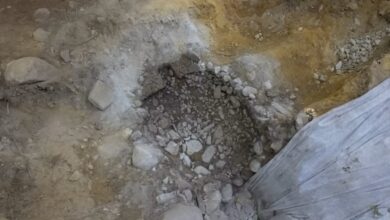
Last season, Rick and Marty thought they were close to a breakthrough. Groundwater testing revealed a large concentration of precious metals deep underground, and new drilling uncovered tools older than any known treasure-hunting expedition. But before they could reach the suspected vault, the earth beneath two key shafts — TB-1 and TOT-1 — gave way, swallowing months of work and millions of dollars.
Now, the team believes the treasure may have dropped even deeper, perhaps into a natural void in the bedrock known as a solution channel.
“It makes sense,” Rick says. “Every time we get close, the island changes. Maybe that’s where the answers are — deeper still.”
Old Iron and New Clues
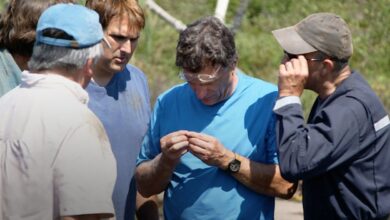
Meanwhile, across the island at Smith’s Cove, metal-detection expert Gary Drayton and machine operator Billy Gerhardt sift through spoil piles from last year’s digs. Among the mud and stones, Gary’s detector buzzes to life.
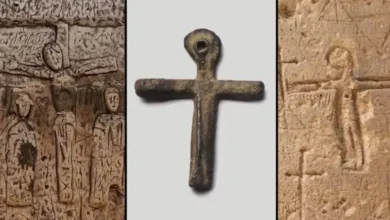
Moments later, the team pulls out another iron artifact — a possible chisel or pick head, heavily corroded but unmistakably hand-forged.

“That’s no modern tool,” Gary says with a grin. “Could be 1600s, maybe earlier.”
The discovery follows last year’s finds of a 16th-century pickaxe and an iron chisel, suggesting that someone was tunneling deep below Oak Island long before the first recorded treasure hunters arrived.
Science Confirms the Age
Back in the team’s lab, archaeologist Laird Niven and archaeometallurgist Emma Culligan test the chisel using X-ray fluorescence to determine its composition.
“It lacks any modern alloying elements,” Culligan explains. “This is pre-industrial iron — likely from the 1700s, maybe older.”
For the team, the results add another layer of credibility to the theory that the Money Pit was engineered centuries ago, possibly to conceal something of immense value or importance.
“We’ve got another piece of the puzzle,” Marty says. “It’s not the answer — but it’s progress.”
A Mission That Won’t Quit
Even after twelve years, the team’s energy hasn’t waned. From collapsed tunnels to breakthrough discoveries, their pursuit of the Oak Island mystery has become as much about the human spirit as the treasure itself.
Rick looks out toward the Atlantic horizon and sums it up simply:
“This is history whispering to us. We just have to keep digging until it speaks clearly.”
With old tools in hand, new science at their side, and unshaken determination, the Laginas are ready to face another season beneath Oak Island’s unforgiving surface — chasing a legend that refuses to stay buried.