Josh Gates investigates the truth behind the world’s most iconic and captivating legends

Lost Empires, Vampire Graves, and the Secrets of Death
A Journey Through Legends, Science, and the Afterlife
The Hidden Roads of the Inca
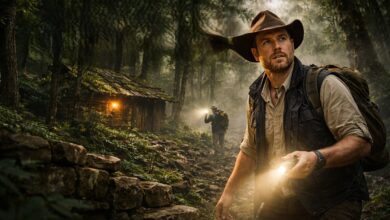
High in the jungles of Ecuador, archaeologists are chasing one of the greatest mysteries of the ancient world — the missing mummy of Atahualpa, the last king of the Inca Empire.
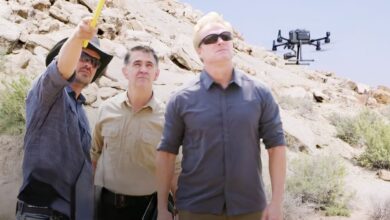
Using drones and cutting-edge 3D mapping, the team searches for forgotten Incan trails swallowed by the forest.
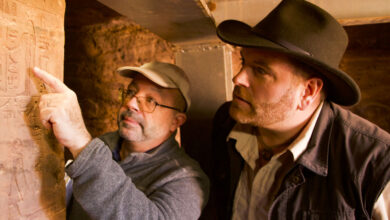
Historian Pablo García shows newly discovered 500-year-old Spanish documents describing a solemn procession — the transport of a royal mummy after the fall of the Inca Empire.
Many believe that the body was secretly carried from Peru back to Ecuador to empower the Incan army and inspire resistance.

At Mali Machai, a lost fortress rises through the fog. With the help of drone pilot Benoît, aerial cameras capture what no one has seen in centuries — massive stone terraces and symmetrical foundations that could mark the resting place of Atahualpa’s sacred remains.




“It’s definitely man-made,” Benoît says. “It could have been a temple or even a tomb.”
The jungle hides its secrets well, but each new image brings them closer to the truth: the lost mummy of a god-king may still lie buried beneath the clouds.
The Vampire of the Balkans
In Eastern Europe, another mystery unfolds — one that blurs the line between myth and medicine.
In southern Romania, villagers recently exhumed a corpse they believed had risen from the grave. They performed ancient anti-vampire rituals — burning and even consuming the heart — to ensure it would never return.
Not far away, in Bulgaria, archaeologists uncovered a skeleton that shocked the scientific world.
A heavy iron ploughshare had been driven through its chest.
“It was done after death,” the archaeologists explained. “A ritual meant to prevent the person from becoming a vampire.”
The discovery raised disturbing questions. Who was this person? Why were they feared even in death?
DNA testing on a tooth from the skeleton revealed signs of porphyria, a rare blood disease that causes sunlight sensitivity, receding gums, and an aversion to garlic — symptoms eerily similar to the vampire myths that haunt European folklore.
The Science Behind the Superstition
For centuries, stories of vampires spread alongside plagues and mysterious diseases.
Victims of illnesses like cholera or tuberculosis were sometimes believed to be undead.
Without medical knowledge, villagers turned to superstition — staking corpses or burning bodies to stop the spread of what they could not understand.
From a medieval curse to a modern diagnosis, the vampire myth reveals humanity’s deep fear of the unknown — and our endless fascination with conquering death.
The Lost King Who Would Not Die
Meanwhile, in South America, the Incan legend of Atahualpa’s mummy mirrors that same human obsession with immortality.
Like the European vampire, Atahualpa was believed to hold power over life and death — his preserved body thought to bless the living and protect his people.
The fortress of Mali Machai, rediscovered through drone mapping, may yet hold his remains.
If true, it could rewrite history and prove that the ancient Inca’s final emperor continues to command loyalty, even in death.

The Hindu Afterlife: The City of Death and Rebirth
Half a world away, in the sacred Indian city of Varanasi, life and death coexist on the banks of the Ganges.
Here, cremation fires burn day and night as Hindus believe that dying in Varanasi grants moksha — release from the endless cycle of rebirth.
Funeral processions wind through narrow alleys, leading to the burning ghats. The eldest son lights the pyre himself, a final act of love that frees the soul from the body.
To outsiders, the ritual may seem shocking, but for Hindus, it is sacred — death not as an end, but a liberation.
“There is a purity to this,” the narrator observes. “Here, death isn’t hidden. It’s faced, embraced, and understood.”
The Hanging Graves of Sulawesi
In Indonesia, the Torajan people preserve another remarkable belief — that the dead never truly leave.
In the lush mountains of Sulawesi, wooden effigies known as tau-tau guard cliffs filled with hanging coffins and cave tombs.
Each figure represents someone buried nearby, their gaze fixed on the living world below.
For the Torajans, death is a process, not a moment. The deceased are kept at home for months or even years, treated as part of the family until the final ceremony sends them to the cliffs — a bridge between life and the afterlife.
“We believe the spirit doesn’t leave the body,” a Torajan elder explains. “It stays close to us until the final farewell.”
What We Learn from the Dead
From the misty Andes to the burning ghats of India, from medieval graves in Bulgaria to jungle tombs in Ecuador, one truth connects them all:
Humanity has never stopped trying to understand death — or to overcome it.
The legends of mummies, vampires, and eternal souls all speak to the same question that has haunted us for millennia:
Is there life after death — or just the stories we leave behind?