12 Treasures That Could Be Buried Beneath Oak Island
What secrets lie beneath Oak Island, the mysterious patch of land off the coast of Nova Scotia?
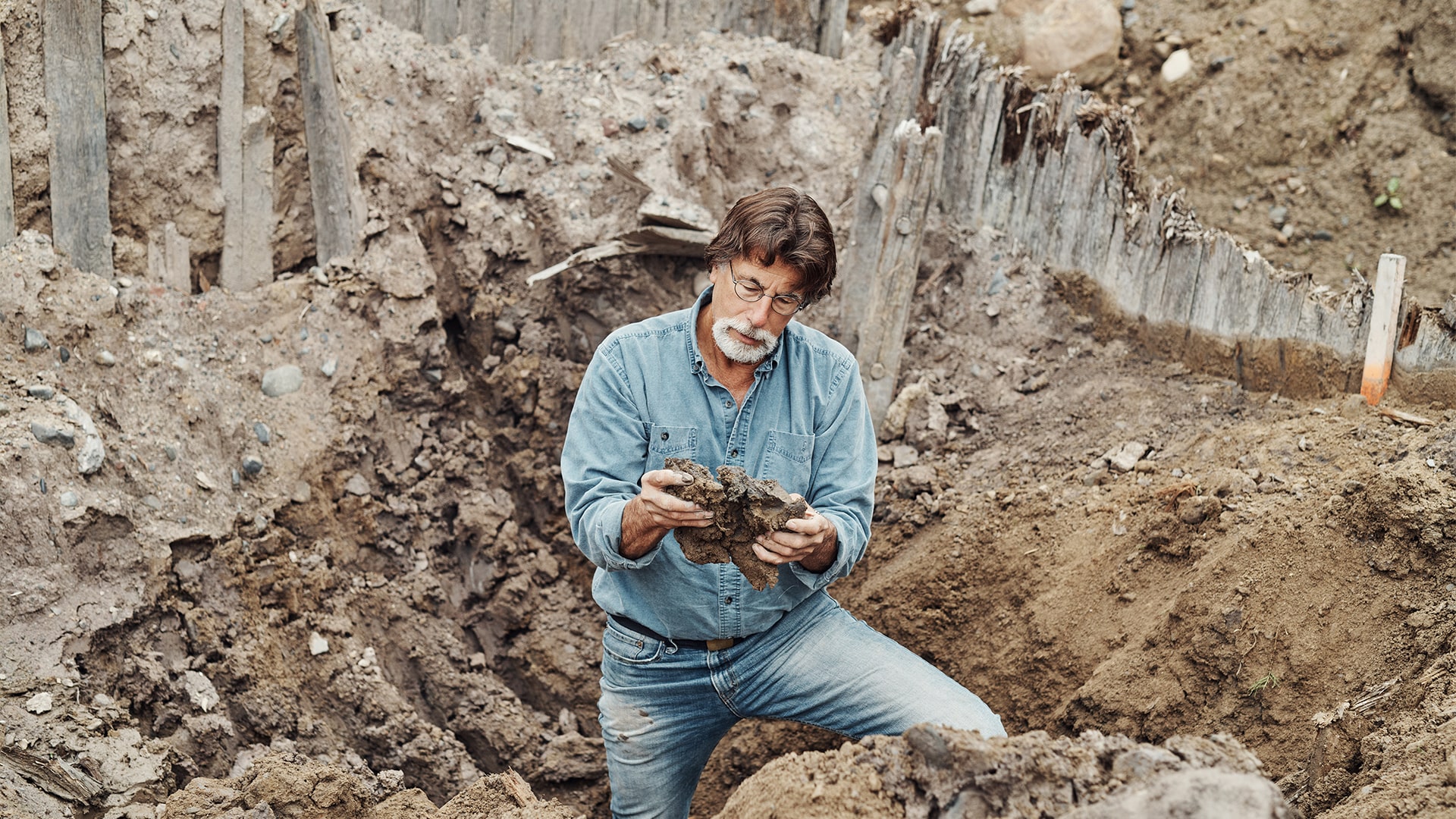
For over two centuries, explorers, scholars, and fortune hunters have searched for answers — and none more passionately than Rick and Marty Lagina, the modern-day treasure hunters whose adventures have captivated millions through The Curse of Oak Island.
Over 220 years after the first excavation, the question remains as compelling as ever: what exactly is buried there? From pirate loot to royal jewels, here are 12 of the most convincing theories about what might lie beneath the island’s surface.
1. Pirate Treasure
The most popular and enduring legend claims that Oak Island conceals the buried treasure of the 17th-century pirate Captain Kidd.
According to local folklore, a dying sailor from Kidd’s crew confessed that his captain had hidden a fortune worth £2 million on the island before being captured.
During early excavations in the 1800s, treasure hunters reportedly uncovered a large stone slab in what became known as the Money Pit, carved with strange inscriptions. The markings were later translated to read:


“Forty feet below, two million pounds lie buried.”
Whether fact or fable, this discovery cemented the island’s reputation as the ultimate pirate treasure site.
2. Spanish Naval Gold
Another enduring theory points to the Spanish Empire. Some believe that a 16th-century Spanish galleon, heavily laden with gold and silver from the Americas, was damaged in a storm and forced to dock near Nova Scotia.
Fearing capture or loss, the crew may have buried their cargo on Oak Island with plans to return later — a return that never happened.
This theory would explain the European artifacts and maritime tools discovered during early digs, suggesting the involvement of a skilled naval crew.
3. Shakespeare’s Lost Manuscripts
A theory favored by literary historians suggests that Oak Island might be hiding the true works of William Shakespeare — or rather, those of Sir Francis Bacon, who many believe was the real author behind the plays.
A piece of ancient parchment found in the Money Pit contained traces of writing, sparking speculation that Bacon’s original manuscripts could have been sealed away for protection.
If true, this would make Oak Island one of the most important literary time capsules in history.
4. The Holy Grail and the Ark of the Covenant
Perhaps the most spiritual and dramatic theory connects Oak Island to the Knights Templar, the medieval military order rumored to have safeguarded Christianity’s greatest treasures — including the Holy Grail and the Ark of the Covenant.
Supporters of this theory point to several Templar symbols discovered on the island, including a stone cross formation and a lead cross artifact resembling those found at Templar sites in Europe.
Could Oak Island be the final resting place of sacred relics smuggled out of Jerusalem and carried across the Atlantic?
5. A Buried Viking Ship
Some historians believe the island’s famous Money Pit may not be man-made at all. One daring theory proposes that it could be the remains of a Viking longship, swallowed by Oak Island’s unstable, muddy terrain.
As the ship sank vertically, its wooden ribs and planks might have been mistaken for man-made platforms during excavations.
If proven true, this would link Oak Island to Norse explorers who reached North America centuries before Columbus.
6. Marie Antoinette’s Missing Jewels
During the chaos of the French Revolution, Queen Marie Antoinette is said to have instructed her loyal maid to flee with her priceless jewels.
Those jewels vanished from history — but some believe they may have crossed the Atlantic.
According to this theory, the maid escaped to Nova Scotia with help from royal allies and the French Navy, building an elaborate underground vault — the Money Pit — to hide the queen’s treasure.
It would explain the French connections that run throughout Oak Island’s history.
7. Money from Fort Louisbourg
Fort Louisbourg, a massive French fortress in Nova Scotia, fell to British forces in 1758. Before its capture, defenders may have smuggled out military funds or gold reserves and hidden them elsewhere — perhaps on Oak Island.
The pit’s naval-style engineering and use of flood tunnels could be consistent with French military expertise, strengthening this theory.

8. British Imperial Treasure
In 1762, British troops captured Havana, Cuba, acquiring an immense fortune.
To protect it from theft or future wars, it’s been theorized that they buried part of this imperial treasure in a secret cache near Halifax — possibly on Oak Island.
With the American Revolution soon to follow, it’s easy to imagine British officers wanting to hide their riches far from rebel hands.
9. Freemason Artifacts
The discovery of Masonic symbols and carvings around the island has fueled speculation that the Money Pit could be a Masonic vault.
The Freemasons, known for their secret rituals and cryptic symbolism, were prominent during the 18th century — exactly when many Oak Island legends began.
Supporters believe the pit was constructed as a ceremonial hiding place for important Masonic relics or knowledge.
10. A Coptic Christian Chamber
Some researchers believe the mysterious stone inscriptions found at the Money Pit resemble the Coptic alphabet of early Egyptian Christians.
If accurate, this would suggest that Coptic explorers — centuries before Columbus — crossed the Atlantic and built the pit as a sacred site or repository of religious texts.
It’s a theory that stretches the imagination, but one that adds a fascinating spiritual layer to the Oak Island enigma.
11. A British Tar Kiln
A more practical explanation suggests that Oak Island’s “Money Pit” wasn’t a treasure vault at all — but rather a tar kiln.
During the 18th century, the British Navy used massive tar kilns to produce pitch for sealing wooden ships.
Author Joy Steele argued that the layout and structure of the pit closely match those of known naval kilns, meaning the site could have been part of a shipbuilding supply operation rather than a treasure hoard.
12. A Natural Sinkhole
Finally, the simplest — and perhaps most disappointing — theory: the Money Pit might be a natural sinkhole.
Several sinkholes have been discovered nearby on the Nova Scotia mainland. The island’s soft, waterlogged soil could easily create depressions mistaken for man-made tunnels.
Over time, collapsed trees, debris, and flooding may have deepened the hole, creating the illusion of an elaborate underground system.
A Mystery That Endures
From pirates and kings to Vikings and Templars, the theories surrounding Oak Island span continents and centuries.
Each discovery — from ancient coins to wooden platforms and mysterious tunnels — only deepens the intrigue.
Whether the truth turns out to be a lost fortune, a sacred relic, or simply a natural wonder, Oak Island remains one of the most captivating unsolved mysteries in history.
And as the Lagina brothers continue to dig deeper with every new season, the world waits for the day when the island finally gives up its secrets.