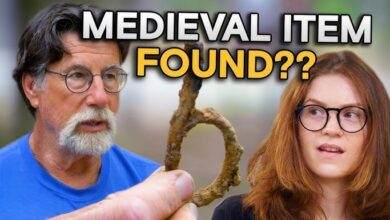
Oak Island’s Latest Breakthroughs: Inside DN-11.5, Lot 5, and the Trail to a Vault
A Century-Old Riddle, A New Flash of Hope
After centuries of false starts and near-misses, Oak Island’s mystery tightened its focus in Season 10, Episode 15 and Season 11: fresh cores, chemical hits, and artifact clusters are converging on a narrow band of depths and locations. The headline: a void intersected at borehole DN-11.5 in the heart of the Treasure Zone—and lab data that won’t let the team look away.

Breakthrough at Borehole DN-11.5 (S10E15)
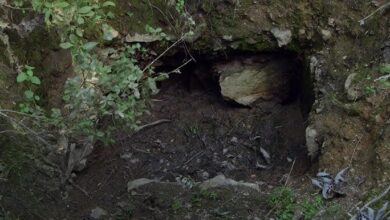
- Why DN-11.5 matters: Sited squarely in the Treasure Zone, DN-11.5 lines up with earlier promising holes (DN-12.5, DN-13.5) on an east-west trend long suspected to host a tunnel.
- The moment: Around ~90 ft, the drill “dropped,” indicating a void ~1.5 ft thick. Core recovery brought up embedded wood, not random till.
- Immediate action: Charles called Rick and Marty back to site; the team prioritized lab work and correlation with the Garden Shaft trajectory.
Lab Confirmation: Metals, Mapping, and an Outlier—Gold
At the Interpretive Center, archaeo-metallurgist Emma Culligan ran XRF/CT on DN-11.5 wood and surrounding material:
- Baseline matrix: iron, manganese, titanium, calcium, potassium, aluminum (expected for Oak Island sediments).
- The outlier: detectable gold in the wood, echoing previous gold-in-water hits nearby. Two different media (wood and water) pointing to the same target zone suggests proximity to a gold-bearing source—possibly a tunnel segment feeding or protecting a chamber.
- Alignment: Data ties back toward the Garden Shaft, sharpening the case for a controlled advance at depth.
Season 11, Episode 1: Lot 5 Reframed by Ceramics
Redware and Coarse Earthenware
Excavation within a stone-ringed depression (first flagged by Robert Young) produced:
- Redware with purple/darker glaze—stylistically 1600s.
- Coarse earthenware sherds, thicker and earlier than most surface finds.
Implication: Lot 5 may have served as a staging or deposit locale before the Money Pit era (pre-1760s), not simply a later dwelling.
Lot 5 Coin Cluster: Four Finds, Three Compositions (E1)
Systematic detecting and flagged targets yielded four hammered coins:



- Coin 1: ~94% copper, ~5% silver → not Roman, but notably old.
- Coin 2: copper with silicon/lead/tin → composition consistent with Roman-era alloys, fueling “early contact” theories.
- Coin 3: brass with woven-like markings → identified as a 13th-century French denier (matching a prior season’s discovery).
- Coin 4: hammered, possibly Roman, in good preservation.
Takeaway: The French-Roman mix in one confined lot suggests multi-phase, multi-national presence, strengthening logistics/transfer hypotheses over centuries.
Decorative Strap & Mine Tool? (E2)
~100 yards from the coin field:
- Decorative metal strap: likely chest/bound-box hardware; blacksmith Carmen Legge ties the style to French usage.
- Heavy iron piece: wear and geometry consistent with a chisel for tunneling/mining; likely originally ~1 ft long.
Theory bridge: A container (strap) + digging implement (chisel) near a coin scatter = movement of valuables and subsurface works, potentially by French actors long before English searchers.
Money Pit, East of Garden Shaft: Wood at Tunnel Depths (E2)
Drilling at D5N12 and D5N26.5 intersected wood between ~98–111.5 ft:
- Multiple fragments suggest floorboards/ceiling collapse rather than random driftwood.
- Chemistry match across samples points to the same tunnel; palladium detected (unexpected at that depth) hints at refining/preservation processes or metal-rich deposits nearby.
Map fit: The indicated tunnel trends toward the Garden Shaft and the “baby blob” anomaly—consistent with a purpose-built access rather than later searcher damage.
Lot 5 Shoreline Iron: Cribbing Spike & 17th-Century Scissor Handle (E4)
- Cribbing spike (wrought iron): ties to timber-on-timber joinery, useful in shipbuilding or underground structures.
- Hand-forged scissor handle: Carmen dates it to 1600s–1700s; parallels earlier Spanish scissors find, but older.
Interpretation: The beachfront likely functioned as a landing/off-load corridor, with tools reflecting shipwright and site-preparation activities.
The Rectangular Foundation Beside the Circular Feature (Lot 5, E4)
Archaeology exposed a rectangular rock-lined pit with disturbed rubble infill:
- Associated creamware (post-1762) and porcelain suggest continued 18th-century activity atop an earlier footprint.
- Veteran archaeologist Helen notes the feature’s unusual form (built “around” something?)—and its probable temporal relationship to the older circular structure.
Hypothesis: The rectangular feature may cloak or frame an earlier installation, possibly military or logistics-oriented, predating lot divisions and perhaps even the Money Pit discovery.
Muon Tomography: Seeing Between the Shafts
Idon Technologies deployed 14 muon cameras (80–250 ft) for two years around the Money Pit:
- Yellow: neutral; Blue: low-density voids/tunnels; Orange/Red: high-density anomalies that could indicate metallic masses or stone vaults.
- The newest rectangular foundation echoes forms seen in historic anomaly maps, suggesting multiple engineered targets may remain.
What the Convergence Suggests
- Structural evidence: voids and wood fragments at ~90–110 ft; east-west tunnel pointing to the Garden Shaft.
- Artifact context: French denier, possible Roman alloy, decorative chest strap, cribbing spike, and early scissor handle—a chain of human presence from medieval to early modern.
- Chemistry: repeated pre-industrial metallurgy signals (high S/no Mn), gold outliers in wood/water, and palladium where it shouldn’t be.
Synthesis: These are consistent with a multi-phase, organized operation—maritime off-load → controlled movement inland → tunnel access toward a protected chamber.
The Road Ahead
- Garden Shaft push: Safely deepen to intersect the ~95–100 ft tunnel, then probe horizontally to verify voids without destabilization.
- Material forensics: Cross-match Lot 5 “cement” with Money Pit mortars/caissons; continue tight-loop XRF/CT on woods, waters, and metals.
- Context discipline: Favor provenanced artifacts, repeatable assays, and stratigraphic control over spectacle—each confirmed datum cuts search space dramatically.
Bottom Line
From the DN-11.5 void and gold-bearing wood to the Lot 5 coin matrix, shipwright traces, and rectangular-over-circular foundations, Oak Island’s narrative is shifting from rumor to resolvable engineering. Whether the prize is a vaulted cache or a genius-level waterworks, the island is finally speaking in structures, chemistry, and dates—and the team is listening.