Samuel Ball’s Secret: The Forgotten Story Behind Oak Island’s Wealthiest Farmer

Oak Island’s Biggest Bet Yet: Inside the Lagina Brothers’ High-Tech Hunt, Hard History, and the Mystery of Samuel Ball
A New Spark in an Old Mystery
Fingers crossed—and shovels ready. The team behind The Curse of Oak Island says it has “struck gold” figuratively and literally, with recent sales of authenticated artifacts helping to fund deeper, smarter digs. What sets this chapter apart isn’t just the treasure talk—it’s the structure behind the search: a tightly policed licensing regime, a bigger scientific toolbox, and closer collaboration with archaeologists and historians. The result is a model that raises the bar for responsible treasure hunting while keeping the island’s lore alive.

Why the License Matters
Nova Scotia’s treasure-trove licensing is more than paperwork. It exists to incentivize serious, long-term investment while protecting heritage and the environment. For Rick and Marty Lagina, the chance to retain a significant share of any finds justifies high-cost technology, expert hires, and the long slog of compliance. The policy also enforces archaeology-first standards—documenting contexts, stabilizing sites, and reporting finds—so what’s uncovered isn’t just monetized, but meaningfully interpreted.
Science First: How the Digs Got Smarter
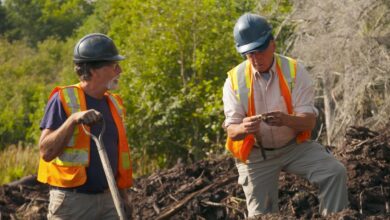
The modern Oak Island operation looks less like an old-time prospect and more like a field lab.
- Ground-penetrating radar, LIDAR, and magnetometry map sub-surface anomalies before a bucket moves.
- Sonic and core drilling test targets with surgical precision.
- Water-chemistry studies (notably in the Money Pit zone) hunt for geochemical halos that point to buried metals.
- Conservation protocols ensure artifacts—parchment fragments, leather bindings, brooches, coins—are stabilized and studied, not simply displayed.
Add in a rumored honeycomb-style caisson strategy to reach deeper, safer, and the technical playbook now rivals commercial geotech projects.


Meet the Brothers Behind the Quest
Rick Lagina (born 1952) first encountered the Oak Island legend reading Reader’s Digest in 1965. A long USPS career came first; the island waited. Retirement—and a pitch from Prometheus Entertainment—pulled him into TV and back onto the island as both on-camera lead and producer. Rick’s on-screen persona—curious, patient, and preservation-minded—has made him the mission’s conscience.
Marty Lagina brings systems thinking. A mechanical engineer and attorney, he built a reputation in the energy sector before applying the same rigor to complex field operations and finance. His dual background in engineering and law has been decisive for planning, permitting, and keeping multi-million-dollar seasons on track. Together, the brothers helped turn a childhood fixation into a durable franchise—with spin-offs like Beyond Oak Island expanding the brand’s footprint.
Beyond TV: Real-World Impact
The show’s success doesn’t just fund more trenches. It’s buoyed a local tourism boom in Nova Scotia, stewarded museum-grade conservation of artifacts, and spotlighted the valley between entertainment and archaeology. The production’s profile has also brought in academic partners, adding peer-style scrutiny to what was once folklore and guesswork.
Finds, Theories, and That “Templar” Question
Across lots and shafts, the team has reported a mosaic of finds that span centuries:
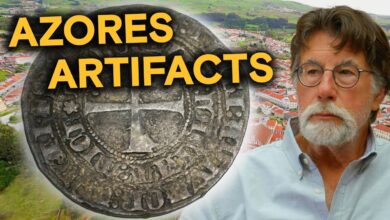
- Coins from the 17th and 18th centuries (Spanish maravedís, Britannias).
- Metalwork (hand-forged spikes, possible ship fittings, military buttons).
- Ornament (a gold-plated brooch with medieval styling).
- Materials at depth—including parchment and leather—recovered from boreholes in the Money Pit cluster.
- Geochemical signals suggesting anomalous concentrations of metals at specific depths.
These layers feed competing narratives: pirate caches, Spanish payroll, Templar caches, Masonic vaults, or a palimpsest of overlapping activities across centuries. The team’s overseas research (Malta and beyond) has only deepened speculation about transatlantic links.
Samuel Ball: Freedom, Fortune, and a Puzzle
No figure complicates Oak Island’s story quite like Samuel Ball (1765–1846). Born enslaved in South Carolina, Ball earned freedom fighting for the British during the American Revolution, then resettled in Nova Scotia. He farmed, bought land—including on Oak Island—and died astonishingly wealthy for his time, with a will listing substantial holdings.
Skeptics ask how cabbage farming alone financed that portfolio; romantics suggest Ball may have found—and quietly leveraged—local treasure. Recent show discoveries (including a slave tag bearing the Ball name and a never-freezing stone well with elevated silver signatures nearby) keep the debate alive. The evidence is still circumstantial—but tantalizing.
![The Characters of Oak Island: Samuel Ball — Respected Cabbage Farmer or Something More? | by Michael [Redacted] | Medium](https://miro.medium.com/v2/resize:fit:786/1*n7fc2Jl7L2Ke819xD1L34A.jpeg)
A Trail of Attempts—and Tragedy
Oak Island fascinates because the ground keeps answering back. Since the early 1800s, waves of syndicates and dreamers—Onslow, Truro, the Oak Island Association, Heddon, Chappell, Restall, Dunfield, Triton—have dug, pumped, cored, and, heartbreakingly, lost lives to floods and collapses. The infamous flood tunnels, the inscribed “90-foot stone,” the repeated log platforms every ten feet—these staples of Oak Island lore are now studied with a modern caution the earliest searchers never had.
The Community Contract
This era of the hunt emphasizes benefit sharing. Local businesses thrive on visitation; archaeological records expand with each controlled excavation; and the licensing framework keeps incentives aligned: dig smart, disclose, and protect context. The show popularizes the complexity—legal, financial, ethical—behind every artifact brought to light.
What Comes Next
If the geochemists are right and the structural engineers can safely access target depths, Oak Island may be approaching its most consequential season yet. The team’s mix of tech and patience—plus a willingness to pause for lab work, dating, and epigraphy—suggests any breakthrough will be documented, not just televised.
Still, core questions endure:
- Is the Money Pit a single event—or generations of reuse?
- Do the swamp structures and causeways mark concealment—or logistics?
- Was Samuel Ball an accidental bystander to wealth—or its quiet beneficiary?
- And if a true “vault” exists, will it survive contact with 21st-century air and water?
The Takeaway
Oak Island’s latest chapter isn’t merely louder; it’s smarter. Licenses, labs, and local partnerships frame a hunt that now doubles as public history. Whether you believe in pirate chests, Templar caches, or simply the power of persistence, the island remains what it’s always been: a riddle written in wood, stone, and water—now read with better instruments.
As the Lagina brothers like to say, the real treasure may be knowledge. But if the instruments and the odds finally align, Oak Island might yet deliver both.