Oak Island: Secrets Beneath the Surface
The Island of Rules, Myths, and Restricted Truths
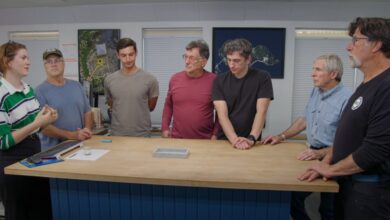
Oak Island has long been a place governed by strict rules and permits. While authorities can control physical access to the site, information still escapes. In recent years, more details have leaked than ever before — thanks largely to the Fellowship of the Dig, a group that includes Rick and Marty Lagina, their family, and a devoted circle of historians and treasure hunters.
Each new find makes it harder to separate history from legend. Were foreign soldiers once here? Or were these just curious visitors pursuing their own secret missions? Among the stories that refuse to die is the one about Captain Kidd’s legendary treasure, said to be buried centuries ago.
The Boot That Changed History
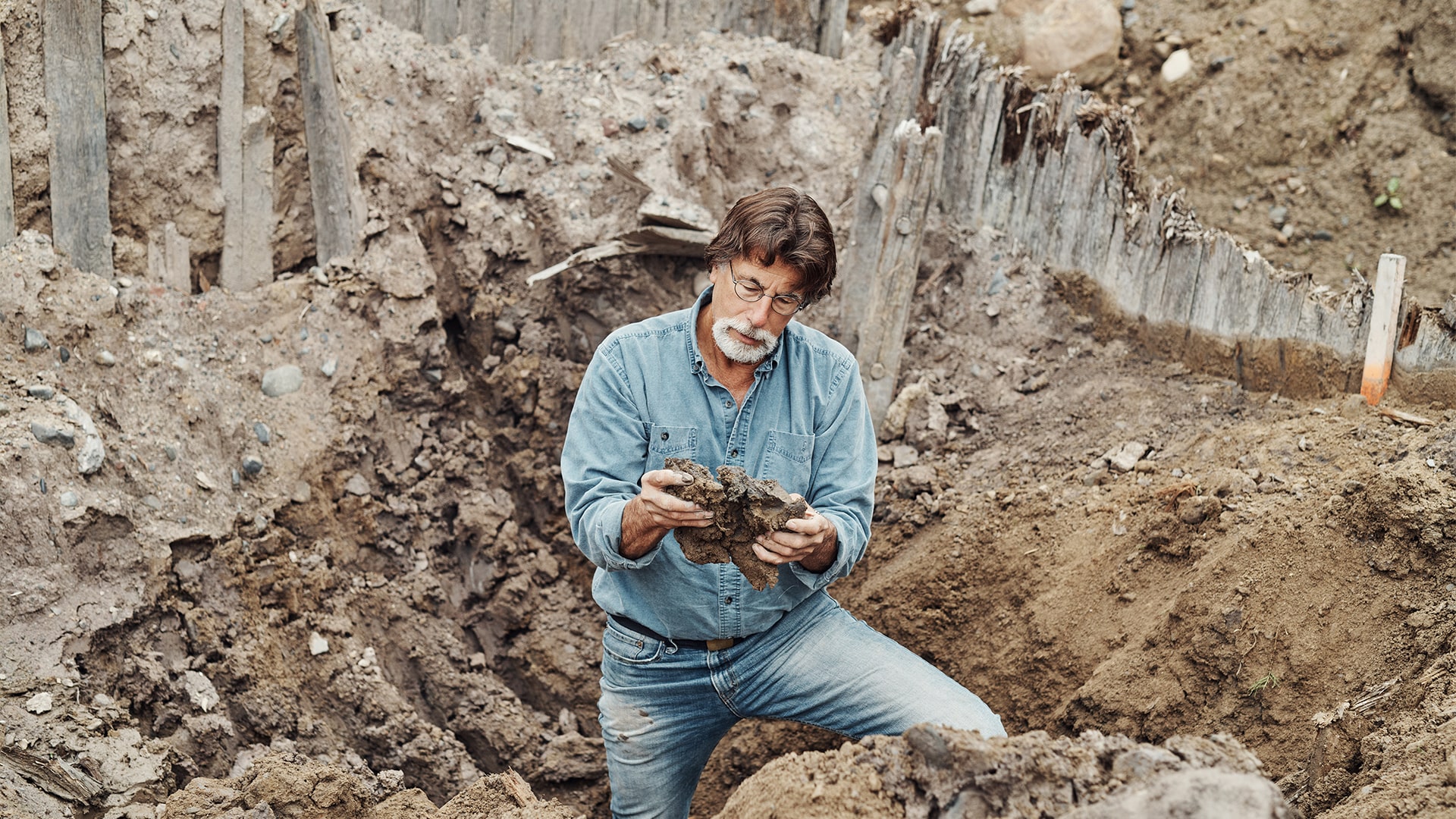
At the Money Pit site, the crew deployed a massive hammer-grab tool in the TF1 shaft, reaching depths of 80 feet. After several attempts, they struck something solid — a boulder with a drill hole, and beside it, a boot buried deep in the muck.


The boot, traced to a Canadian rubber company circa 1908-1909, may connect directly to Franklin Delano Roosevelt, who as a young lawyer joined an Oak Island excavation in 1909. Roosevelt’s group found gold shavings but no treasure; could this boot be a relic from that very dig?
For the team, the discovery reignited excitement. It was a physical link between their modern efforts and the earliest serious explorations more than a century ago.
Digging Deeper: The B4C Shaft
As work shifted to the B4C shaft, 5 feet north of Borehole C1, anticipation grew. Previous samples from nearby boreholes had contained wood, iron, and traces of silver and gold at depths near 90 feet.
When the hammer claw brought up old timber and an iron fastener, speculation surged. But the dig stalled at 130 feet when the team hit bedrock. Despite the setback, they refused to abandon the shaft.
Blacksmith expert Carmen Lehr examined the iron spike and suggested it might date to medieval times — a tantalizing link to early European activity on the island.
Discovery Beneath the Waves
Not all discoveries happened on land. Diver Tony Samson and marine archaeologist Dr. Lee Spence investigated the channel between Oak Island and Frog Island using a handheld magnetometer.
A sudden strong signal led them to uncover the outline of what appears to be a shipwreck buried just 20 feet below the seabed. Whether it’s a Portuguese galleon, a supply vessel, or something else entirely remains unknown, but the possibility of a centuries-old wreck has intensified global fascination.
Lot 8: A Ground Full of Questions
On Lot 8, Gary Drayton and Michael John unearthed an unusual concentration of artifacts. The area yielded iron tools, a possible chisel head from the 1400s, and fragments of paving and boulders suggesting deliberate placement.
A buried paved feature beneath a large stone hints at earlier human work — maybe a vault entrance, maybe a refilled shaft. The team now awaits permits for deeper excavation.
A Parchment and a Possible Treasure Map
Back at the Money Pit, a small piece of parchment appeared on the wash table. Under high-resolution scans by imaging experts John Guieni and David Samson, the material showed signs of iron-based ink — evidence that it could once have contained writing.
Further tests revealed cellulose fibers and possible wax coatings, suggesting the parchment might have been wrapped around explosives used in Roosevelt’s 1909 dynamite operations. The finding hints that fragments of both gold and manuscripts may rest in the depths below.
Portuguese Connections: The Templar Cannon
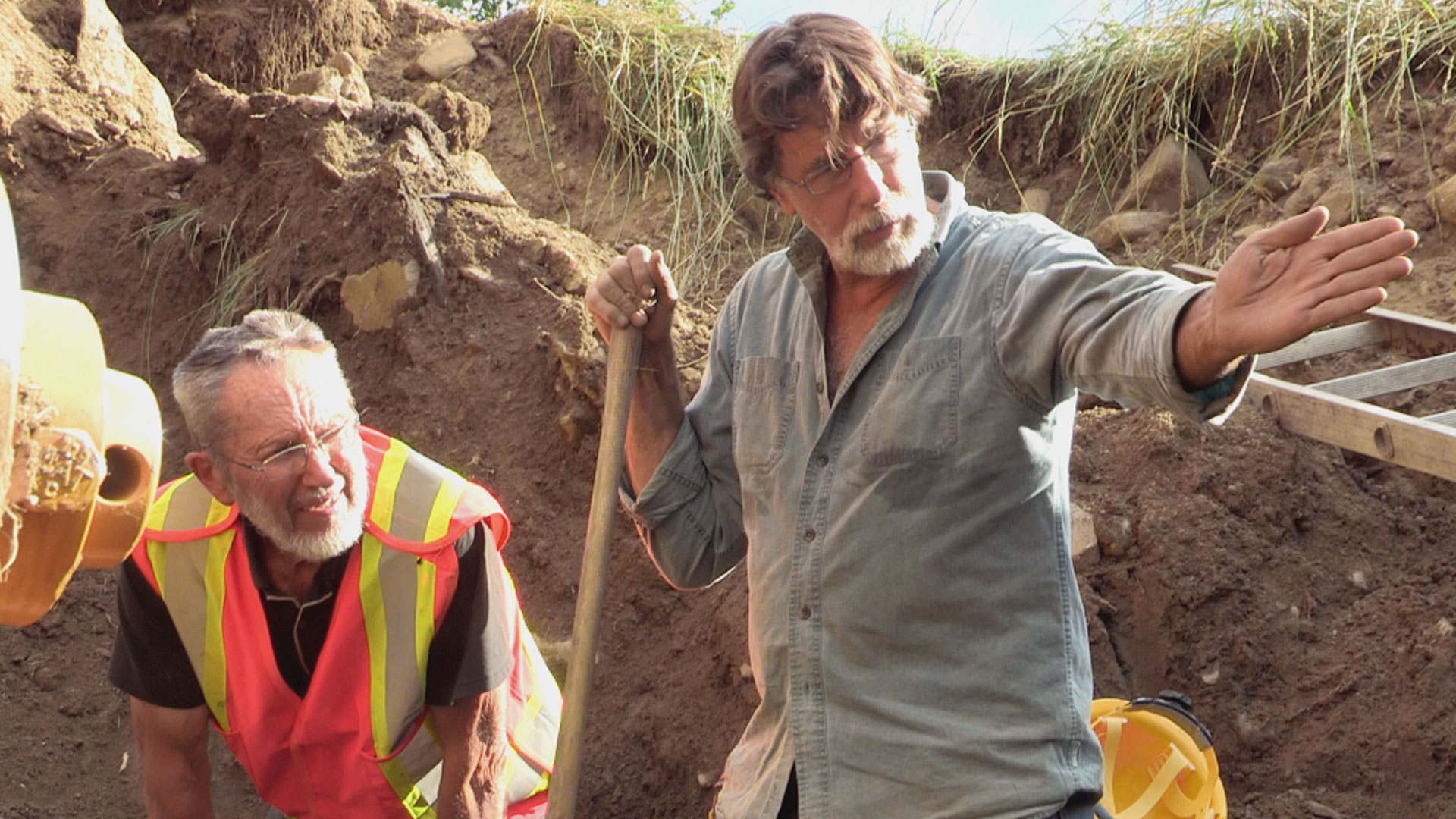
In Lisbon, Rick Lagina’s team compared stone-shot artifacts from Oak Island with examples in the Portuguese Military Museum. Experts confirmed a perfect match with 15th- and 16th-century Portuguese naval ammunition used in swivel guns — implying early European seafaring presence near Nova Scotia.
The revelation strengthens theories that Portuguese explorers — possibly connected to the Order of Christ (the Templars’ successor organization) — may have reached the island long before the colonial era.
The Templar Trail: From Tomar to Oak Island
The team’s next stop, Quinta da Regaleira in Sintra, Portugal, offered another uncanny parallel: an initiation well mirroring Oak Island’s Money Pit in shape and depth. Local historian Joel Fiandero explained its Masonic and Templar symbolism — nine levels, spiral descent, and spiritual rebirth.
Further north in Tomar, the Templar capital, Rick and his nephews found carvings in a 12th-century church matching symbols seen on Oak Island’s mysterious 90-Foot Stone. These discoveries renewed speculation that the island’s “Nolan’s Cross” formation may echo the elongated cross of the Knights of Christ, tying Oak Island to medieval Portugal.
Ships in the Swamp
Back home, dredging in the triangular swamp produced deck planks, ship spikes, and trapezoidal timbers consistent with 17th-century vessels. The evidence supports surveyor Fred Nolan’s decades-old theory that the swamp was artificially created to hide a ship — possibly a treasure galleon deliberately scuttled and buried.
The Metallic Anomaly
Another metallic signal on Lot 8 led to iron tools, chain fragments, and a unique ads-shaped implement used for shipbuilding. The artifacts point to heavy construction or tunneling activity predating the Money Pit legend itself.
Every new find adds context: Oak Island wasn’t just a site of treasure hunts — it was once an active workshop, perhaps for secretive engineering or maritime storage.
Gold in the Depths
Excavation at 90 feet in the C1 cluster revealed timber tunnels and measurable traces of gold and silver. Subsequent drilling confirmed elevated precious-metal concentrations — a scientific milestone after centuries of speculation.
Although bedrock halted deeper excavation at 130 feet, geochemical data and core samples suggest that the fabled Money Pit, or an offset chamber, may indeed exist nearby.
The Human Spirit Beneath the Dirt
For Rick and Marty Lagina, Oak Island is more than a treasure hunt; it’s a lifelong dream. A decade of exploration has revealed medieval tools, a 13th-century stone road, a 1200 AD paved area, and 15th-century drilling implements.
Each clue deepens the mystery, and each failure strengthens their resolve. The discovery of measurable gold content has finally given scientific weight to two centuries of legends.
The Legacy of the Search
Whether or not vast treasure lies beneath, the Oak Island expedition has achieved something priceless — a living record of perseverance. The Fellowship of the Dig has turned folklore into a forensic puzzle, mapping every layer of earth, artifact, and history.
As another season ends, the team’s determination endures. Somewhere below the swamp, beneath stone, silt, and centuries of secrecy, Oak Island still whispers to those who listen.