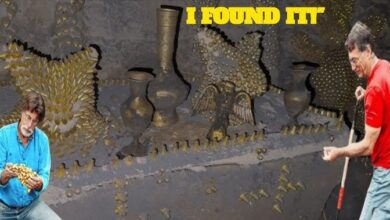
Oak Island’s High-Stakes Push to the Chappell Vault: Wooded Tunnels, Roman Numerals, and a Possible Man-Made Cave
After months of planning, the Lagina team drops giant caissons toward the fabled Chappell vault at ~153 ft. Along the way: stacked timbers, etched numerals, elite-grade artifacts on Lot 5—and sonar/camera hits that make “Aladdin’s Cave” look anything but natural.

The Mission: Reach the 153-Foot Target
For two centuries Oak Island has chewed up equipment and hope in equal measure. This season, Rick and Marty Lagina commit to a precision dig designed to stabilize the Money Pit and finally re-enter the depth where the 1897 Chappell crew reported a vault, parchment, and hand-wrought hardware. Massive caissons are the chosen play: contain the ground, control water, and drive straight to the target horizon.
Early Signals Underground: “We Hit a Lot of Wood”
As the caissons bite, core samples show concentrated wood at depth—ordered, not random. Then a large timber appears bearing a carved Roman numeral (“III”). It’s an echo of earlier Oak Island finds—numbered timbers at Smith’s Cove (dated ~1769)—and points to deliberate construction rather than collapse debris. If these elements align, the team may be intersecting the original Money Pit works or a connected tunnel network.
A Surprise Aboveground: A Gem on Lot 5
Parallel metal-detecting and excavation on Lot 5—already a hotspot—produce a gemstone-like find and high-status artifacts (including a gold-gilded button and decorative silver handle). The gilding and detailing track to 18th-century British naval/ceremonial material culture, strengthening the case that people of rank and resources operated here.



Maps, Marks, and a Stone Feature
Fresh analysis of historic cartography lines up eerily with a stone structure at the swamp’s north end. If the outline on the map intentionally marks that feature, it ties documentary breadcrumbs to physical architecture—another nudge that the swamp and its roads/cribbing were engineered for logistics and concealment.
The Season’s Artifact Thread (Highlights)
- Roman-era coins (Lot 5): Multiple hammered coins recovered, fueling hypotheses of early visitation/curation.
- Ramrod guide with “VI”: Martial hardware with numeral marks, mirroring the numbered-timber convention seen elsewhere on the island.
- Rectangular feature (Lot 5): Creamware (~1762+) and lifting hardware suggest a worksite, not a homestead.
- “Stone ship” in the swamp: Structural evidence supports a large vessel or wharf-like staging area.
- Cribbing spike & rose-type fasteners: Classic 18th-century construction signatures tied to tunneling/shipbuilding.
- Snipping-tool handle (Spanish-style scissors): Hand-forged utility piece, 1600s–1700s.
- Pearlware/white ceramics: Mid-18th-century tableware—status goods amid a work zone.
- Underground chain link & metal wedge: Heavy-lift/working hardware (wedge form c. 1735) from deep contexts.
- Lead bag seal (“KR”): Trade/military-logistics marker used to secure goods; hints at organized consignments.

Aladdin’s Cave: Natural Void… or Engineered Room?
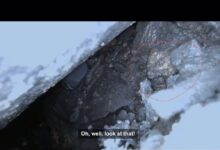
Beneath the Money Pit, boreholes, low-light cameras, and sonar describe a ~150-ft-deep limestone cavity with straight edges, squared faces, and an apparent entrance. Water chemistry flags organics (wood) and even gold-adjacent signals, which is hard to square with a purely natural void at that depth. The working hypothesis: human modification, and possibly an offset chamber.
Why This Matters
- Intentional Layout: Numbered timbers, cribbing, and stacked wood suggest planned architecture—not just collapse layers.
- Status & Reach: Gilded button, fine silverwork, and imported ceramics point to elite operators with global supply lines.
- Logistics Hub: The swamp road/stonework looks designed to move and hide heavy cargo, then hand it off to subsurface storage.
- Multiple “Catches”: As Rick says, the pattern is suggestive of more than one deposit—a distributed system, not a single chest.
What to Watch Next
- Drive the caisson window to the Chappell-depth horizon and test for vault geometry.
- Recover and date more numbered timbers; look for joinery/tool marks that match Smith’s Cove sets.
- Re-image Aladdin’s Cave at higher resolution; chase the entrance corridor with targeted drilling and camera drops.
- Lot 5 synthesis: Provenance the gem, button, and silverwork; continue the rectangular feature dig for chest fittings, seals, and timbers that tie surface logistics to underground storage.