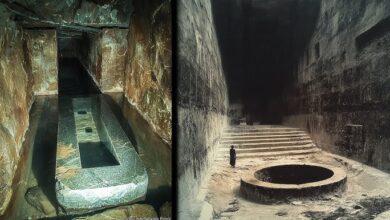
Oak Island Hunt Intensifies: Lot 5 Artifacts, Aladdin’s Cave Clues, and a Timber-Packed Void
Deck: The Lagina team doubles down as fresh ceramics, hammered coins, French-style hardware, and deep-level wood fragments point to long-running activity—and a possible man-made route toward treasure.
The Big Picture
The never-ending search on Oak Island has entered a new, data-rich phase. While Lot 5 continues to yield artifacts that shift the timeline and purpose of the area, new scans and a camera drop into “Aladdin’s Cave” beneath the Money Pit suggest straight edges, possible walls—and perhaps an entrance. Meanwhile, flooding at the Garden Shaft exposes a surprising timber-filled void.

Lot 5 Ceramics Upend Assumptions
Initial work on Lot 5—once thought to be simple habitation—now indicates a more complex story.
- Redware & Glazed Pottery: Finds include red pottery with a purple-rim glaze and dark interior glaze, alongside thicker coarse earthenware. The typology and finishes point to 17th–18th century activity and go beyond a casual domestic scatter.
- Implication: Lot 5 may have been a drop site or working area—possibly linked to the Money Pit era—rather than just a residence.
A Cluster of Hand-Hammered Coins
Metal-detecting across flagged targets produced multiple coins with distinct compositions and iconography.



- Coin 1 (XRF/CT): ~94% copper, 5% silver—unlike typical Roman alloys—yet clearly pre-modern and hand-forged.
- Coin 2: Copper–silicon–lead–tin composition, with a female bust motif; chemistry resembles Roman-era pieces discussed in prior seasons.
- Coin 3: Brass signal with elevated calcium/phosphorus, consistent with a French denier (~13th century).
- Takeaway: Mixed origins (French, Roman-like) suggest layered visitation—and potentially a longer, more international prehistory for Lot 5.
French Fingerprints: Strapwork and Fasteners
A bow-style metal strap and hand-forged iron were identified by a blacksmith as early 1600s–1700s hardware, likely decorative chest fittings.
- Why it matters: The style and make align with French material culture, dovetailing with earlier French-linked finds (e.g., the well-known lead cross).
- Working theory: Lot 5 could have been a logistics hub—handling chests, barrels, and cargo tied to high-value movement.
Shoreline Iron: Tools of Trade and Construction
Close to the beach margin of Lot 5, the team recovered:
- A cribbing spike (typical for joining timbers)—plausibly tied to ship work or subsurface structure building.
- An ancient scissor handle, visually analogous to artifacts found in earlier seasons and assessed to be 1600s–1700s.
Signal: Shoreline activity likely included cargo handling and fabrication, consistent with a staging zone rather than passive settlement.

The Rectangular Foundation—Built Around Something?
Archaeological work on a rectangular foundation near Lot 5’s center reveals:
- Dating: Circa 1700s, with creamware (c. 1762 onward) and even porcelain teacup fragments—valuable goods for the time.
- Structure Behavior: The perimeter appears well-built and preserved, while the interior looks deliberately filled or collapsed.
- Hypothesis: The foundation may have been constructed around an earlier feature, possibly linked to the 1600s circular depression nearby.
Money Pit Update: Wood, Palladium, and Aladdin’s Cave
Drilling east of the Garden Shaft (e.g., L3.5 and nearby holes) produced multiple wood fragments between roughly 98–111.5 ft.
- Geochemistry: Wood samples show palladium signatures (with no gold/silver/tin detected in the wood itself), a curious flag often associated with precious-metal processes and refining/preservation contexts.
- Aladdin’s Cave Imaging: Sonar and a low-light 360° camera capture straight lines, broken edges, and what looks like a man-made opening ~150 ft down.
Bottom line: Subsurface evidence increasingly hints at constructed spaces rather than purely natural voids.
Garden Shaft Flooding Reveals a Timber-Packed Void
A setback turned into a clue: as water surged into the Garden Shaft, cameras revealed a small cavern behind the lagging—apparently packed with timbers laid in courses.
- Potential Meaning: Could indicate an offset chamber, tunnel segment, or deliberate blockage near the shaft.
- Next Steps: Stabilize inflow, enlarge the opening, and visually confirm the void’s geometry and relation to known tunnels.
The Regulatory Backdrop
Past discoveries of Mi’kmaq/First Nation artifacts have led to work stoppages and tighter oversight. Current strategies emphasize non-invasive methods (sonar, seismic, targeted drilling) to progress while meeting compliance requirements.

What It Could Mean
Taken together, Lot 5 and Money Pit data sketch a coherent scenario:
- Staging & Logistics: Lot 5’s ceramics, coin mix, and French-style hardware support a working platform for receiving, sorting, and moving high-value goods.
- Chronological Layering: Artifacts span 13th-century denier to 17th–18th-century ceramics and hardware, implying repeated visitation and multi-national footprints.
- Engineered Subsurface: Wood at depth, palladium traces, straight-edged voids, and a timber-filled cavity suggest intentional underground construction—possibly offset from the Garden Shaft.
What to Watch Next
- Void Investigation: Direct inspection of the timber-packed cavity adjacent to the Garden Shaft.
- Cave Mapping: Higher-resolution sonar and camera passes to confirm man-made geometry in Aladdin’s Cave and locate a navigable entrance.
- Lot 5 Synthesis: Continued excavation of the rectangular foundation and targeted hunts for complete vessels or chest remains that can lock in use-case and dates.
- Metallurgy & Provenance: Expanded XRF/CT work on the coin cluster and hardware to refine origin, trade routes, and depositor identity.
Verdict
From glazed redware to French strapwork, from hammered coins to engineered voids, Oak Island’s latest findings point to organized, multi-century operations—not random happenstance. If Aladdin’s Cave and the Garden Shaft void connect the way the data suggests, the island’s most persistent mystery may be edging from legend toward blueprint.