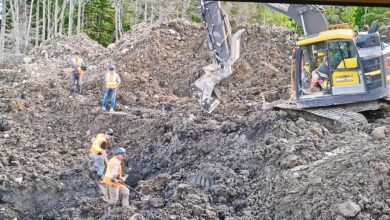
Oak Island: Five Discoveries That Bring Treasure Hunters Closer to Solving a 226-Year Mystery
For more than two centuries, Oak Island in Nova Scotia has fascinated treasure hunters with stories of hidden riches, booby-trapped tunnels, and cryptic clues. While many of the island’s mysteries have remained speculative, the Lagina brothers and their team have uncovered remarkable evidence in recent years. These finds suggest they may be closer than ever to unraveling one of history’s greatest enigmas.
Here are five of the most important discoveries that hint at the existence of treasure beneath Oak Island.
1. The Smith’s Cove Slipway
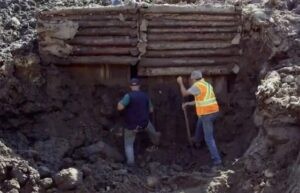
In 2018, excavations at Smith’s Cove revealed a man-made wharf structure, built from carefully placed logs and beams. Dating tests identified the construction as originating in 1771, predating the discovery of the Money Pit by more than two decades.



The slipway indicated that Oak Island was once prepared for heavy loads, suggesting significant operations had taken place there long before modern treasure hunters arrived.
2. The Medieval Lead Cross
During Season 5 of The Curse of Oak Island, Gary Drayton and Rick Lagina unearthed a small lead cross at Smith’s Cove. Initially thought to be medieval in style, scientific analysis confirmed its origins: the lead matched deposits from southern France, with mining activity dating back to before the 15th century.
The cross raised new questions about a possible connection to the Knights Templar or other European groups, strengthening theories that Oak Island’s secrets may trace back to medieval Europe.
3. The Paved Area in the Swamp
A year later, the team drained part of the swamp and uncovered a layered stone pavement that was too uniform to be natural. Carbon dating of nearby material placed its construction around 1200 AD.
This discovery supported long-held theories that the swamp itself is man-made, possibly engineered to conceal or protect something significant beneath its waters.
4. The Stone Wharf
Further investigation revealed a second major feature within the swamp: a stone wharf, estimated to be at least 300 years old. Completely hidden beneath the bog, the structure resembled an old Roman-style road or platform, possibly used for loading and unloading ships.
The construction implied large-scale, organized activity on the island well before the Money Pit was first discovered in 1795.
5. Silver in the Money Pit
The most compelling evidence to date emerged in 2021, when geoscientist Dr. Ian Spooner proposed testing water samples from drill holes near the Money Pit. The analysis revealed extraordinarily high levels of dissolved silver.
According to Spooner, the concentration was not consistent with natural deposits but with a massive cache of silver buried underground. This was the first scientific proof that precious metals may actually exist within the Money Pit, supporting centuries of legend.
A Mystery That Endures
From medieval artifacts to engineered structures and scientific evidence of treasure, Oak Island continues to yield discoveries that deepen the mystery. Each find adds weight to the belief that something extraordinary lies hidden beneath its soil.
After 226 years of searching, the question remains: will Oak Island finally reveal its greatest secret?