The Enduring Mystery of Oak Island
Oak Island remains one of the world’s greatest unsolved mysteries. Recent discoveries, including a cut silver coin and ancient timbers, may finally bring researchers closer to the truth behind the legendary Money Pit.
Discovery of the Cut Coin
During a dig on Lot 5, Fiona Steel uncovered a silver coin broken clean into four pieces. At first glance, it appeared Spanish—potential treasure from soldiers or pirates. But analysis revealed it was actually an English William III shilling from the 1690s.
The coin’s precise cut was no accident. In the 17th century, people often sliced coins into halves or quarters to make change. Its presence near a stone circle and tools from the same era suggested deliberate activity on Oak Island long before records place settlers there.
A Link to British Troops
Some theorists believe British soldiers once used Oak Island as a hidden base or storage site. After treasure-hunter William Phips recovered riches from a sunken ship in the late 1600s, his associates may have stashed valuables on the island. If true, this coin could support the idea of a military or secretive presence.



Strange Finds on Lot 5
The soil where the coin was discovered was no ordinary dirt—it contained layers of artifacts spanning centuries: 14th-century tokens, 17th-century iron tools, and fragments of mortar identical to that pulled from the Money Pit. The mix hinted at intentional construction rather than random settlement.
Scans and Authentication
Archaeologist Laird Niven and metal specialist Emma Culligan ran elemental scans on the coin. The results confirmed silver mixed with lead, typical of coins from the 1690s. Faint letters (“GV LY”) and tiny triangular patterns matched William III’s coinage. It was a solid identification.
Implications of the Find
The coin itself is not treasure. But as a clue, it pushes the island’s timeline back decades. Combined with the stone circle, mortar, and unusual tools, it suggests that Lot 5 was occupied or engineered much earlier than historians believed.
Search for Shaft 2
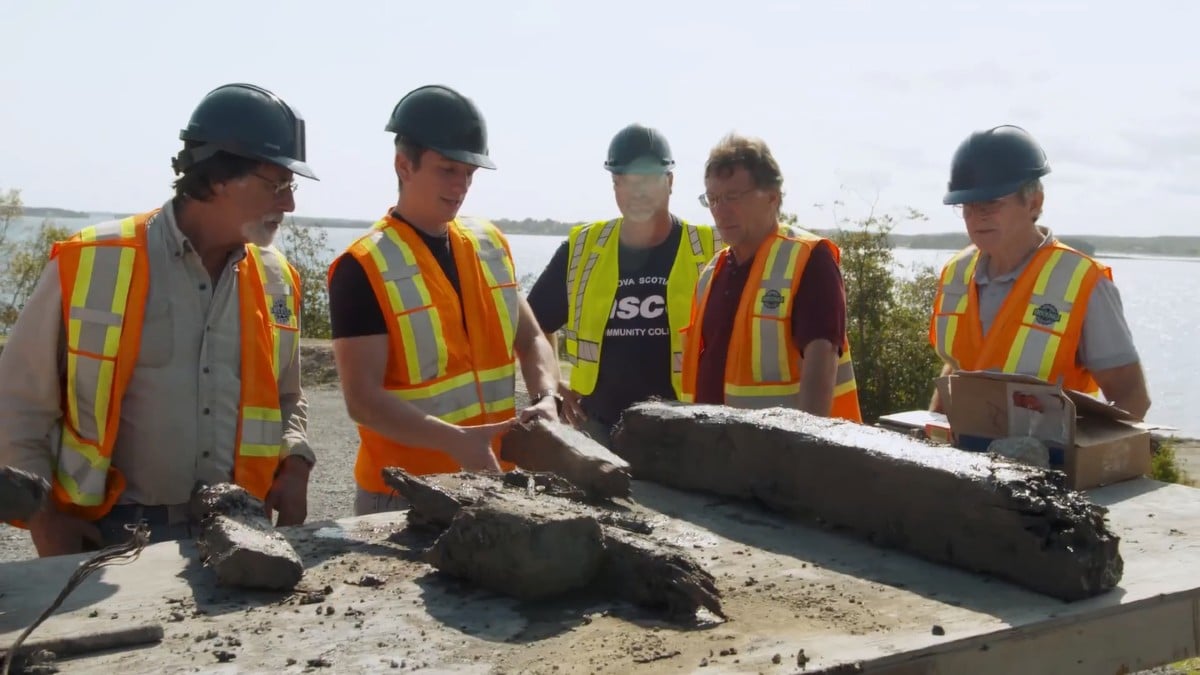
Meanwhile, excavations continued near where records place “Shaft 2,” only 14 feet from the Money Pit. Heavy timbers surfaced, many without nails—suggesting pre-industrial construction. Blackened beams, likely from deep layers, hinted at untouched structures dating to the early 1800s.
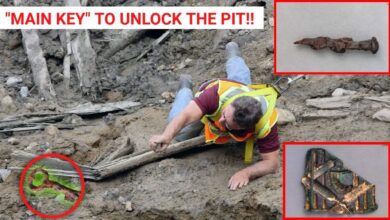
The Rose-Head Spike
Among the spoils, the team uncovered a rose-head spike, a hand-forged nail typical of the 1700s–1800s. This discovery aligned with historical reports of early search shafts, strengthening the case that they were near the original Money Pit.
Gold-Plated Coin at Smith’s Cove
In another dramatic twist, Gary Drayton’s detector uncovered a gold-plated coin at Smith’s Cove. Likely European in origin, possibly 1700s, it reignited theories of pirate treasure, secret society caches, or even Knights Templar links. Though modest in size, its craftsmanship and location pointed to deliberate placement.
The Mysterious Wooden Structure
Alongside the coin, excavators revealed a carefully built wooden slipway or wharf beneath the cove. Its construction suggested organized activity—perhaps for offloading heavy cargo. This structure deepened suspicions that Oak Island once hosted operations larger and more deliberate than anyone realized.
Historical Roots of the Mystery
The Oak Island saga began in 1795 when Daniel McGinnis and friends unearthed a shaft reinforced with oak logs. Over time, treasure hunters found evidence of advanced engineering: inscribed stones, imported coconut fiber, and flood tunnels designed to protect something hidden. For over 200 years, generations have chased what might lie beneath—gold, manuscripts, or priceless relics.
Are We Closer to the Truth?
With the William III shilling, gold-plated coin, ancient timbers, and mysterious structures, Oak Island continues to yield evidence of deliberate, centuries-old activity. Each clue adds to the puzzle. Whether treasure, a military outpost, or something greater, the island’s secrets may soon come to light.