Ancient Finds and Golden Clues: Oak Island’s Latest Revelations
Roman or Byzantine Origins? A Coin Raises Questions
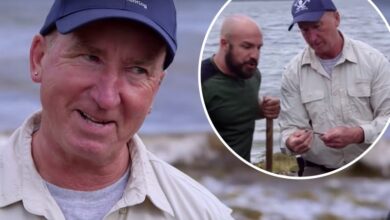
On the storied shores of Oak Island, history may have just shifted. While combing through Lot 5 — a section of the island that has long fueled speculation — the team unearthed a weathered copper coin. Its green patina and faint engravings hinted at deep antiquity. To unravel its story, the crew turned to numismatist Sandy Campbell, an expert in ancient currency.
After close inspection, Campbell placed the coin’s minting date somewhere between 300 BC and 600 AD, falling squarely within the Roman and Byzantine periods. X-ray fluorescence analysis added another layer of intrigue: the coin’s composition included 1.05% silver and 0.51% arsenic, consistent with minting practices from before the 16th century.
Such findings ignite a burning question: How could a coin from the ancient Mediterranean world make its way to a remote island off the coast of Nova Scotia?
A Possible Templar Connection Through Portugal
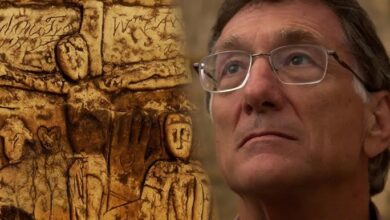
The mystery deepened when the team revisited a past expedition to Portugal. There, they had uncovered a 2,000-year-old Roman road and stone engravings that mirrored symbols etched into Oak Island artifacts. Even more startling, a cobblestone road discovered in Portugal matched one unearthed in Oak Island’s swamp — both built with strikingly similar construction techniques.
Given that the medieval Knights Templar held strategic bases in Portugal, the crew proposed a daring theory: the coin may have traveled across centuries and oceans, carried by Templar hands during a secret voyage. Such a link would not only connect Oak Island to European medieval history but possibly to ancient Rome itself.



The Garden Shaft: Hunting for Hidden Gold
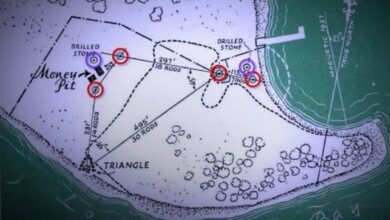
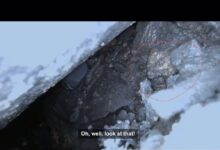
While historical speculation swirled, boots and drills were hard at work in another part of the island. Brothers Rick and Marty Lagina, working with Dumac Contracting Limited, launched a new drilling campaign in the Garden Shaft. This location, just outside the infamous Money Pit, has long been rumored to conceal a treasure chamber.
Water testing had already revealed traces of gold in the surrounding area. Now, drilling bore into the earth, extracting wooden fragments from 55 feet below. In a moment of scientific confirmation, archaeometallurgist Emma Culligan detected gold particles embedded in the wood — tangible evidence that treasure, or at least treasure-related activity, had once been here.
Science and History Hand in Hand
These breakthroughs underscore how the Oak Island investigation has evolved. It is no longer a pursuit fueled solely by shovels and speculation. Instead, modern science — from metallurgical testing to advanced geological surveys — works in tandem with historical research. Every clue, whether metallic traces in ancient wood or a coin with mysterious origins, is cataloged and cross-referenced to build the bigger picture.
A Mystery That Refuses to End
With each passing season, Oak Island’s story only grows more complex. The recent coin discovery has the potential to rewrite local history, hinting that this island may have been touched by hands from distant continents long before Columbus. At the same time, the gold traces near the Money Pit renew hopes of finding a long-sought treasure that has eluded explorers for over 200 years.
For Rick, Marty, and their team, the stakes have never been higher. What lies ahead could be a discovery that finally solves the Oak Island mystery — or opens an entirely new chapter in its centuries-old legend.