Royal Relics, Deadly Traps, and Buried Secrets: Oak Island’s Most Dangerous Treasure Hunt Yet
Discovery of Spanish Religious Artifact Raises the Stakes
A silver religious artifact, believed to date back to the early 1600s, has emerged from the swampy soil of Oak Island. According to metal-detecting expert Gary Drayton, this particular piece—likely carried atop a pole during Spanish processions—is more than just precious metal; it’s a symbol of an era and a culture that may have left its mark on Nova Scotia centuries ago. As more clues surface, the search team believes they may be edging closer to a trove of royal treasure—and a hidden history long kept secret by Oak Island itself.
New Finds Link to King Charles II
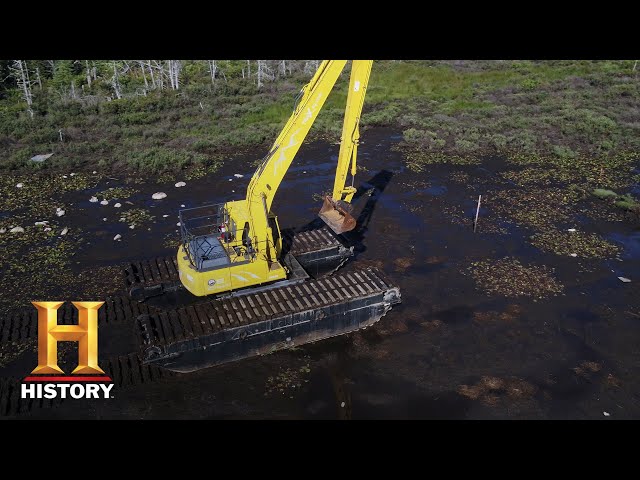
The current focus is the swamp—a site that has consistently yielded strange, out-of-place artifacts. Recent finds include coins believed to date back to the reign of King Charles II. When unearthed near the swamp’s shoreline, one such coin sparked immediate intrigue. Craig Tester, analyzing the surrounding soil, noted that the coin appeared relatively well-preserved, indicating it may have been deliberately reburied at a later time—possibly in the 1800s.
The implications are staggering: was this coin part of a hidden royal cache? Or was it left behind by someone who had already discovered and moved part of the treasure?


Evidence of a Chest: 17th Century Hardware Unearthed
Not long after the coin discovery, Drayton’s detector picked up a strong signal near an old stone path. The team unearthed a heavily rusted piece of hardware, later identified as a 17th-century chest hinge by historical blacksmith Carmen Legge. The craftsmanship, though degraded, suggested the hinge once secured a sturdy container—potentially for gold, jewels, or royal documents. The object’s estimated date once again aligns with the era of Charles II.
The Coconut Fiber Enigma
Perhaps the most puzzling discovery of the episode came in the form of coconut fibers, unearthed deep within the swamp’s silty layers. Native to tropical regions, these materials have no logical reason to be found on a cold Atlantic island. Their repeated appearances over the years have baffled researchers.
Current speculation suggests the fibers may have been used as a primitive filtration system, possibly intended to protect underground structures from flooding—yet another sign of advanced, deliberate engineering.

Buried Plank Suggests Underground Access Point
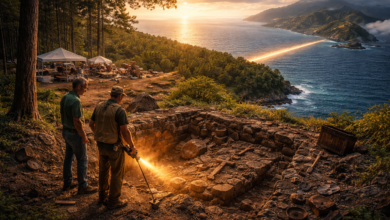
The episode’s climax arrived when the team encountered a buried wooden plank, deep in the swamp’s edge. Its position and condition hint at a possible entryway to an underground chamber or tunnel system. However, due to the unstable terrain, excavation was temporarily halted.
The team now suspects the plank may mark a concealed entrance—one potentially leading to the royal cache, or at the very least, to a chamber untouched for centuries.
Back to the Money Pit: Revisiting Old Dangers
While the swamp yields new evidence, attention also turns to the infamous Money Pit—Oak Island’s most treacherous and storied site. The team returned to the B4 shaft, a dig that had previously suggested the presence of deeper chambers and unusual fill layers.
The Money Pit has long been associated with deadly traps and sophisticated flood tunnels designed to thwart intrusion. With modern equipment and historical data in hand, the team hopes that new technology may finally crack what hundreds of previous explorers could not.
A Treasure Worth Hiding—At All Costs
The episode closes with more questions than answers. What was so important that someone would build elaborate traps, use tropical materials in a Canadian climate, and hide royal relics so carefully? Is Oak Island guarding a treasure tied to the Spanish Empire, the English crown, or perhaps a secret religious order?
Whether fact, folklore, or some combination of both, the evidence continues to grow. Every new artifact suggests intention—design, planning, and secrecy. Oak Island’s muddy surface may be slowly giving up its secrets, but what lies beneath still holds the power to astonish, and possibly, to change history.