Oak Island Discovery Sparks New Theories After Unearthed Vault and Human Remains
Unsettling Find in the Swamp Raises More Questions Than Answers
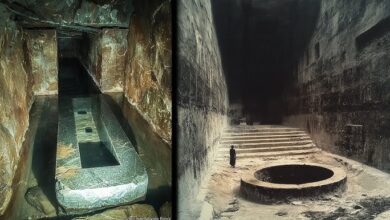
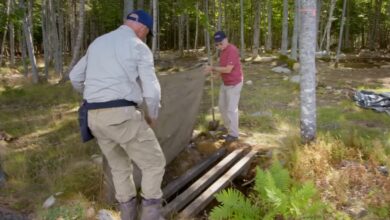
In the depths of the swamp on Nova Scotia’s infamous Oak Island, members of the ongoing treasure-hunting team have made a chilling discovery: a fragment of human bone with hair still attached. The bone, unearthed between 160 and 165 feet underground, was located beside an unusual brick-and-stone structure resembling a vault. Though the vault was empty, the implications of this find have reignited theories about hidden burials, abandoned constructions, and long-concealed secrets beneath the island’s muddy surface.
An Empty Vault—and a Silent Warning
Investigators described the vault as an intentionally crafted cavity, with signs of care in its construction—slate, brickwork, and a defined perimeter—yet no contents. The emptiness itself raised alarms. Alongside the structure, the team also discovered a worn leather boot sole, multiple thick leather fragments, and an oddly shaped wooden stake that appeared to have been roughly cut, possibly to mark the area.
The surrounding soil yielded additional artifacts: an iron spike and a chisel-like tool—items not considered common debris but functional implements likely used in heavy construction or excavation. The concentration of objects in such close proximity suggests that the site may have been used for a significant purpose, perhaps abruptly abandoned.


The Rocky Path That Leads Nowhere—Yet
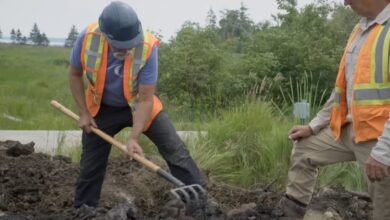
For weeks, the team has been tracing a stone path that winds through the swamp like a hidden artery. Its presence, odd in such terrain, points to deliberate construction. As they continue excavating nearby, the path reappears intermittently, as if intentionally obscured. Some believe it may lead to further vaults or chambers yet to be uncovered—perhaps even ones that were never emptied.
The Graves Connection: Coincidence or Cover-Up?
One historical figure has resurfaced in speculation: Anthony Graves. In the mid-19th century, Graves purchased most of Oak Island but notably stayed out of the high-profile treasure hunts. Despite his detachment, he was later observed spending rare silver Spanish coins—currency that matched the type theorized to be hidden on the island.
The origin of these coins has never been explained. Now, with the discovery of the vault and surrounding artifacts, a new theory emerges: that Graves may have found this or another vault when it still contained treasure, quietly removed its contents, and concealed his discovery. The physical evidence—tools, footwear, and disturbed ground—may be silent witnesses to that event.
Tools, Trails, and Tension
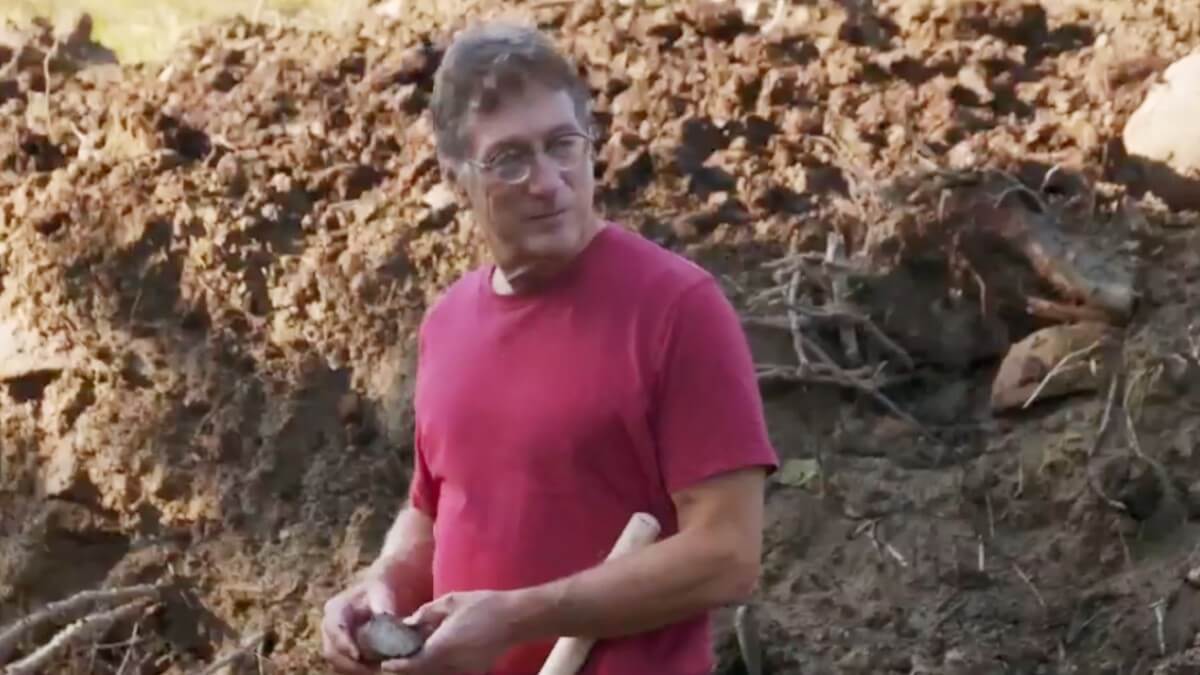
The stakes—both literal and metaphorical—are rising. The unusual wooden marker found near the vault site stood out for its shape and apparent rough hewing. Detectors in the area have registered continued signals, and further artifacts, including iron fastenings and remnants of worked wood, have since emerged. Experts believe these could be remnants of a partially constructed or disassembled structure. Whether it was meant to hide, protect, or transport something remains unclear.
A Place That Resists Answers
Oak Island has long defied expectations. Each new clue leads to more uncertainty. From the infamous Money Pit to stone-paved platforms and unexplained coconut fiber layers, the island offers tantalizing evidence, but never resolution. The latest finds—human remains, a concealed vault, and an abandoned path—deepen the mystery.
There is one persistent question: Who builds a vault only to leave it empty?
The team continues to excavate, hoping that the next discovery will yield answers. Whether that be treasure, historical context, or something more disturbing, Oak Island continues to guard its truths, even as it slowly reveals them—one fragment, one footstep, one artifact at a time.