The Curse of Oak Island: A Centuries-Old Mystery Unearthed
A Century-Long Quest
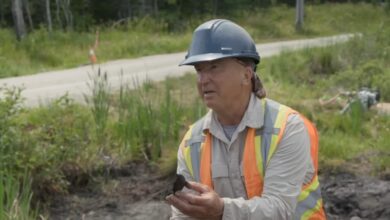
For over 200 years, Oak Island—a small, unassuming piece of land off the coast of Nova Scotia—has captivated treasure hunters, historians, and skeptics alike. From whispers of buried pirate gold to theories of Templar secrets, its legend has persisted, unfaded by time or failure. Among those drawn to its mystery are Rick and Marty Lagina, brothers whose journey to uncover the truth has become one of modern television’s most enduring real-life sagas.
The Beginning of the Lagina Brothers’ Exploration
The first season of The Curse of Oak Island dove into the island’s murky history. Rick and Marty Lagina began their quest by meticulously examining historical documents, tracing stories of pirate legends, Knights Templar lore, and the mysterious 18th-century discovery that birthed the legend of the Money Pit.
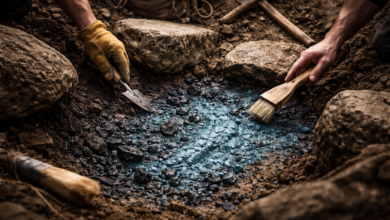
Their early excavations revealed objects that hinted at deliberate engineering—wooden planks, coconut fibers, and a carved stone slab—raising suspicions of a man-made shaft beneath the surface. However, excavation proved difficult. The ground was unstable, and machinery often failed. In response, the Laginas formed a multidisciplinary team including engineers, archaeologists, and historians.


Revealing the Layers of the Money Pit
As exploration deepened into the Money Pit, wooden platforms were found at regular intervals, strongly suggesting intentional design. Complicating their efforts was the discovery of flood tunnels—an elaborate system engineered to sabotage treasure seekers.
Despite setbacks, promising artifacts emerged: a Spanish coin from the 1650s, a lead cross with potential Templar links, fragments of armor, and a Templar seal. These finds, though not conclusive, indicated a rich historical presence on the island.
New Sites and Expanding Theories
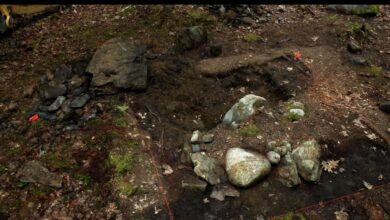
As the seasons progressed, the Lagina brothers expanded their search beyond the Money Pit. In the triangle-shaped swamp and Smith’s Cove—long rumored to hold secrets—they uncovered evidence of early European settlement and potential Templar relics, including a wooden cross known as “Nolan’s Cross.”
An even more intriguing discovery came in the form of 18th-century maps depicting known and unknown areas of the island. These maps, along with a mysterious stone slab engraved with cryptic symbols, added to the growing list of enigmas.
The 10X Borehole and Deeper Discoveries
One of the major breakthroughs came in Season 5 with the deeper excavation of the 10X borehole. Penetrating depths unreached for over a century, the team found wooden platforms, ancient tools, a chest, and what may have been a Templar cross. Perhaps most startling of all, human bones of both European and Middle Eastern origin were discovered, suggesting long-distance and multicultural involvement in the island’s secrets.
The Chamber and the Treasure
Seasons 6 through 8 focused on breaking into the sealed chamber beneath the Money Pit. After years of setbacks, collapses, and unstable soil, the team finally breached the mysterious vault. Inside were enigmatic items—an ancient hammer, broken pottery, leather fragments, and an aged wooden chest.
Though the contents were not definitive proof of treasure, the possibility of encoded documents and the presence of Templar-related artifacts lent credence to long-standing theories. Meanwhile, radar scans of Smith’s Cove uncovered an intricate system of box drains and interconnected tunnels, pointing to sophisticated flood mitigation efforts by unknown builders.

The Chappell Vault and Evidence of Wealth
Season 9 and 10 brought the discovery of a vault potentially linked to the elusive Chappell Vault. Using submersible cameras and advanced pumps, the team fought continuous flooding to uncover metallic relics, timber framing, and another cache of coins—gold, silver, and copper—some dating back centuries. Perhaps most significant was a wooden box containing ancient scrolls and documents, hinting at a deeper historical narrative yet to be decoded.
A growing number of artifacts—leather-bound boxes, Templar symbols, foreign coins—suggested the treasure might be more than gold: it could be a lost archive of religious or political significance.
Season 11 and the Final Frontier
Lot 5, a site long untouched, emerged as the final frontier in Season 11. Here, the discovery of ancient Roman coins, Chinese gold, and English artifacts pointed to a global connection rarely seen in North American archaeological sites. A mysterious lead token, coins from various empires, and a buried metal object possibly marking a hidden entrance reignited speculation about Oak Island’s purpose.
Historian Charles Barkhouse suggested strong links to the Knights Templar, reinforced by the appearance of a brick inscribed “1347” and other Templar-associated symbols. The theory that Oak Island may have been a hiding place for sacred relics or documents continued to gain traction.
Conclusion: Treasure or Legacy?
While the Lagina brothers have yet to uncover a definitive treasure hoard, their discoveries have rewritten parts of North American history. The scope and scale of engineering beneath Oak Island suggest that something—or someone—of significance once operated there.
Whether the final reward is a chest of gold or a new understanding of the past, the journey itself has brought light to centuries-old mysteries. The Curse of Oak Island continues to unfold, promising more revelations, and perhaps, the ultimate truth behind one of the world’s most enduring legends.