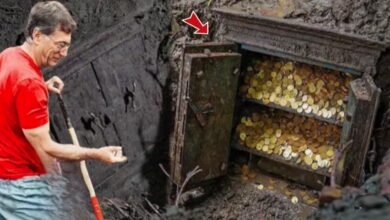
Samuel Ball’s Mysterious Rise to Wealth
Samuel Ball, born into slavery in South Carolina in 1765, began life in extreme poverty. Like many enslaved African Americans of the time, he worked under brutal conditions on southern plantations. However, during the American Revolutionary War, the British offered enslaved men their freedom in exchange for fighting alongside their army. Ball seized this opportunity, joining General Henry Clinton’s forces and eventually gaining his freedom after the war ended with the signing of the Treaty of Paris in 1784.
He was granted land as a war payment and settled in Nova Scotia, where he began cabbage farming in Shelburne. Despite the promise of freedom, racial discrimination persisted, and Ball struggled to integrate into Canadian society. He later relocated to Chester, Nova Scotia, and eventually began acquiring plots on Oak Island for farming. By the time of his death in 1846, Ball had amassed over 100 acres of land, a fortune considered highly unusual for a formerly enslaved Black man in 18th-century Canada.

Unusual Land Acquisitions on Oak Island
Researchers and treasure hunters have long been puzzled by Ball’s ability to purchase expensive land on Oak Island, a location steeped in legends of hidden treasure. Unlike most Black men of his era, Ball acquired multiple tracts of land on the island and surrounding areas. His property included farmland and an island known as Hook Island, suggesting significant financial means.



Samuel Ball’s 1841 will, later probated in 1846, confirmed the extent of his holdings. In it, he named heirs and detailed generous provisions, unusual for a cabbage farmer of modest beginnings. The document has further fueled speculation that Ball may have discovered part of the legendary Oak Island treasure.
Early Discoveries and Historical Evidence
Oak Island’s mystery began in 1795 when 18-year-old Daniel McInnis discovered a depression in the ground and signs of past excavation. He returned with friends Anthony Vaughan and John Smith (possibly a pseudonym or early reference to Samuel Ball), and together they began digging what would become known as the “Money Pit.” Every ten feet, they encountered layers of logs, but abandoned the project after reaching 30 feet without significant findings.
The Enslow Company reignited interest in 1803, excavating the pit to a depth of 90 feet and discovering layers of charcoal, putty, and coconut fiber. Most notably, they unearthed a stone with mysterious symbols. While the inscription’s meaning remains debated, one translation claimed it said, “Forty feet below, two million pounds lie buried.” However, the shaft flooded and the excavation was halted.
Subsequent efforts by multiple companies through the 19th and 20th centuries also failed to uncover conclusive evidence of treasure, although tools, anchors, and other artifacts were found. Fatal accidents—including a boiler explosion in 1861 and the deaths of four men in the 1960s—led to a mythic “curse” stating that seven men must die before the treasure is found.

Masonic Symbols and Royal Connections
In his book Oak Island Secrets, Mark Finnan noted that Masonic symbols were found on the island, suggesting a possible connection to Freemasonry. The design of the Money Pit itself reportedly resembles a Masonic initiation ritual involving a hidden vault. Other theories speculate that the treasure could include the missing jewels of Marie Antoinette, pirate loot, naval treasure, or religious artifacts linked to the Knights Templar.
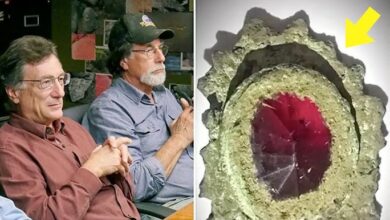
Some stories even allege that Ball’s land holdings overlapped with areas where significant artifacts were later found. Metal detector expert Gary Drayton and historian Charles Barkhouse, working with the Lagina brothers in recent years, discovered items including King George II-era coins and gun parts on Lot 24—land historically associated with Samuel Ball.
The Legacy of Samuel Ball and the Treasure Hunt Today
Despite the extensive investigations, no treasure has been conclusively recovered from Oak Island. Yet the volume of consistent findings, including rare coins and mysterious artifacts, keeps the legend alive. The Lagina brothers have used modern techniques and a broader approach, analyzing multiple lots across the island instead of focusing solely on the original Money Pit.
Samuel Ball remains central to the Oak Island mystery. His improbable accumulation of land and wealth in an era of systemic racial oppression continues to raise questions. Did Ball simply profit from good fortune and hard work as a farmer—or did he uncover a portion of the Oak Island treasure, keeping the secret to himself?
Conclusion
The story of Samuel Ball adds a compelling human dimension to the centuries-old Oak Island legend. Whether he stumbled upon treasure or was simply an industrious landowner, Ball’s life and legacy remain deeply intertwined with one of North America’s greatest unsolved mysteries. As the search for the Oak Island treasure continues, so too does the enduring question: Did Samuel Ball unlock the secret of Oak Island long before anyone else?