Ancient Coins Discovered: Roman and Tudor-Era Artifacts Found on Lot 5
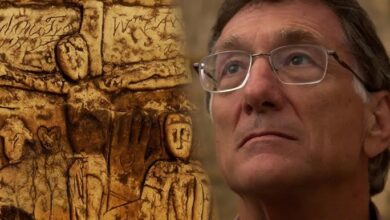
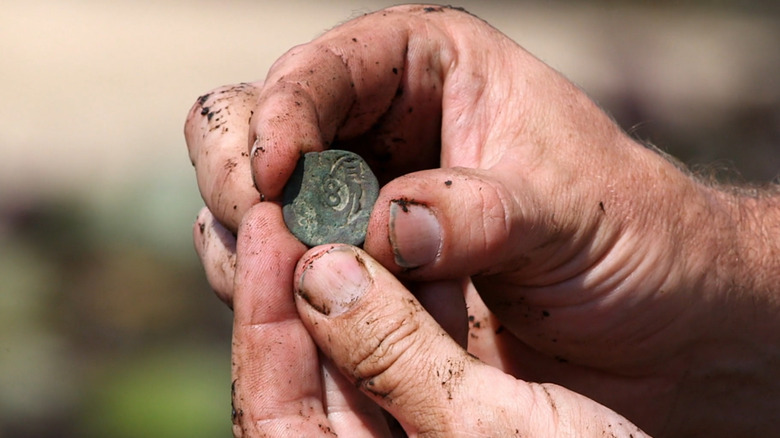
In a remarkable breakthrough on Oak Island, the team has unearthed five more historical coins from Lot 5 — including what appears to be half of a Roman coin. This find comes shortly after the recovery of three older coins and strengthens the possibility that ancient mariners may have reached Nova Scotia long before modern explorers. The newly discovered coins span a broad historical timeline, with markings and artistic styles dating from the 6th century to the 1500s, including possible links to the Tudor dynasty in England.

Numismatic Analysis by Expert Sandy Campbell
To help authenticate and analyze the coins, numismatics specialist Sandy Campbell has joined the team. With four years of experience analyzing ancient currencies, Campbell is focused on identifying the metallurgy, age, and likely origins of each piece. All coins were recovered from Lot 5 — an area rich with multicultural relics, having previously yielded English, Spanish, Indian, and Chinese artifacts.
Evidence of Maritime Activity on Lot 32
Further supporting theories of ancient seafaring, Lot 32 has provided additional clues. A lead cargo seal and an oversized iron wharf spike suggest this coastal lot once served as a landing site. Tooling expert Carmen Legge has examined a forged spike that may have been used to tether ships to shoreline rocks — reinforcing speculation that Oak Island was part of a larger transoceanic network.



The Roman Coin Mystery and Historical Implications
Two of the newly found coins are confirmed by Campbell to be of Roman origin, potentially over 1,000 years old — a staggering age for a North American discovery. One coin matches the design of a portcullis, which still appears on modern British coinage. Another Roman coin, previously recovered on the island in 2016, may date back over 2,000 years, making it the oldest artifact of its kind ever found on Oak Island.
Freemason Clues and the Heeden Shaft Legacy
Oak Island’s deep ties to Freemasonry were further underscored by evidence connected to the Heeden Shaft. Originally excavated by Freemason Irwin Hamilton in 1938, under lease from fellow Mason Gilbert Hedden, this shaft lies near the Money Pit. A hand-forged rose-head spike, found in 2020, may predate the 1700s and appears to have been sealed with materials matching other mysterious items from the island.
Templar Cartography and Symbolic Markings
Historian Zena Halpern’s controversial Templar maps have continued to fuel speculation. Among them: a 12th-century depiction of Nova Scotia and a 14th-century chart believed to show Oak Island. In their pursuit of historical connections, the team has explored ancient sites in England, where they found a brick marked with the enigmatic number “131947,” possibly tied to secretive Masonic or Templar codes.
Swamp Excavations Reveal Artificial Design
Meanwhile, the triangular swamp remains an active excavation zone. Rick Lagina, Billy Gerhardt, and Gary Drayton have exposed a cobbled rock layer and a 14-foot log lying beneath a root system — details that suggest purposeful construction. Dr. Ian Spooner has confirmed the configuration is not natural, and the team is now collecting organic material to carbon-date the site and determine its construction timeline.
The “Eye of the Swamp”: Symbol of Secrecy?
A circular rock formation previously discovered in the swamp — now known as the “Eye of the Swamp” — bears striking resemblance to the Masonic all-seeing eye. Spooner’s analysis dates its creation to between 1680 and 1700, adding credence to theories of a centuries-long mission to hide something of enormous significance on the island.
Portugal Connection and Roman Empire Expansion
Hoping to trace the coins’ origins further, metal detection expert Gary Drayton and treasure hunter Michael Jn traveled to Portugal — once a territory of the Roman Empire. There, they uncovered Roman-period artifacts, raising the possibility that transatlantic voyages may have occurred far earlier than history records, delivering these coins to Oak Island’s shores.
Pinpointing the Real Money Pit: D11 and Beyond
The team’s current working theory places the original Money Pit center at grid point D11, just beyond the Heeden Shaft. Water samples from several boreholes nearby have tested positive for valuable metals. Craig Tester and his brother remain committed to pushing forward with exploration, aiming to finally solve Oak Island’s greatest riddle.