Oak Island Season 10 & 11: Are the Secrets Finally Being Unearthed?
[A Discovery That Stops the Drill]
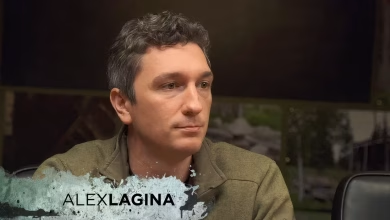
While drilling down through DN-11.5, Rick Lagina was off-site. In his place, geologist Terry Matheson and historian Charles Barkhouse oversaw operations. As the drill reached depths between 78 and 88 feet, something unusual happened. The pressure shifted.
Drill operator Mike noted that around 90 feet, they struck something solid—and just moments later, hit a void about a foot and a half deep.
What did this mean?
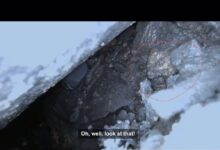


They pulled up a core sample—and inside it? Solid wood. Deep underground.
Not driftwood. Not tree roots. But worked wood.
Terry immediately recognized it: this was part of a manmade structure.
The sample was rushed to a lab for X-ray fluorescence (XRF) testing. And the results?
Traces of gold—not just in the wood, but also in the surrounding water.
This was no longer just a legend. For the first time, there was scientific proof that something of value might actually lie below.
[Evidence of a Hidden Structure]
Previous boreholes—like DN-2.5 and DN-13.5—hinted at tunnel-like paths below ground. Now, those theories gained strength. The structure beneath appeared to run east to west, possibly interconnected, possibly intentional.
And that void at 90 feet? Maybe not just empty space—maybe the edge of a hidden chamber.
For the Lagina brothers and the Fellowship, this was more than a breakthrough. It was a confirmation: something was built here. Something with a purpose.
[Lot 5: The Forgotten Corner Awakens]
At the start of Season 11, the team turned their attention to Lot 5—a previously overlooked area, rich in mystery.
There, they unearthed red clay pottery shards dating back to the 1600s. That predates the Money Pit legend by over a century.
What were people doing here that early? Were they just passing through—or hiding something that would one day become a legend?
Even more surprising: metal detectors lit up along the beach. Among the discoveries:
- An iron rod
- A decorative metal object
- A mining tool
- And coins—including a 13th-century French denier
Each artifact whispered the same thing: This place has been touched by history again and again.
[Clues of Construction—and Concealment]
The Lot 5 story deepened when Jari Drayton found a triangular iron spike, likely used in old ships or underground structures.
Moments later, a mysterious iron piece was found—a scissor handle, confirmed to date back to the 16th or 17th century.
These weren’t just artifacts. They were signatures of the past, each tied to human activity centuries before the Laginas ever arrived.
Then came the big one: a rectangular foundation, dated to the 1700s, connected to an even older circular structure beneath.
Helen Sheldon, the team’s archaeologist, noted that the uneven rubble in the middle wasn’t just debris—it looked like it had been used to hide something.
Why build this way… unless there was something worth concealing?

[The Fine China of a Hidden Elite]
Among the Lot 5 rubble, the team unearthed creamware ceramics from 1762 and fragments of a fine porcelain tea set.
This wasn’t left behind by common laborers.
Whoever used these items likely held status—perhaps officers, wealthy patrons, or members of an organized group protecting a secret.
Could this tie back to the Knights Templar? To French nobility? Or even to early British military operations?
[Technology Reveals the Unseen]
Using muon tomography, the team scanned underground and discovered:
- A solid object at 65 feet, just beneath the Garden Shaft
- Two more at 112 and 230 feet depth
These were not natural formations. The density and shape suggested manmade structures, possibly chambers, tunnels, or storage areas.
For the first time, Oak Island was speaking clearly—not in legends, but in measurable density maps and real-world data.
[International Ties and Ancient Seals]
Back at the Money Pit, a lead object initially thought to be a coin was revealed to be a 13th-century British seal, tied to military supply shipping in the 1700s.
This piece of lead wasn’t just old—it suggested Oak Island may have been involved in clandestine operations centuries ago, perhaps even as a hub for smuggling or hidden trade.
[Lot 5—A Historic Crossroads]
From rusty nails to elegant porcelain, each find on Lot 5 adds a layer to Oak Island’s tangled history.
It now seems clear: Oak Island wasn’t just a one-time hideout. It was a place used again and again, across generations, by different groups for specific purposes.
And as each season progresses, more pieces fall into place.
[Conclusion – More Than Just Treasure]
Oak Island is no longer just the site of a legend.
It’s a living document, being read layer by layer.
Each new void, each piece of wood, each forgotten coin adds clarity to the fog—revealing that Oak Island may not just be hiding treasure…
It may be hiding history itself.
If you’re just as captivated by these discoveries as we are, don’t forget to like, share, and subscribe. The Oak Island mystery is far from over—and together, we’ll keep digging until the truth comes out.