Exploring 200 Feet Down… and Finding a Legend (Season 12) | The Curse of Oak Island

Digging Deeper into the TOT-1 Shaft
Jack Begley and geologist Terry Matheson are overseeing the excavation of the TOT-1 shaft, which is being driven deeper in hopes of reaching a solution channel and uncovering potential valuables more than 200 feet below ground. The team is steadily progressing, pushing through what appears to be the remains of the historic Chappell Shaft.

Historical Context: The Chappell Shaft
In 1931, Melbourne Chappell, along with his father William and treasure hunter Frederick Blair, constructed a 157-foot shaft in the Money Pit. This effort was aimed at recovering what was believed to be a treasure vault first discovered in 1897. Although their attempt was ultimately unsuccessful, modern excavations through the same area are reviving hopes of success.
Significant Metal Discovery at Depth
Later in the day, at over 160 feet deep within TOT-1—deeper than any previous excavation in this location—Marty Lagina and metal detection expert Gary Drayton unearthed a significant metal artifact. The item appears to be a fragment of a handwrought tool, possibly the tip of a pickax.

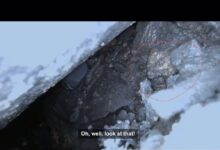


This artifact shows visible striations and appears distinctly aged, indicating that it may not belong to any modern-era search effort. Its discovery beneath the Chappell Shaft suggests that it could predate known digging operations.
A Similar Find in RF-1 and the Malta Connection
In 2019, a similar pickax fragment was recovered from RF-1, a shaft located less than five feet northeast of TOT-1. This earlier find is now being reconsidered in light of the recent discovery.
Two weeks prior, while visiting Malta, the team observed 16th-century underground tunnels with design features similar to those of the original Money Pit. Historian Matthew Balzan proposed that similar tools were used by the Knights of Malta during their underground construction projects, raising the possibility of a historical link.

Analysis by Blacksmith Expert Carmen Legge
The newly discovered metal fragment was brought to blacksmith expert Carmen Legge for analysis. He confirmed it to be a primitive mining tool, likely used for breaking rocks or digging through stone. The wear pattern and grain folding on the tool strongly indicate it was heavily used against hard surfaces.
Legge dated the tool to the 1500s or early 1600s—well before the officially recognized discovery of the Money Pit in the late 1700s. This implies that tunneling or mining activity occurred on Oak Island centuries earlier than previously thought.
Scientific Confirmation from Metallurgical Analysis
Emma Culligan conducted a composition analysis of the tool, identifying elements such as potassium, phosphorus, sulfur, and magnesium. These impurities further support the dating of the artifact to between the 1500s and 1700s.
The presence of such an old mining tool in the depth of TOT-1 strengthens the theory that original, pre-searcher activity may have taken place in the shaft—possibly tied to the Knights of Malta or other early European secretive groups.
A Turning Point in the Oak Island Search
This artifact could mark a turning point in the investigation. The alignment of physical evidence, historical theory, and scientific data is leading the team to believe they may be in the proximity of original work connected to hidden treasure.
The team now feels more confident that they are on the right track, and that the TOT-1 shaft may soon reveal one of Oak Island’s long-sought secrets.